
Heavy-Industry Engineering Guide · United Kingdom
QD Bushings for Mining Conveyor Belt Drive Systems
The shaft-to-hub connection technology keeping UK mining and quarrying operations running under the harshest conditions imaginable
Why QD Bushings Are the Backbone of Mining Conveyor Drive Systems
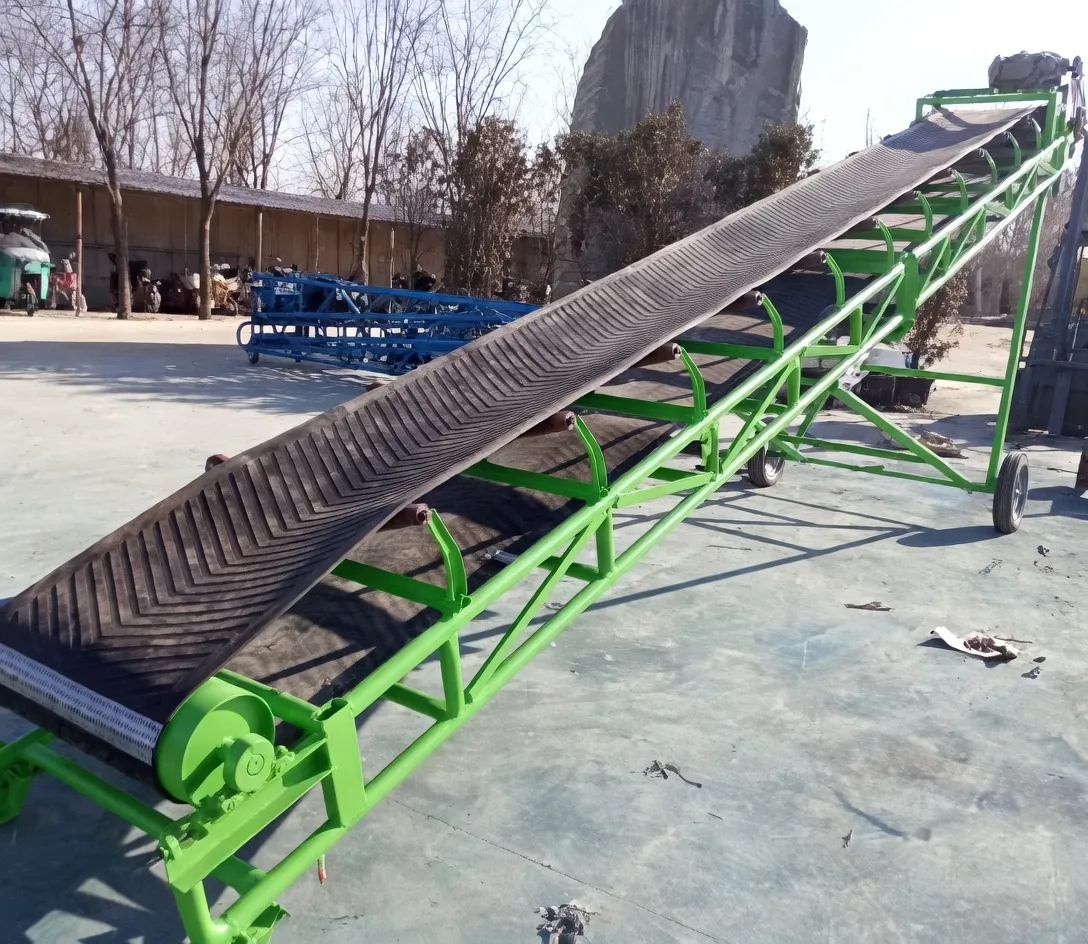 In the unforgiving world of open-cast and underground mining, a conveyor belt system is the circulatory system of the entire operation. From the moment a shot-fired face produces its first tonne of rock to the point where crushed aggregate or coal loads onto a lorry at the surface, the conveyor chain never stops. And at the mechanical heart of every drive pulley — connecting the rotating drum to the drive shaft — sits one relatively small component that either holds everything together or becomes the costliest point of failure on site: the QD bushing.
QD stands for “Quick Disconnect.” The name captures what makes this category of shaft-to-hub connection stand apart from conventional keyed bores, press-fit hubs, and shrink-disc assemblies. The QD bushing uses a precision two-degree taper — machined into both the bushing’s outer face and the hub bore — to generate a uniformly distributed radial clamping force the moment the cap screws are drawn up. This geometry produces a zero-backlash joint that transmits torque frictionally rather than mechanically, protecting the shaft surface and eliminating the fretting damage that gradually destroys conventional keyed connections under the cyclic loading that mining conveyors deliver every single day.
Across the United Kingdom, conveyor belt drives operate in some of the harshest conditions found anywhere in heavy industry. From the limestone quarries of the Peak District and the aggregate plants of the Welsh valleys, through the hard-rock operations in Argyll and the Cairngorms, to the bulk mineral terminals along the Humber and the Clyde, these drives contend with abrasive fine particles, fluctuating humidity, acidic groundwater, thermal cycling, and the relentless shock loading that comes from irregular material — oversized lumps that pass through a primary jaw crusher and drop onto a receiving belt with forces that spike the drive torque to three or four times its steady-state value.
A correctly specified QD bushing absorbs that punishment, stays firmly seated, and releases cleanly when the maintenance team needs to pull the drive pulley — with ordinary spanners, in a cramped underground roadway, in under two hours. A poorly specified or worn-out hub connection does none of those things. Understanding how to select the right QD bushing series, material grade, and surface treatment for your specific mining drive application is therefore not merely a procurement exercise: it is a production reliability decision with a direct and measurable impact on tonnes-per-hour output and annual maintenance costs.
The Engineering Case for QD Bushings in Heavy Conveyor Applications
▶ Precision Taper-Lock Mechanism — Zero Backlash Under Shock Load
The self-centering taper on a QD bushing exerts a uniform radial clamping force along the full shaft contact length the moment the cap screws reach their specified torque value. There is no metal-to-metal contact between the hub bore and the shaft at any point other than through the bushing itself, which means the shaft surface stays pristine across the entire service life of the assembly. In a 1 200 kW mining conveyor experiencing emergency-stop deceleration — where the transmitted torque can briefly reach 3 to 4 times the steady-state running figure — this zero-backlash characteristic prevents the hammering action that progressively widens keyway bores and creates the shaft “bitting” that maintenance teams in UK quarries know all too well. A dimensionally correct QD bushing, assembled to the specified screw torque, simply holds firm through events that would begin destroying a conventional keyed hub within weeks of commissioning.
▶ Rapid Maintenance Disassembly — The Feature That Pays for Itself
The “Quick Disconnect” designation is literal. The same cap screw holes that clamp the bushing in service are threaded to accept the same bolts in the opposing jack positions, pressing the bushing cleanly out of the hub bore using mechanical advantage rather than heat or hydraulics. In a UK underground roadway where a diesel engine loader is physically the only heating source available — or on a high remote quarry face where the nearest hydraulic press is thirty minutes away by haul road — this matters enormously. A trained two-person team can remove, inspect, and reinstall a drive pulley assembly with a QD bushing in approximately 90 minutes. The identical task with a keyed interference-fit hub routinely takes a full working shift, frequently involves improvised methods that carry serious injury risk, and occasionally results in heat damage to the shaft that turns a straightforward pulley swap into an unplanned shaft replacement. Eliminating that scenario is where the real commercial value of QD bushings accumulates across a mining operation’s asset life.
▶ Corrosion and Contamination Resistance in UK Mining Conditions
Surface corrosion is the silent destroyer of conventional drive hub assemblies throughout the UK’s wet mining and quarrying environments. A cast iron hub that has been running for twelve months in a continuously damp underground roadway — or in the spray zone beneath a limestone crusher — will have developed a rust bond between the hub bore and the shaft that makes removal genuinely destructive. Heavy-duty QD bushings specified for these environments are supplied with a zinc phosphate conversion coating followed by an oil impregnation treatment that penetrates the surface matrix, providing residual protection even after installation scratching. For particularly aggressive conditions — coastal aggregate terminals, acidic drainage tunnels, or mineral processing plants handling sulphidic ores — stainless steel Grade 316 QD bushings are available, providing a corrosion-free service life measured in decades rather than months and eliminating the bushing seizure problem entirely at the cost of a modest unit price premium that pays back on the first avoided removal incident.
QD Bushing Technical Specifications — Mining Conveyor Drive Series
| Series | Bore Range (mm) | Max Torque (Nm) | Hub Pilot OD (mm) | Cap Screw | Standard Material | Typical Mining Drive |
|---|---|---|---|---|---|---|
| JA | 12.7 – 31.75 | 270 | 69.85 | M8 | Grey Cast Iron | Light auxiliary / sampling conveyors |
| SH | 19.05 – 63.5 | 1 550 | 117.48 | M12 | Grey Cast Iron / Ductile | Crusher discharge belts up to ~250 kW |
| SK | 25.4 – 88.9 | 3 500 | 155.58 | M16 | Ductile Iron | Main screening / gate road belts 250–600 kW |
| SF | 31.75 – 101.6 | 5 900 | 196.85 | M20 | Ductile Iron / Steel | Incline haulage / stockyard belts 600–1 200 kW |
| E | 38.1 – 127 | 9 700 | 247.65 | M24 | Ductile Iron / Steel | Main trunk belts 1 200–2 500 kW |
| F | 44.45 – 152.4 | 16 300 | 304.8 | M30 | Alloy Steel 42CrMo4 | Heavy mineral & bulk ore haulage 2 500–4 000 kW |
| J | 57.15 – 177.8 | 28 500 | 381.0 | M36 | Alloy Steel 42CrMo4 HT | Large open-cast / dual-drive systems 4 000 kW+ |
Torque ratings based on 2-key configuration, standard cap screw grade 10.9, nominal tightening torque. Both imperial and metric bore sizes available. Custom keyway patterns, oversized bores, and non-standard flange geometries supplied on request. Contact [email protected] for a selection report tailored to your drive data.
Construction, Materials, and Operating Principle of Mining-Grade QD Bushings
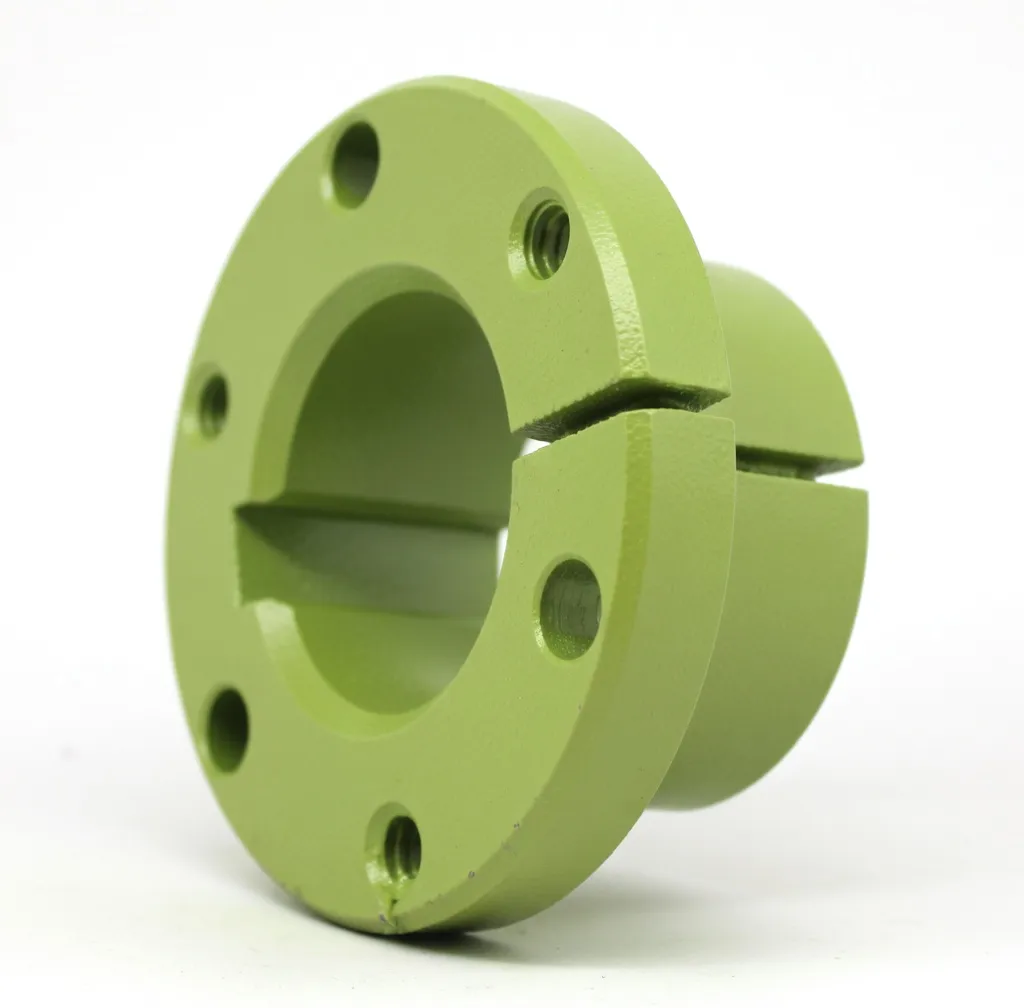 A QD bushing is a split, flanged sleeve machined with a precisely defined taper angle on its outer diameter — typically 2 degrees inclusive — that mates with a matching taper bore cut into the drive pulley hub. The axial split running through the bushing wall allows the sleeve to contract radially when the cap screws are tightened, squeezing the shaft with a force that is both uniformly distributed and directly proportional to the applied screw torque. This relationship between input screw torque and resulting shaft clamping force is the critical characteristic that distinguishes the QD bushing from every alternative connection method: it is repeatable, auditable, and can be set with a standard calibrated torque wrench by any maintenance technician who understands the relevant tightening sequence.
For standard mining conveyor drives operating below 60 °C in relatively dry conditions — primary screening circuits in an open quarry, for example — grey cast iron QD bushings to ASTM A48 Class 35 provide adequate strength and a competitive unit cost. Moving to ductile iron (ASTM A536 Grade 65-45-12 or equivalent) doubles the impact toughness and improves fatigue resistance considerably, which is why ductile iron QD bushings are the standard specification for crusher discharge drives and any application where shock loading is a regular occurrence rather than an exceptional event. The difference in tensile strength between grey and ductile iron is substantial — roughly 250 MPa versus 450 MPa — but more importantly, ductile iron does not fail by sudden brittle fracture under impact, making it far safer in the confined spaces of an underground roadway where a component failure can become a safety incident.
For the heaviest mining drives — those exceeding 2 500 kW, operating on ore with bulk densities above 2.5 t/m3 — alloy steel QD bushings manufactured from 42CrMo4 are the correct specification. Ever Power heat-treats these to 30–35 HRC surface hardness with a tough core, produces the keyway by precision broaching to 0.05 mm tolerances, and grinds the bore to an H7 fit that eliminates any radial clearance between the bushing bore and shaft surface. At this level of dimensional control, the contact stress distribution across the shaft is predictable and uniform, which prevents the localised fretting that initiates fatigue cracks in heavily loaded alloy steel shafts.
Surface protection strategies for mining QD bushings require as much attention as the base material selection. All Ever Power mining-series bushings receive a zinc phosphate pre-treatment that converts the surface iron to a crystalline phosphate matrix, followed by an oil impregnation step that fills the crystal voids with a corrosion-inhibiting fluid. This treatment survives installation handling and light surface scratching, providing residual protection in the humid conditions underground. Where re-greasing intervals exceed six months — as is common in difficult-access conveyor drives at remote Scottish quarries or in the deeper sections of UK limestone mines — a PTFE-based dry-film lubricant overcoat is available that maintains low-friction disassembly throughout the bushing’s service life without requiring any site-applied grease at all.
QD Bushing Applications Across the Mining Conveyor Chain
Primary Crusher Discharge Belt Drive
Immediately downstream of the jaw or gyratory crusher sits arguably the most demanding conveyor drive in the entire material handling circuit. The discharge belt carries rock that is still angular and highly abrasive, arriving in irregular surges with lumps up to 300 mm that create impact loads on the belt and corresponding torque spikes at the drive pulley. A correctly sized SK or SF series QD bushing, selected using the drive motor’s rated power and the design shaft diameter, provides the clamping force margin needed to survive these peak torque events without slip or shaft damage. The quarterly pulley inspection requirement that most UK crusher discharge belts carry — driven by the high severity of belt tracking loads and the proximity to the primary crusher’s vibration field — is also far less disruptive when the drive pulley assembly uses QD bushings. Stripping and rebuilding a drive pulley in ninety minutes between shifts is a very different maintenance proposition from the half-day task that conventional hubs impose.
Main Incline Trunk Belt — Gate Road and Surface Decline
The main trunk belt is the artery of the underground mine. Everything produced at the coal or hard-rock face reaches surface processing via this conveyor, which means a single unplanned stoppage immediately halts production across all active headings. UK underground mining and aggregate recovery operations typically run trunk belt drive motors from 630 kW to 1 500 kW per drive unit, with dual-drive configurations on heavily loaded inclines reaching 3 000 kW total. At these power levels, E and F series QD bushings are the correct specification, with shaft diameters typically between 100 mm and 160 mm. The inclined geometry introduces an additional load case that flat-run conveyors do not face: in the event of a hold-back device failure, the loaded belt imposes a significant regenerative torque on the drive pulley in the reverse direction, and a QD bushing’s taper-lock geometry handles this bi-directional loading without the progressive keyway widening that a conventional connection would accumulate across repeated braking events.
Chute Transfer and Loading Belt Drives
Transfer points between consecutive conveyor belts — where ore drops from one belt onto the next through a shaped chute — are among the most mechanically stressed zones in any bulk-handling system. The kinetic energy of falling material generates a longitudinal impact that temporarily loads the receiving belt drive to several times its running torque before the belt tension stabilises. QD bushing assemblies on transfer loading drives carry an important advantage here beyond their straightforward clamping force: the standardised cap screw geometry allows a calibrated assembly using a torque wrench to set the clamping force within a defined range, rather than relying on the wrench-and-intuition approach that often leads to either under-clamped bushings that slip under peak loads or over-clamped assemblies that initiate shaft cracking around the keyway root radius. Consistent, measured assembly is a significant reliability benefit in high-shock transfer applications across the UK quarrying and minerals processing sector.
Stacker, Reclaimer and Outdoor Stockyard Belt Drives
Open-air stockyard conveyors at UK aggregate terminals, coal import berths, and mineral processing plants operate in an environment where the combination of abrasive stone dust, Atlantic rainfall, seasonal frost, and wind-driven spray creates corrosion conditions that consume standard drive components at a pace that bewilders maintenance teams who encounter it for the first time. The QD bushing’s compact, self-contained design lends itself well to sealing against these conditions — a simple rubber sealing ring between the bushing flange and the hub face provides adequate protection for most outdoor quarry applications — while the axial repositionability of the taper-lock system is genuinely useful during the commissioning and reconfiguration of radial stacker conveyor systems, where the axial position of the drive drum on its shaft sometimes requires small adjustments as the machine configuration changes. Stainless steel Grade 316 QD bushings are available for coastal aggregate terminals where salt spray and tidal influence make standard iron bushings unacceptably short-lived.
Operational Advantages That Mining Operations Across the UK Rely On
✓ Dramatically Reduced Unplanned Downtime
A UK mining or quarrying operation losing conveyor production typically loses between £1 500 and £8 000 per hour depending on throughput, commodity price, and whether the outage cascades to other production areas. When a maintenance team can swap a drive pulley assembly in ninety minutes using a QD bushing — versus the four to eight hours required with conventional interference-fit hubs — the production-hour saving from a single unplanned maintenance event frequently recovers the entire cost premium of the QD bushing fleet. Many UK quarry operations that have completed QD bushing conversions across their conveyor fleet report a reduction in drive-related downtime exceeding 60%, with the secondary benefit that planned maintenance events are now genuinely achievable within a normal shift change window rather than requiring a full production shutdown day.
✓ Shaft Reuse and Extended Asset Life
Drive shafts for large mining conveyor heads are not off-the-shelf items. They are machined from alloy steel billets to site-specific dimensions, and their replacement cost — including lead time, machining, and labour — runs from several hundred to several thousand pounds per shaft. A QD bushing protects the shaft contact zone from both fretting corrosion and keyway bitting, enabling the shaft to be reused across multiple bushing lifetimes. In practical terms, a site operating fifteen drive heads on QD bushings, each with an expected shaft life of fifteen years compared to five years on conventional connections, avoids approximately thirty drive shaft replacements over the equipment lifecycle. Multiplied across a typical UK quarry’s shaft replacement cost, this is an avoided expenditure measured in tens of thousands of pounds — entirely attributable to the QD bushing’s contact mechanics.
✓ Simplified Inventory and Procurement Across Multi-Conveyor Sites
The QD bushing system is inherently modular: a single hub bore can accept multiple bushing sizes, so a procurement team can standardise on a small number of bushing series to cover an entire site’s conveyor fleet, whether drive shafts are imperial vintage or metric new-build. This standardisation compresses the storeroom’s critical spares holding into a manageable list — instead of twenty unique shaft-specific components, the same site might hold stock of just four bushing series and cover every drive pulley. For procurement managers at larger UK mining companies who oversee maintenance stores at multiple sites across England, Scotland, and Wales, this system-level simplification produces genuine administrative and working-capital benefits that compound across the inventory estate.
✓ Alignment with UK Mining Safety Legislation
Under the Mines Regulations 2014 and PUWER 1998, UK mine operators carry a statutory duty to ensure mechanical equipment is maintained safely and that maintenance activities themselves can be performed without exposing workers to unnecessary risk. The improvised techniques that seized conventional hub connections force on maintenance crews — heating in confined spaces, hydraulic pullers in cramped roadways, the use of sledge hammers on rotating components — introduce substantial injury risk that is entirely preventable by specifying QD bushings from the outset. The Health and Safety Executive’s guidance on machinery maintenance in underground environments specifically notes the risk profile associated with high-force component removal methods, making the QD bushing’s tool-free extraction capability not merely a productivity advantage but a demonstrable safety compliance benefit.
Customer Success: Peak District Limestone Quarry, Derbyshire, UK
The Challenge
This 4 500 t/day limestone quarry in the Derbyshire Peak District ran seventeen conveyor belt drives across its primary crushing, secondary screening, and surface stockyard circuits. Seven of these drives used an older generation of keyway-only hub connections that had accumulated serious shaft wear over years of service, causing worsening belt tracking problems and two complete drive shaft replacements in the eighteen months prior to the Ever Power engagement. Each shaft replacement cost approximately £14 000 when labour, materials, and lost production were factored together. The maintenance manager had reached the point of pre-buying spare machined shafts as a buffer stock — an approach that tied up capital, occupied storeroom space, and treated the symptom rather than the underlying cause.
The Solution
Ever Power’s technical support team visited the site, measured shaft diameters at all seventeen drive heads, reviewed motor and gearbox data plates, and examined the existing hub bore specifications and keyway conditions. The recommendation was a complete fleet conversion to SK and SF series QD bushings — SK on the crusher discharge and screening belts, SF on the incline trunk and stockyard drives. Four of the seven worn shafts were recoverable using chrome build-up and precision grinding, then fitted with fresh SK bushings. The remaining three required replacement shafts, which were machined to QD bushing bore compatibility to prevent a recurrence. The entire seventeen-drive conversion was completed during a single planned maintenance shutdown over one long weekend, minimising production impact.
The Outcomes
maintenance hours
in 24 months post-conversion
(previously 5–7 hours)
previous hub system
“The QD bushing programme was one of the best maintenance investments we have made in the past five years. The system is simple to work with, the documentation from Ever Power was thorough and accurate, and the results are clear — not a single drive shaft replacement since the changeover.” — Site Maintenance Manager, Peak District Limestone Operation, Derbyshire
What Mining and Quarry Engineers Across the UK Say
“We run a 900-metre main gate belt in our coal recovery operation in South Yorkshire. After converting both drive heads to Ever Power SF series QD bushings, we went from drive-related issues every three months to a clean fourteen months with zero incidents. The corrosion resistance in our wet roadways is genuinely impressive — the bushings come out as cleanly as the day they went in.”
“I was initially cautious about moving our crushed granite belt drives from shrink-disc connections to QD bushings. Ever Power sent detailed selection documentation and a comparison torque analysis specific to our shaft sizes before I committed to anything. The transition went smoothly, and we noticed a measurable reduction in bearing wear as a secondary benefit — something we were not expecting at all. A well-engineered product backed by solid technical support.”
“Our slate quarry in North Wales is one of the wettest working environments I have ever managed maintenance in. Hub seizure on our main loading belt drives was a recurring nightmare. Ever Power recommended their phosphate-treated ductile iron QD bushings with dry-film coating, and the change has been dramatic. Any drive pulley on site can now be pulled and inspected within a single working day — previously a two-day job with a crowbar and a heat gun.”
Ever Power: Manufacturing Precision and Custom QD Bushing Solutions
Ever Power operates a dedicated precision machining facility covering the complete QD bushing range from JA through J series, alongside a separate engineering cell dedicated entirely to custom and non-standard specifications. The production equipment includes CNC turning centres capable of holding bore tolerances to H7 across all bushing sizes, precision broaching machines for keyway cutting in both single and double configurations, and co-ordinate measuring machines (CMMs) that verify critical dimensions on every production batch before despatch. This level of quality control is not an overhead — it is the direct enabler of the dimensional consistency that makes taper-lock clamping force predictable and reproducible, which is the entire basis of the QD bushing’s reliability advantage over conventional connections.
Custom QD bushing manufacturing is a genuine core competency at Ever Power, not a side service. The engineering team regularly handles requests that fall entirely outside the standard catalogue: oversized bore QD bushings for large-diameter drive shafts beyond the J series range; twin-keyway configurations for shafts with double parallel keyways on mining gearbox output flanges; non-standard flange geometries for retrofitting into legacy hub bores on British-made quarry machinery that predates the ANSI/AGMA standard by several decades; duplex stainless steel specifications for coastal aggregate terminals where standard 316 grade is insufficient; and lined bore versions for applications where the bushing material and the hub alloy combination would otherwise generate galvanic corrosion that destroys the taper surface within months.
For UK mining and quarrying operations that require full supply chain traceability — a requirement increasingly written into the procurement specifications of major UK mine operators, aggregate groups, and minerals processors — Ever Power provides EN 10204 3.1 material certificates, dimensional inspection reports with CMM data, and third-party test certificates for heat-treated alloy steel QD bushings on request. Delivery timelines for standard mining series to UK addresses are typically five to ten working days ex-stock. Custom-engineered QD bushings are manufactured against customer-approved drawings, with lead times from six weeks for straightforward bore modifications to sixteen weeks for complex multi-feature custom designs. All projects begin with a detailed engineering drawing issued for customer approval before a single cut is made.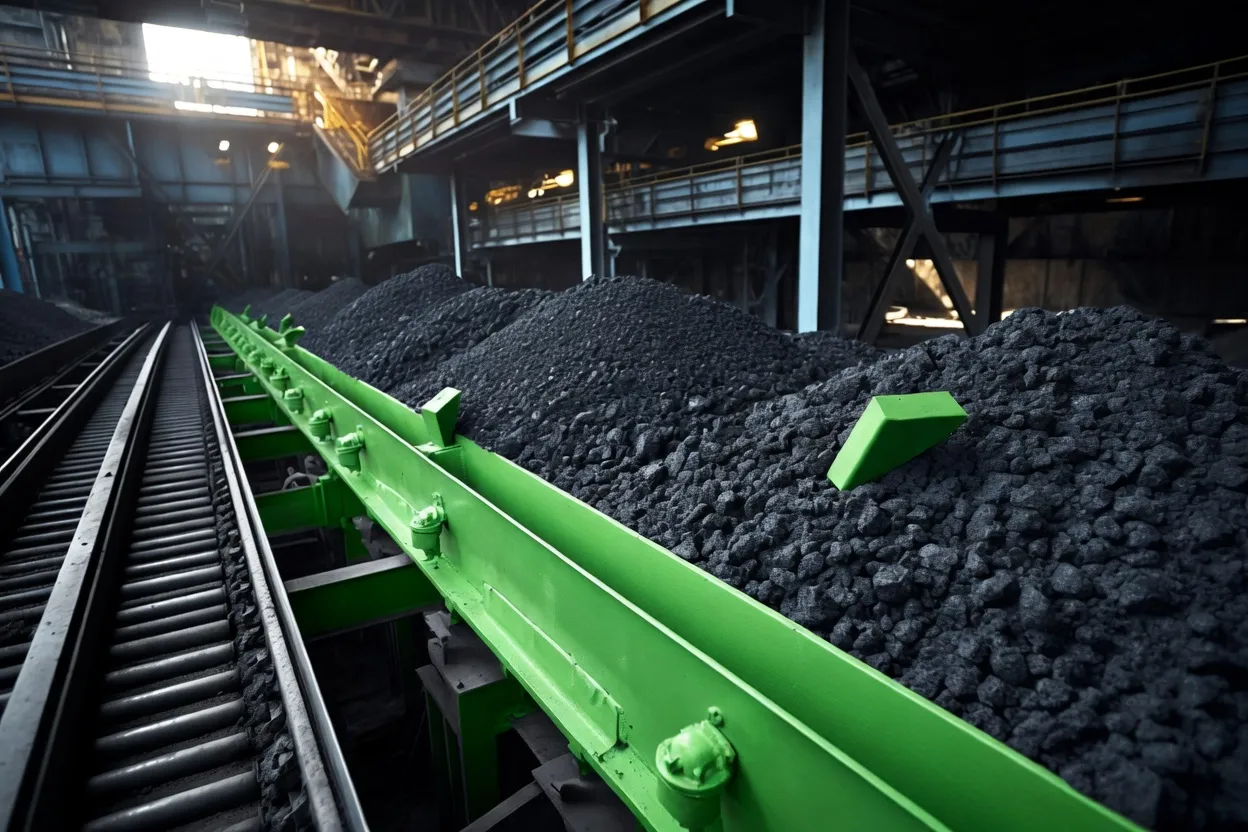
Serving Mining and Quarrying Operations Across England, Scotland, and Wales
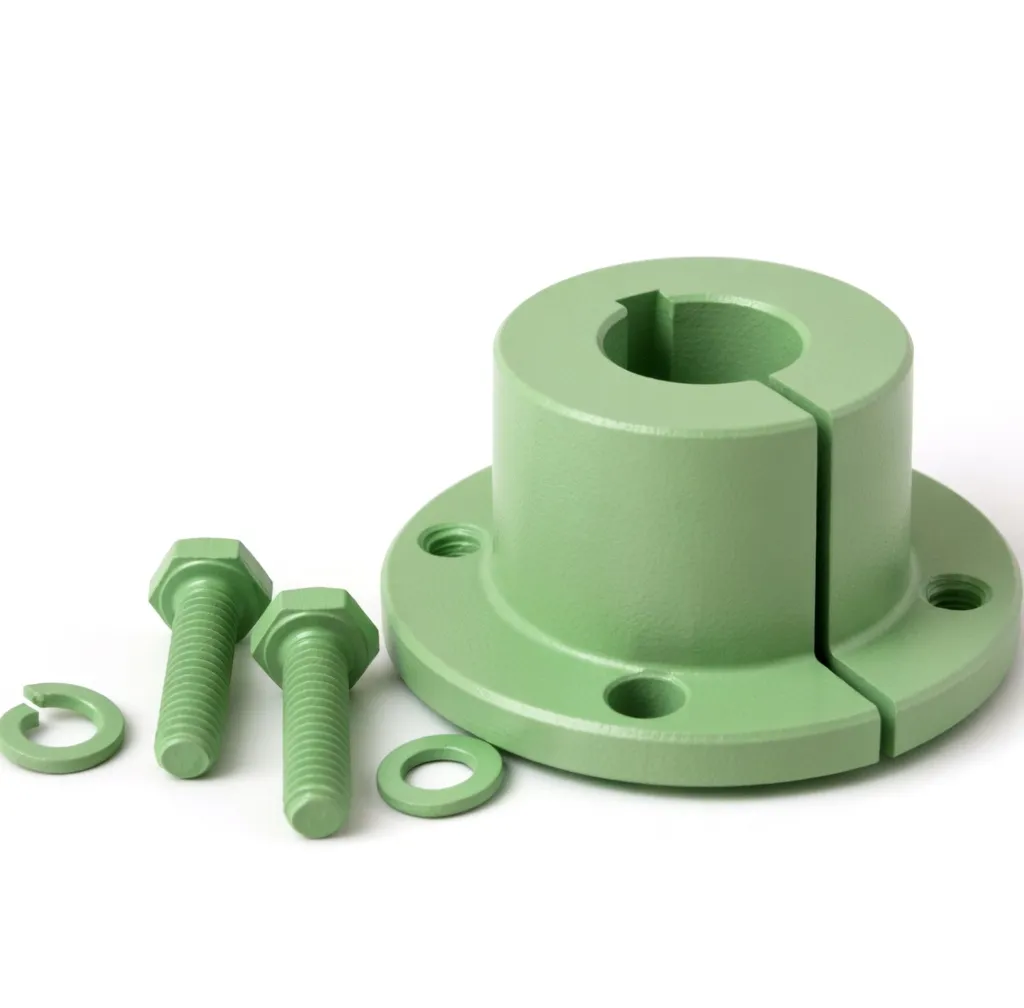 The United Kingdom has one of the most diverse and technically demanding mining and quarrying landscapes in Europe. Active hard-rock quarrying operations stretch from the Cairngorms granite belt in the Scottish Highlands, through the limestone country of the Peak District and the Yorkshire Dales, into the limestone and sandstone quarries of the Midlands and the South West. Coal recovery and surface mining operations continue across parts of South Wales, Yorkshire, and the North East. Coastal aggregate and bulk mineral terminals operate along the Thames Estuary, the Humber, the Clyde, and the Bristol Channel. QD bushings deployed across this range of environments — from sea-level tidal zones to high moorland sites exposed to freeze-thaw cycling — need to be specified with the local operating conditions in mind, not simply selected from a generic catalogue.
Ever Power’s technical support covers the full UK mining and quarrying geography. When a procurement manager at a Derbyshire aggregate operation specifies QD bushings to replace worn hub connections on their secondary screening belt drives, the selection recommendation accounts for the pH of local groundwater, the prevailing humidity levels in the screening building, the ambient temperature swing between summer and winter, and the specific motor and gearbox combination on each drive — not a one-size-fits-all product recommendation. When a Scottish hard-rock quarry requests a price comparison between ductile iron and stainless steel QD bushings for their primary crusher discharge belt, the advice comes with a service-life cost model that makes the total cost of ownership over a ten-year maintenance cycle transparent. This is how Ever Power QD bushings have established a track record across the UK mineral products industry.
Frequently Asked Questions: QD Bushings for Mining Conveyor Drives in the UK
What size QD bushing do I need for a 900 kW mining conveyor belt drive in the UK, and how do I calculate the correct bore diameter?
For a 900 kW mining conveyor drive at a typical pulley shaft speed of 50–100 rpm, the design torque at the drive shaft ranges from approximately 85 000 Nm to 170 000 Nm depending on speed, and after applying a service factor for mining shock-load duty (typically 2.0 to 2.5), the required QD bushing holding torque will point toward an E or F series bushing with a bore diameter between 90 mm and 130 mm. The precise selection depends on the actual shaft diameter shown on your gearbox output flange drawing, the keyway configuration, and whether you are running a single-end or dual-drive arrangement. Ever Power provides verified selection reports based on your motor nameplate data and gearbox specifications — contact [email protected] with your drive data sheet for a full written recommendation.
How much does it cost to replace or upgrade to QD bushings on a UK quarry conveyor drive system, and is there a price per unit I can budget from?
Unit prices for heavy-duty mining QD bushings vary with series and material specification, ranging from approximately £25 for a standard SH series grey iron bushing at the lighter end up to £380 or more for a large J series heat-treated alloy steel bushing. A complete fleet conversion for a UK quarry with ten to twenty drive heads — including supply, any shaft remediation work, and labour for installation — typically totals £4 000 to £18 000. Based on the maintenance hour savings and eliminated shaft replacements reported by converted UK operations, this investment is typically recovered within the first twelve months. Contact [email protected] for a site-specific budgetary quote based on your drive inventory.
Where can I find a reliable supplier of heavy-duty QD bushings for underground coal mining operations in Yorkshire, and what lead times should I expect?
Ever Power supplies QD bushings to underground and surface mining operations throughout Yorkshire and the wider northern England region. Standard heavy-duty mining series are despatched to UK addresses within five to ten working days. For Yorkshire underground coal recovery operations specifically, metric bore sizes matching European-sourced gearboxes and material grades compatible with the local acidic groundwater conditions are available from stock or manufactured to order. Custom bore sizes and non-standard configurations carry lead times of six to sixteen weeks. Get in touch via [email protected] for a current lead-time and availability confirmation.
Which QD bushing material grade is best for a continuously wet underground mining environment in Scotland or Wales, and how do I avoid hub seizure?
For the wet underground conditions typical of Scottish hard-rock mines and Welsh slate and coal operations, phosphate-treated ductile iron QD bushings with dry-film lubricant coating provide the best balance of corrosion resistance, impact toughness, and practical maintainability. In highly aggressive environments — acidic drainage tunnels, tidal-influence coastal workings — Grade 316 stainless steel QD bushings are the preferred option. Avoid standard grey cast iron bushings in continuously wet conditions: surface corrosion creates a rust bond between the bushing and hub bore within six to eighteen months that makes removal destructive rather than routine. Re-greasing the cap screw threads and the keyway at each inspection interval, regardless of bushing material, is equally important in preventing seizure.
How long does it actually take to remove and reinstall a QD bushing on a mining conveyor drive pulley underground, and what tools does the maintenance team need?
A trained two-person team familiar with QD bushings can remove and reinstall a drive pulley assembly — including cleaning the shaft and hub bore contact surfaces, inspecting the bushing, and re-torquing all cap screws to the specified value — in 45 to 90 minutes underground. The only tools required are a set of Allen keys or a socket set to match the cap screw size and a calibrated torque wrench for reassembly. Removal uses the same screws repositioned into the bushing’s jack holes to press the taper out — no heat, no hydraulic pullers, no specialist equipment unavailable underground. This compares directly to 4–8 hours for keyed interference-fit hubs, which routinely require heating equipment or hydraulic tools not safely usable in confined spaces.
Can Ever Power manufacture custom QD bushings to a non-standard bore size for older legacy mining machinery at a Scottish quarry, and what information do I need to provide?
Yes. Ever Power manufactures custom QD bushings to non-standard bore sizes — both imperial and metric dimensions outside the standard catalogue range — which is particularly relevant for Scottish quarrying operations running older British-made or continental European machinery with non-standard shaft dimensions. To obtain a quote and lead time, provide the shaft diameter, keyway width and depth, hub bore taper specification (or physical hub for measurement), and the application torque and operating environment. A detailed engineering drawing is produced for customer approval before manufacture begins. Lead times are typically eight to fourteen weeks for non-standard bore customs. Send enquiries to [email protected] with as much dimensional information as available.
What is the practical difference between a QD bushing and a taper lock bushing when choosing a connection for a high-power UK quarry conveyor belt drive?
Both systems use a tapered interface to generate shaft clamping force, but the QD bushing features a flanged design with multiple cap screws arranged around a full bolt circle, producing a significantly higher and more uniformly distributed clamping force for a given shaft size. The QD bushing is therefore the appropriate choice for high-power quarry conveyor drives in the UK — particularly where shaft diameters exceed 50 mm and installed motor power exceeds 200 kW — because it provides the torque capacity, shock resistance, and assembly precision that heavy mining drives require. Taper lock bushings remain suitable for lighter conveyors, fan drives, and auxiliary equipment where their more compact envelope size is the primary selection criterion. For any conveyor drive directly connected to a primary or secondary crusher circuit, a QD bushing is the safer and more durable specification.
© Ever Power | Heavy-Duty QD Bushings for Mining Conveyor Applications | UK Technical Support: [email protected]
edit by gzl