
Introduction
The Drive System That Keeps the Harvest Moving
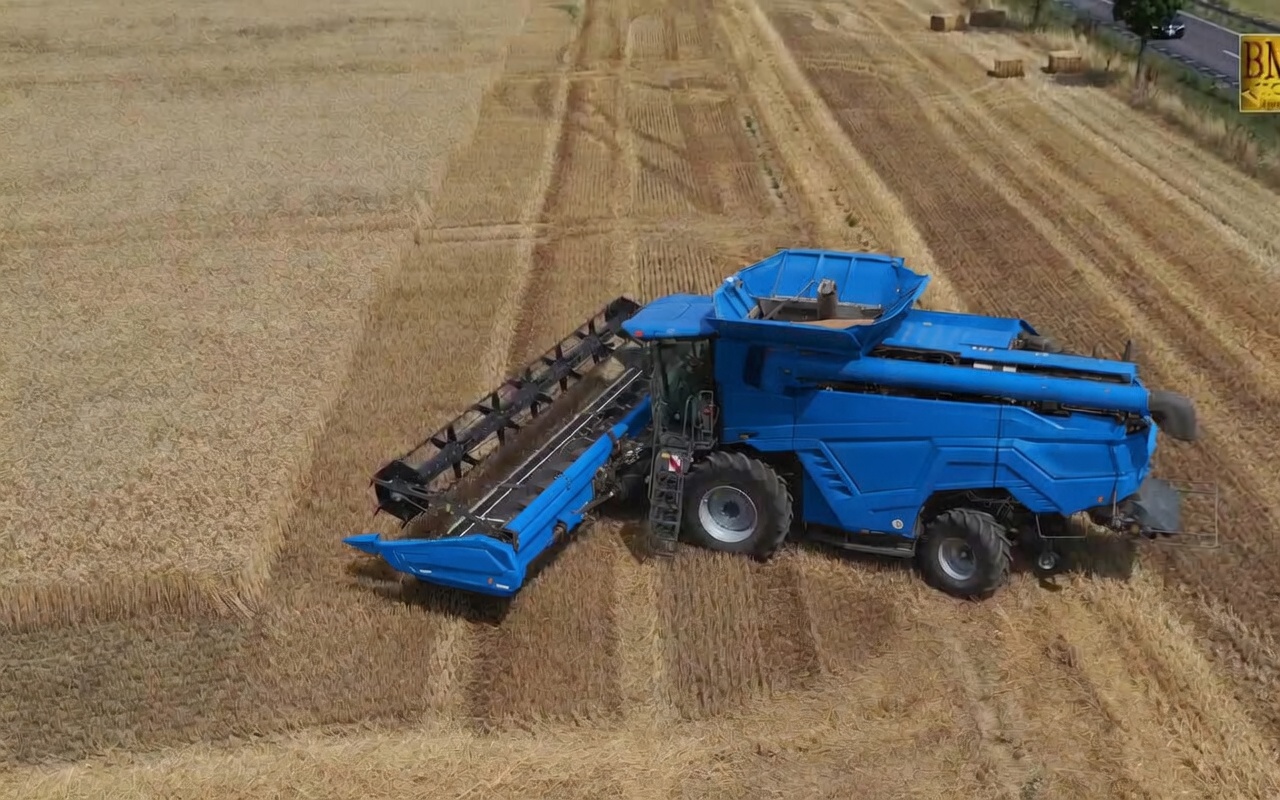 Britain’s arable farming industry operates on a mercilessly tight schedule. Across the wheat fields of East Anglia, the barley belts of Yorkshire, and the oilseed rape farms of Lincolnshire, combine harvesters must perform at peak capacity during a harvest window that can be as short as two to three weeks. Any mechanical failure during this period translates directly into unharvested crop — a financial loss that no farm business can easily absorb. The threshing drum assembly, which separates grain from straw at rotational speeds between 500 and 1,200 RPM, is among the most mechanically stressed components on the entire machine. Every kilogram of crop material passing through the drum places cyclic torsional and radial loads on the shaft, the drive pulleys, and the connecting hardware that holds them all together.
QD bushings — the widely used abbreviation for Quick-Detachable taper-lock bushings — have earned a firm place in the maintenance strategies of UK agricultural equipment workshops precisely because they solve two problems at once. Under load, a properly installed QD bushing delivers reliable, high-torque drive connection that outperforms conventional keyway set-screw hubs in terms of concentric load distribution. At service time, the same component releases from the shaft in minutes using only standard tools — no heating, no pressing, no risk of shaft damage. For a combine harvester that must return to the field within hours of a scheduled service, this speed of maintenance is not a convenience; it is a critical operational requirement.
The adoption of QD bushings across UK combine harvester fleets has been accelerated by OEM manufacturers and Tier 1 drivetrain component suppliers who recognise that a taper-lock connection system designed for rapid field maintenance is the correct specification choice for agricultural applications. For farm machinery dealers, independent agricultural engineers, and fleet maintenance managers across England, Scotland, and Wales, understanding how QD bushings work — and why they are the preferred solution for threshing drum drives — is the starting point for building a more reliable, lower-downtime harvesting operation.
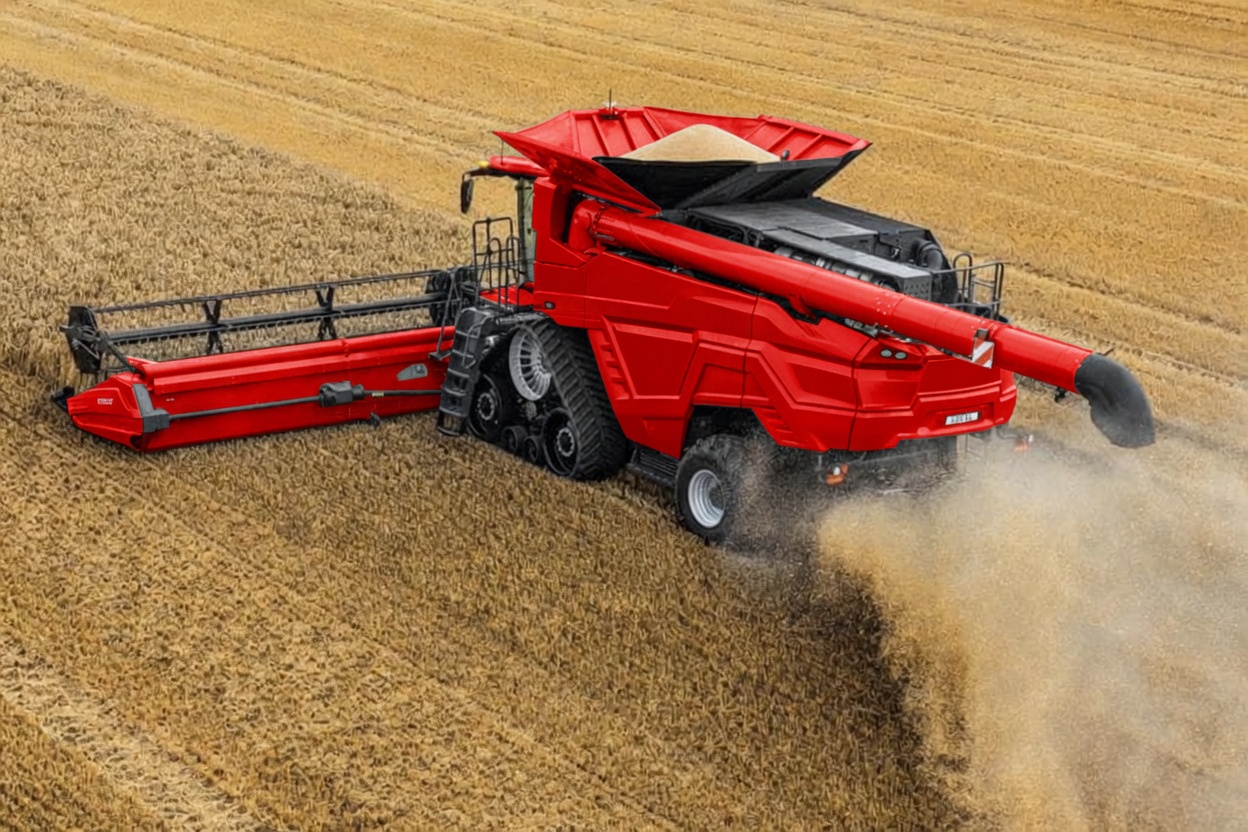
QD Bushings in combine harvester threshing drum drive applications — precision taper-lock design engineered for rapid seasonal disassembly and reliable high-torque service across UK grain farms.
Technical Background
Why Threshing Drum Drives Demand QD Bushings
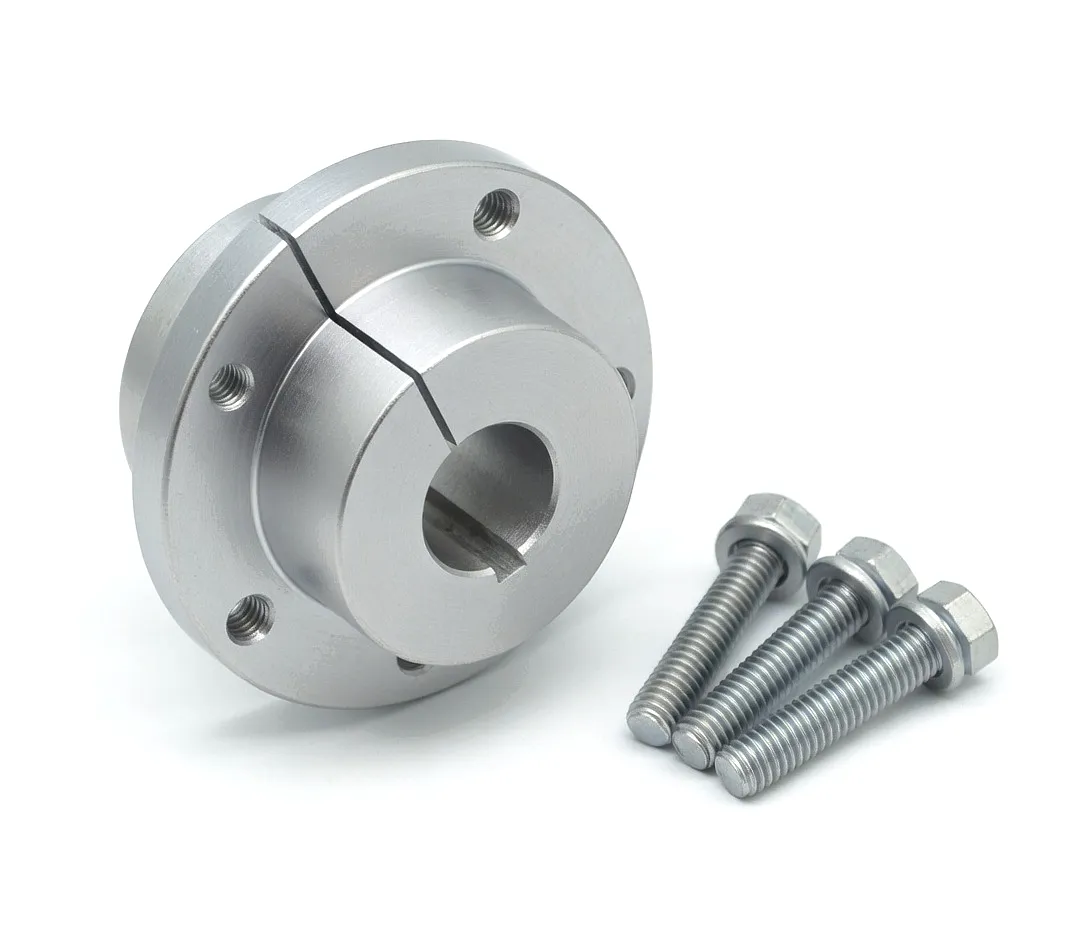 The threshing drum operates under a combination of mechanical stresses that few industrial applications replicate. As the drum rotates at operating speed, it handles continuously variable loading as crop feed rates change — dense bunches of wet barley entering the drum can spike the instantaneous torque demand far above the steady-state operating load. Combine harvesters on UK farms frequently operate for 12 to 16 hours per day at peak harvest, with only brief stops for grain tank unloading. During this entire period, the drive system must maintain consistent shaft-pulley grip without any degradation in torque transfer capacity. Conventional hub assemblies using keyways and set screws are vulnerable to fretting wear under these cyclic load conditions, gradually loosening until the keyway brinels into the shaft — a failure mode that often destroys both the hub and the shaft journal, requiring costly machining repair during the busiest period of the farming year.
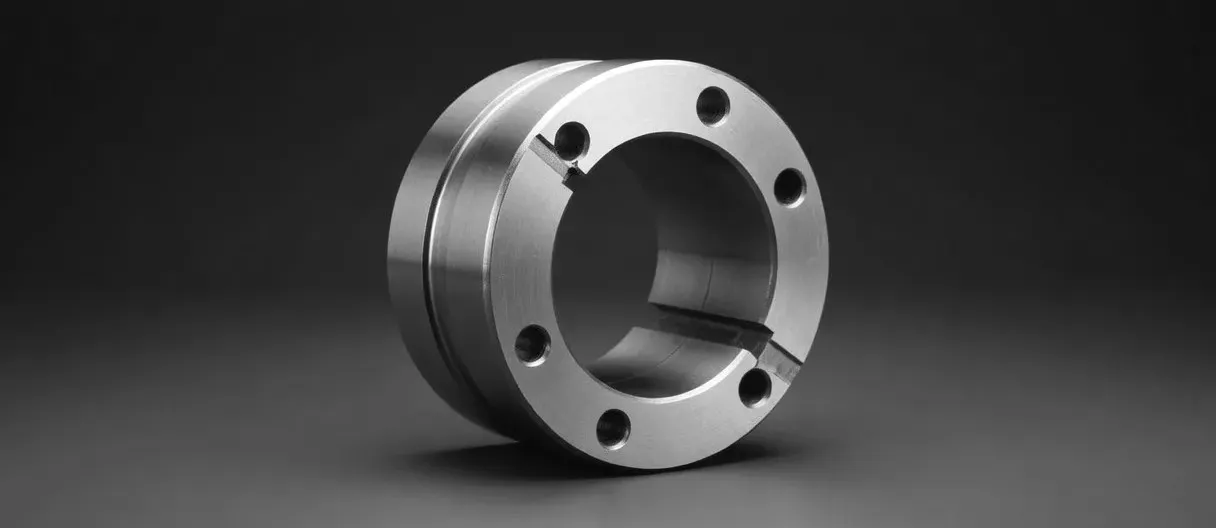
QD bushings address keyway fretting through their fundamental operating principle: the 1:8 taper between the bushing’s outer surface and the matching taper in the hub flange creates a high radial clamping pressure when the mounting bolts are tightened. This pressure is distributed uniformly around the full shaft circumference, not concentrated at a single keyway. The result is a friction-based torque transfer mechanism that remains secure under cyclic loading because the taper geometry locks the components together mechanically — the interference fit actually increases under tightening torque, rather than relaxing as a set-screw connection does.
Equally important for UK agricultural applications is the seasonal storage consideration. British combine harvesters typically enter storage in September or October and may not be recommissioned until the following July — a dormancy period of eight to nine months. Moisture penetration into hub assemblies is almost inevitable in typical British farm storage conditions: damp Dutch barns, unheated equipment sheds, and open-sided storage structures are all common across the UK’s farming estates. QD bushings address storage-corrosion problems through their split-flange design and integral jack-bolt holes. When the drive pulley must be removed the following spring, the jack bolts thread into dedicated extraction holes, bearing directly against the pulley hub face and forcing the tapered assembly apart even if surface corrosion has formed between the bushing and the shaft. This built-in extraction mechanism means that even a combine harvester that has sat through an unusually wet Lincolnshire winter can be disassembled for service without resorting to heat, impact tools, or hydraulic pullers — tools that carry a real risk of shaft and housing damage in an agricultural workshop environment.
Product Advantages
Six Reasons UK Agricultural Engineers Specify QD Bushings
Rapid Season-End Disassembly
The jack-bolt extraction mechanism built into every QD bushing eliminates the need for heat or pressed removal at season-end. On a combine harvester threshing drum, pulley removal time drops from over 90 minutes with corroded conventional hubs to under 15 minutes — directly reducing workshop labour costs during the pre-season overhaul period that UK farm machinery dealers face every spring.
Superior Torque Transfer
The 1:8 taper geometry creates full-circumference shaft contact, distributing clamping forces uniformly and providing torque capacities from 15 N·m to over 8,500 N·m depending on bushing series. This uniform distribution eliminates the concentrated stress found at keyway-and-set-screw connections, preventing the brinelling damage that progressively destroys conventional hubs on high-cycle agricultural drives.
Engineered for British Storage Conditions
Unlike press-fit hubs that can become permanently bonded to shafts during months in a damp barn, QD bushings retain their removability even after a full British off-season. The split design and integral extraction holes mean that a combine stored through a wet autumn and winter can still be disassembled in spring without torch, hydraulic press, or risk of shaft journal damage.
Cross-Brand Compatibility
QD bushings fit the standardised flanged pulley hubs used across multiple combine harvester brands — AGCO, Claas, John Deere, New Holland, and Case IH all use QD-compatible pulley hubs at various drive points. This cross-brand compatibility means a UK farm machinery workshop can stock a single range of QD bushings and cover the majority of their combine harvester service requirements.
Cost-Effective OEM & Aftermarket Value
Compared to OEM-branded hub assemblies, quality aftermarket QD bushings offer substantially lower unit costs while maintaining equivalent dimensional and mechanical specifications. For UK agricultural machinery distributors and parts suppliers serving farms across England, Scotland, and Wales, stocking competitive QD bushings is a direct way to build customer loyalty and increase service revenue.
Precision Balance for High-Speed Drums
Threshing drums operating at 1,200 RPM require drive components machined to close tolerances to prevent dynamic imbalance. Precision-machined QD bushings provide consistent bore-to-OD concentricity, ensuring that when the drive pulley assembly is completed, it runs true at operating speed without introducing vibration that would accelerate bearing wear in the drum shaft journals.
Technical Data
QD Bushing Technical Specifications for Agricultural Applications
The following table summarises the key technical parameters of the QD bushing range as applied to combine harvester threshing drum and drivetrain applications. All values are nominal; specific application requirements should be confirmed with our technical team before placing an order, particularly for non-standard shaft sizes or unusual operating conditions.
| Parameter | Specification | Agricultural Relevance |
|---|---|---|
| Bore Range | 12 mm – 150 mm | Covers threshing drum shaft diameters across all major combine brands operating in the UK |
| Maximum Speed | Up to 1,800 RPM | Exceeds typical threshing drum operating range of 500–1,200 RPM with safety margin |
| Torque Capacity | 15 N·m – 8,500 N·m | Suitable for drum shaft, cleaning shoe eccentric, and straw walker crankshaft drives |
| Standard Material | Close-grain cast iron ASTM A48 CL35 | Tensile strength ~240 MPa; sufficient for standard grain crop threshing applications |
| Optional Material | Ductile iron / Carbon steel | Recommended where stone ingestion or hard object impacts are a risk on UK farms |
| Taper Standard | 1:8 QD taper | Self-locking under load; engineered for repeated assembly and disassembly across seasons |
| Surface Treatment | Black oxide / Phosphate | Baseline corrosion protection for indoor agricultural barn storage conditions |
| Available Series | JA, SH, SDS, SD, SK, SF, E, F, J, M, N | Full spectrum of combine drivetrain applications covered by a single supplier |
| Temperature Range | −30°C to +120°C | Covers full range of UK summer harvest and cold morning start-up conditions |
| Standards | AGMA, BS EN, ISO compatible | Direct interchange with BS and ISO standard QD hub flanges used on UK agricultural machinery |
Application Scenarios
Where QD Bushings Are Used in Combine Harvester Threshing Systems
01
Threshing Drum Main Drive Pulley
The primary application for QD bushings on a combine harvester is the large V-belt pulley that drives the threshing drum shaft from the machine’s main drivetrain. This pulley is typically 400 mm to 600 mm in diameter and receives belt tension from a multi-V or poly-V drive belt connected to the engine’s power take-off system. The radial and torsional forces at this connection point are among the highest in the entire combine drivetrain, and the QD bushing must maintain its shaft grip under both the pre-tension load of the drive belt and the dynamic torque surges that occur when crop feed rates change sharply. For UK farms cultivating winter wheat varieties with heavier straw structures — common in the East Midlands and across East Anglia — these torque spikes can be particularly pronounced, and the QD bushing’s full-circumference clamping is precisely what prevents the micro-slip that would eventually result in keyway brinelling on a conventional hub assembly. When pre-season workshop time arrives, the QD bushing’s quick-release mechanism means pulley removal and inspection can be completed by a single technician in a fraction of the time that conventional hub removal requires.
02
Cleaning Shoe Eccentric Drive
Below the threshing drum, the cleaning shoe assembly uses oscillating sieves and chaffer pans to separate grain from chaff. These assemblies are driven by eccentric crankshaft mechanisms, with V-belt pulleys at each drive point. QD bushings provide the shaft-to-hub connection at each eccentric crankshaft pulley, offering an additional practical benefit in this application: seasonal throw adjustment. Because the eccentric mechanism can be repositioned on the shaft for different crop types — varying the oscillation amplitude for light versus heavy or wet crops — the QD bushing’s quick-release capability means these adjustments can be made without specialist tooling. An agricultural engineer can reposition the hub on the shaft, retime the eccentric throw, and re-tighten the QD bushing in a matter of minutes, without workshop press or heat equipment. This operational flexibility is particularly valuable for UK farms that grow multiple crops on the same equipment, such as alternating between winter barley, oilseed rape, and wheat harvesting across different fields during the same harvest season.
03
Straw Walker Crankshaft Drive
The straw walker assemblies — large reciprocating rack structures that convey threshed straw towards the machine’s rear outlet — are driven by multi-throw crankshafts with V-belt pulleys at one end. On most conventional combine designs, these crankshafts are among the largest and heaviest rotating assemblies in the machine, and their drive pulleys are correspondingly large. QD bushings at each crankshaft pulley connection allow the entire straw walker assembly to be withdrawn laterally from the combine body for bearing inspection and replacement — a procedure typically necessary every two to three seasons on high-use machines. Without QD bushing connections, this procedure requires hydraulic pullers and carries the risk of shaft journal damage. With QD bushings in place, even an experienced farm mechanic working alone can complete the straw walker crankshaft removal as part of a planned off-season service, reducing the need for specialist workshop attendance and the associated cost that many UK farming businesses are trying to minimise.
Customer Success
Case Study: Worcestershire Agricultural Machinery Distributor
24
Combines Serviced
40+
Workshop Hours Saved/Year
95→14
Minutes Per Removal
SH/SD/SK
Series Used
A long-established agricultural equipment distributor based in Worcestershire, operating a full-service workshop for farms across Shropshire and Herefordshire, came to us in early 2022 with a persistent maintenance problem. Across their customer fleet of John Deere and Claas combine harvesters, the workshop was regularly encountering seized threshing drum pulleys during pre-season overhauls. The machines had been stored through a wet autumn and winter, and the original OEM hub assemblies on the drum shafts had corroded to the point where conventional removal tools were no longer effective. Each seized pulley required heat treatment and hydraulic press work that extended the average workshop job time considerably and, in several cases, caused collateral damage to shaft journals — damage that then required specialist machining repair at additional cost.
After a technical review of the machines’ drive specifications, we supplied SH, SD, and SK series QD bushings sized to match the drum shaft diameters across the 24-machine fleet. The workshop fitted the QD bushings during the 2022 pre-season preparation, replacing the seized hub assemblies at the same time. When the 2023 pre-season service cycle began, the QD bushings came apart cleanly using only a standard spanner and the integral jack-bolt extraction system — no heat, no hydraulic tools, no shaft damage. The average drum pulley removal time across the fleet dropped from approximately 95 minutes to just 14 minutes per assembly, a reduction of over 85%.
Over 24 machines, each requiring removal of two to three drive pulleys per annual service, the total workshop time saving exceeded 40 hours per annual service cycle — effectively a full working week for one technician. The distributor subsequently standardised QD bushings across all their combine harvester maintenance recommendations and began stocking them as an aftermarket part for independent farm mechanics throughout the region. The elimination of shaft damage incidents provided a further saving equivalent to two to three specialist machining repair jobs per year — a secondary benefit not initially included in their business case but quickly recognised as equally significant.
Testimonials
What UK Agricultural Engineers Say
We’ve been fitting these QD bushings on our Claas combine drum drives for two seasons and the difference at service time is remarkable. What used to be a job we genuinely dreaded every spring — struggling with corroded hubs, risking shaft damage — now takes under 20 minutes per machine. For a workshop turning over 30-plus combines a year, that time saving is genuinely significant to our bottom line.
Robert M.
Workshop Manager — Agricultural Machinery Dealership, Lincolnshire, England
★★★★★
We supply spare parts to agricultural contractors across central Scotland and we’ve seen a real shift towards QD bushings over the last few years. Farmers who’ve experienced conventional hub seizures know exactly why these components are worth the slightly higher upfront investment. Price per unit is competitive and delivery has been reliable — no issues with supply even during the spring rush period when every agricultural parts supplier is under pressure.
Fiona T.
Procurement Manager — Agricultural Parts Supplier, Perthshire, Scotland
★★★★★
As an OEM drivetrain component supplier, dimensional consistency is everything. I’ve tested several QD bushing sources and the bore tolerances and taper geometry on these parts have been consistently within specification across multiple batch deliveries. For our Welsh manufacturing facility supplying agricultural OEM customers across the UK, that consistency allows us to quote with confidence and eliminates the costly rework that inconsistent-quality bushings create.
Gareth P.
Technical Director — OEM Drivetrain Components Manufacturer, Swansea, Wales
★★★★★
Manufacturing & Custom Supply
Custom QD Bushings for UK Agricultural OEM & Aftermarket
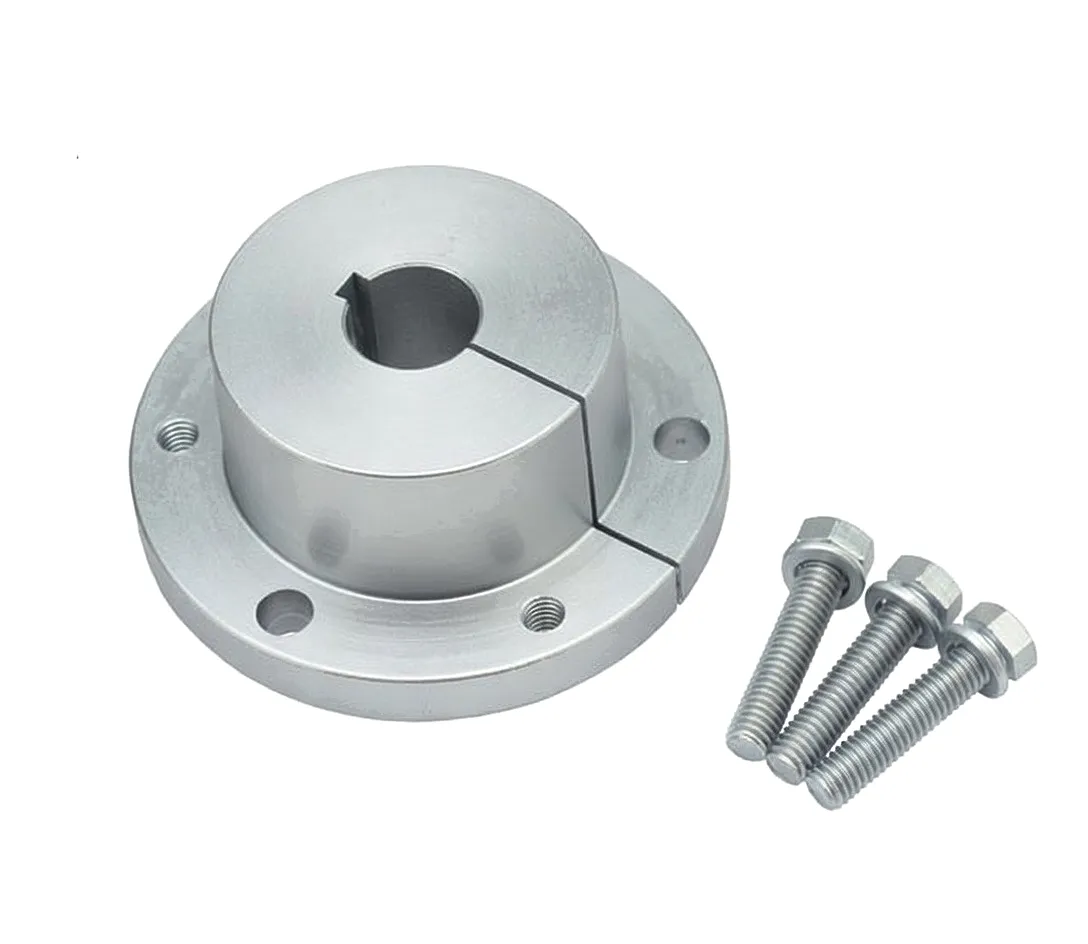 Our manufacturing facility produces QD bushings across the full standard dimensional range and offers an extensive custom engineering programme designed specifically for agricultural OEM customers, combine harvester rebuild specialists, and agricultural machinery manufacturers operating in the United Kingdom. The UK agricultural machinery sector has some specific requirements that differ from general industrial QD bushing specifications, and our technical team has the depth of experience to support those requirements from initial technical enquiry through to volume production delivery. Whether you are a Lincolnshire-based agricultural parts distributor looking for a reliable stocking source, a Scottish agricultural contractor requiring emergency replacement components ahead of harvest, or a Welsh OEM manufacturer developing a new threshing system design that requires custom-dimensioned bushings, our capabilities are built to accommodate you.
⚙️ Non-Standard Bore Sizes
Custom bore diameters machined to metric or imperial specifications for non-standard combine harvester shaft journals and legacy machine rebuild programmes.
⚙️ Special Material Grades
Ductile iron, carbon steel, and stainless options for high-impact drive points, corrosion-critical environments, and high-torque OEM applications across UK agricultural machinery.
⚙️ Enhanced Surface Coatings
Zinc phosphate, hot-dip galvanise, or customer-specified corrosion treatments for machines stored in exposed conditions on UK farm estates.
⚙️ OEM Branding & Packaging
Private-label packaging, custom part numbering, and branded bagging services for UK agricultural parts distributors and OEM supply programmes.
⚙️ Volume Supply Programmes
Factory-direct pricing and scheduled delivery arrangements for UK agricultural distributors requiring regular volume orders aligned with the British farming calendar.
⚙️ Application Engineering Support
Dedicated technical advice for QD bushing selection, torque rating, installation torque specification, and troubleshooting for UK agricultural machinery engineers and OEM design teams.
Lead times for custom-manufactured QD bushings are typically four to six weeks from drawing approval — a timeline that comfortably accommodates the pre-season purchasing cycles of the UK agricultural machinery industry. Standard series items are held in stock for immediate dispatch, with express shipping options available for pre-harvest urgency orders. Our engineering team can work from your shaft and hub dimensional data to produce a complete drawing for review before manufacture commences, ensuring that the finished QD bushings meet your exact specification requirements from the first production batch.
FAQ
Frequently Asked Questions About QD Bushings for Combine Harvesters
edit by gzl