
Port Bulk Cargo Terminals · Power Transmission Engineering · United Kingdom
QD Bushings for Bucket Wheel Stacker-Reclaimers:
Engineering Salt-Resistant, Extreme-Torque Reliability Into UK Port Bulk Cargo Terminals
When hundreds of thousands of tonnes of iron ore, coal, and grain move through a British port every month, the mechanical connections at the heart of your stacker-reclaimer cannot be a weak link. That is precisely what QD bushings were engineered to prevent.
 Bucket wheel stacker-reclaimers are among the most mechanically punishing pieces of capital equipment found anywhere in British industry. Operating continuously at major bulk cargo facilities — from the Port of Immingham on the Humber to Tees Dock in the northeast and the Clydeport operations in Scotland — these machines are tasked with excavating, conveying, and re-depositing millions of tonnes of material each year without pause. The drive systems that power them operate at low rotational speeds but transmit torque loads that dwarf almost any other rotating machinery you would encounter in a manufacturing plant. The shaft-to-hub connections at the core of those drive systems carry a load that is, quite literally, enormous: peak gear reducer output torques at large iron ore terminals can reach 500,000 Nm or more. Getting the shaft coupling specification right at these connection points is not a detail — it is a fundamental engineering decision that determines whether the machine operates reliably for decades or becomes a recurring, expensive problem.
QD bushings — Quick Detach bushings — have become the standard solution for this challenge at heavy port machinery installations across the United Kingdom and globally. Their self-locking tapered bore design, precision machined tolerances, and complete interchangeability across hub manufacturers make them uniquely well suited to the combination of extreme torque transmission, infrequent but necessarily rapid maintenance access, and the relentlessly corrosive coastal environments that define British port operations. This article examines the engineering reality of bucket wheel stacker-reclaimer drivetrains in detail, explains exactly how QD bushings address their most demanding requirements, and provides practical guidance for UK port maintenance engineers and procurement managers making specification decisions on new equipment or replacement components.
The Real Mechanical Demands of a Bucket Wheel Drive System
 The bucket wheel at the front of a stacker-reclaimer typically measures between 5 and 10 metres in diameter and carries 8 to 16 individual excavating buckets arranged around its circumference. It rotates at a deceptively modest 5 to 15 RPM, but the gear reducer output torque required to keep that wheel turning under full bucket load is anything but modest. At a medium-sized UK coal terminal handling 1,500 tonnes per hour, the bucket wheel main drive torque routinely exceeds 200,000 Nm during compacted material reclaim operations. At large iron ore import berths like those on the Humber, where throughput rates approach 3,000 tonnes per hour, peak torques at the reducer output shaft can reach 400,000 to 500,000 Nm. These are not theoretical worst-case numbers — they are the design loads that the shaft coupling at the reducer output must transmit reliably on every operating cycle.
Compounding the torque challenge is the shock loading character of bucket wheel operation. Each time a bucket strikes the face of a compacted ore or coal stockpile, a sudden impact load travels through the entire drive train from the bucket wheel back to the gearbox. These load spikes — which can be three to five times the average running torque — occur multiple times per revolution and create a high-frequency fatigue environment at every shaft coupling in the system. Keyed interference-fit hubs, which rely on a keyway root as a stress concentration point for torque transmission, are particularly vulnerable to this fatigue cycle. The keyway root becomes a crack initiation site under repeated shock loading, and the resulting fretting and material fatigue progresses silently until a visible failure occurs — almost always at the worst possible operational moment.
Beyond the mechanical loading, the coastal environments of UK port terminals introduce a corrosion challenge that significantly complicates maintenance operations on conventional shaft couplings. Salt-laden air at terminals like Tees Dock, Immingham, Tilbury, and the Humber ports attacks exposed steel surfaces aggressively. An interference-fit hub installed on a carbon steel shaft will, given sufficient time in a salt spray environment, develop galvanic and crevice corrosion between the bore and shaft surfaces that effectively welds the two components together. Removing such an assembly in the field — often in a confined space within the bucket wheel head structure, during a tide-dependent maintenance window, in conditions ranging from wet North Sea fog to sub-zero January temperatures — requires hydraulic pulling equipment, applied heat, or both. The shaft surface damage that results from these extraction methods is a significant secondary cost that rarely appears in initial maintenance planning.
The QD bushing system was developed specifically to address all three of these challenges simultaneously: extreme torque capacity without stress concentration, resistance to the corrosion-driven seizure that plagues interference-fit assemblies, and reliable field removability without special equipment or shaft damage risk. Understanding why it achieves these results requires looking at the engineering principles behind the tapered clamping mechanism in some detail.
How the QD Bushing Mechanism Solves Heavy Port Machinery Problems
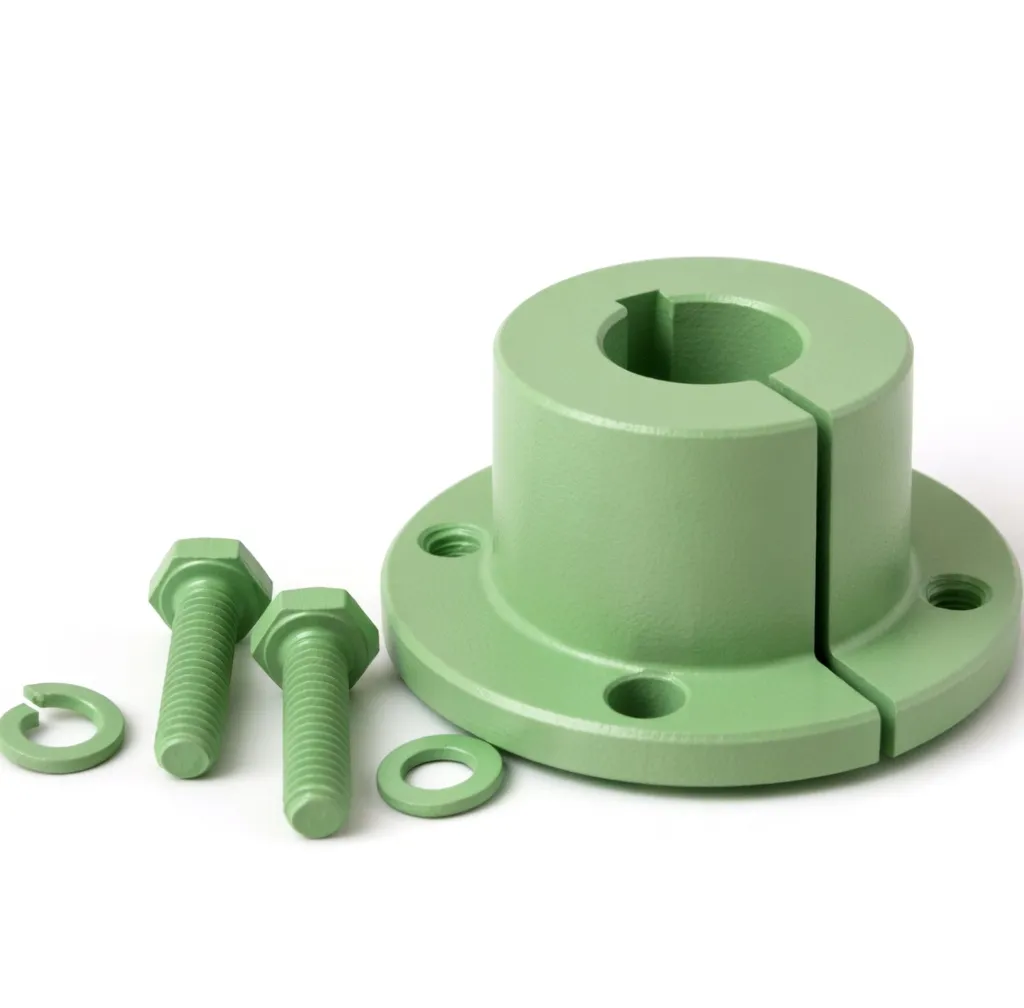
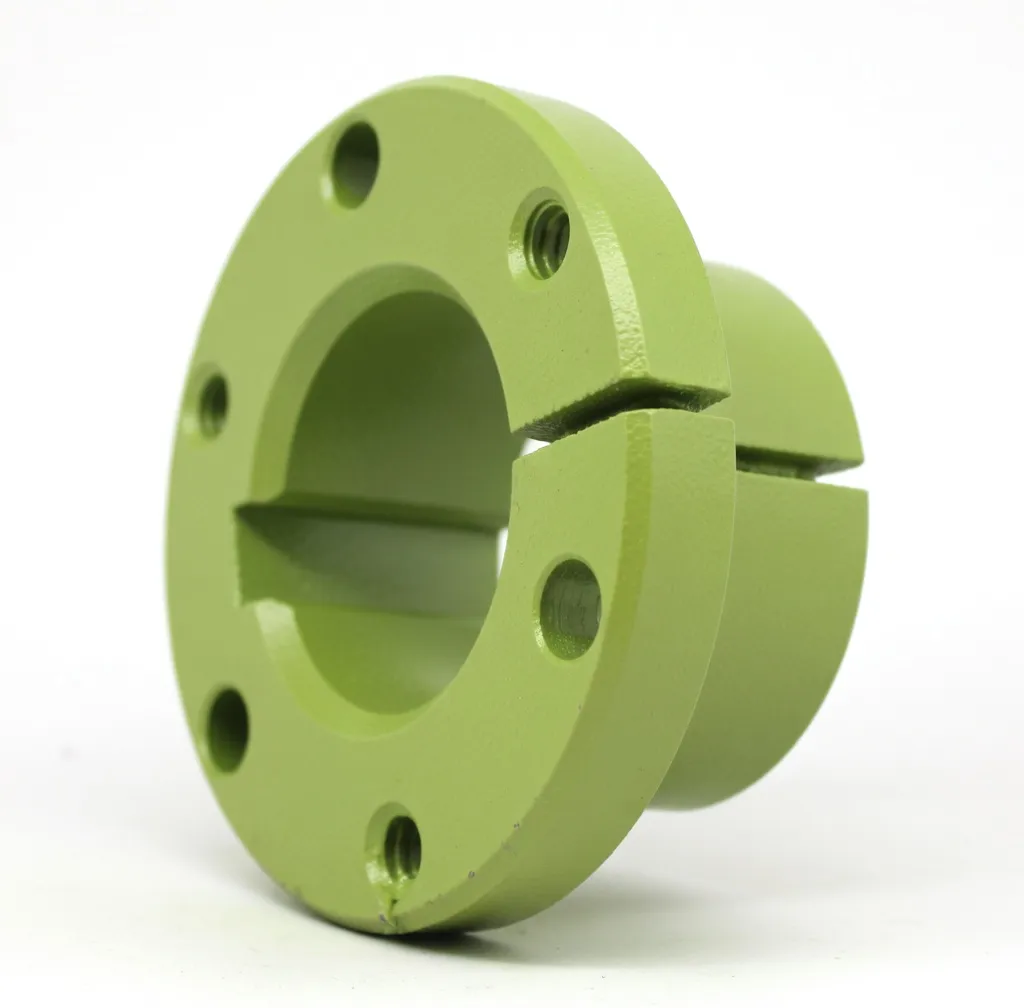
The operating principle of a QD bushing is straightforward but mechanically sophisticated: a split, tapered bushing body — machined to a precise 1:8 taper ratio — is drawn axially into the matching taper bore of a sprocket, coupling hub, or pulley by a set of flange cap screws tightened to a specified torque. The wedging action of the taper converts this axial force into a powerful, uniform radial clamping pressure applied symmetrically around the full circumference of the shaft. This 360-degree clamping force generates the friction-based torque transmission that QD bushings depend upon, with the keyway (where fitted) acting as a secondary locating and safety feature rather than the primary load carrier.
The critical engineering insight is what happens at the 1:8 taper angle specifically. At this geometry, the friction angle of the mating surfaces exceeds the included half-angle of the taper itself, which means the assembly is self-locking in the axial direction. Once the cap screws have been tightened to the correct installation torque and the taper surfaces are fully engaged, the radial clamping force sustains itself without requiring the cap screw bolt tension to remain intact continuously. This distinguishes QD bushings fundamentally from straight-bore clamping collars and hydraulic taper lock systems, which rely on maintained bolt preload throughout service. In the vibration-rich environment of a bucket wheel drive — where every operating cycle involves repeated impact loading events — maintaining clamping force through a self-sustaining mechanical geometry rather than a bolt-dependent preload is a genuine engineering advantage that translates directly into improved long-term reliability and reduced inspection frequency.
The removal mechanism is equally well engineered. The QD bushing flange contains two sets of threaded holes: the installation holes used to draw the taper into engagement, and dedicated extraction holes that allow the same cap screws to be repositioned and used as jackscrews bearing against the hub face. Tightening these jackscrew bolts applies a controlled, progressive axial force that drives the taper out of engagement in a smooth, even motion — without the uncontrolled impact loading of a drift and hammer, without heat application, and without hydraulic tools. For a maintenance team working inside the confined bucket wheel head structure on a North Sea estuary dock, the ability to complete a bushing change with a standard torque wrench and a set of metric hex keys — and to do so reliably regardless of how long the previous bushing has been in service — is commercially and practically significant.
The salt corrosion problem is addressed through both the removal mechanism and material selection. Because QD bushings are never installed with interference pressure between the bore and shaft — only between the taper and hub seat — the shaft surface itself remains free from the aggressive bore-to-shaft corrosion that seizes interference-fit assemblies. Any corrosion that does develop on the exposed external surfaces of the bushing can be addressed with appropriate protective coatings on the bushing body without compromising the core functionality of the taper clamping mechanism.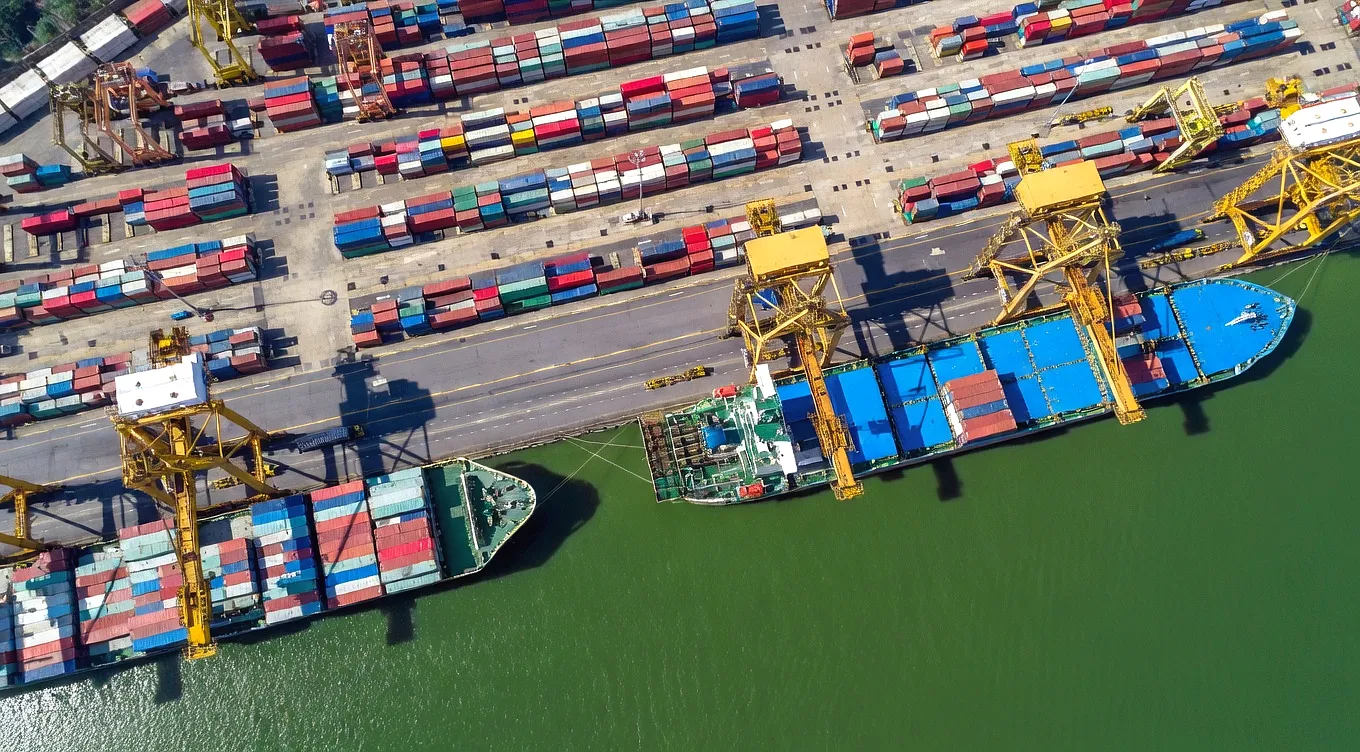
Technical Specifications: QD Bushings for Bucket Wheel Stacker-Reclaimer Service
The specification parameters below reflect standard and heavy-duty industrial grades appropriate for large bucket wheel stacker-reclaimer installations at UK bulk cargo ports. Custom grades and non-standard bore sizes are available on application to the Ever Power engineering team.
| Parameter | Standard Specification | Port Application Notes |
|---|---|---|
| Bore Range | 25 mm – 200 mm (standard) | Custom up to 300 mm for legacy main shafts |
| Taper Ratio | 1:8 self-locking taper | Friction angle exceeds taper angle — self-sustaining clamp |
| Max Torque Capacity | Up to 280,000 Nm (standard grades) | Heavy-duty series up to 600,000 Nm on request |
| Standard Material | ASTM A536 Ductile Iron Grade 65-45-12 | 448 MPa tensile, 12% elongation — shock tolerant |
| Corrosion Grade Option | Hot-dip galvanised C45 or SS 316L | Recommended for Humber, Tees, Thames estuaries |
| Galvanising Standard | BS EN ISO 1461, min 85 µm zinc | Sacrificial protection for salt spray environments |
| Bore Surface Finish | Ra 0.8 – 1.6 µm | Consistent clamping force under shock loading |
| Keyway Standard | Parallel keyway to DIN 6885 | Keyless bore option for smooth-shaft assemblies |
| Operating Temperature | -30°C to +150°C | Well suited to UK winter port operating conditions |
| Hub Bolt Pattern | ANSI B29.1 / JIS B1801 compatible | Interchangeable with major OEM sprocket/pulley hubs |
| Cap Screw Grade | Grade 10.9 / 12.9 alloy steel | A4-70 stainless available for marine atmosphere |
| Lead Time (standard) | 3–7 working days, UK mainland delivery | Expedited airfreight for urgent port shutdowns |
Material Options and Engineering Principles
⚙
Ductile Iron Grade 65-45-12 — The Standard Workhorse
ASTM A536 ductile iron in the 65-45-12 grade is the foundation material for heavy-duty QD bushings in bucket wheel stacker-reclaimer applications. The designation reflects its mechanical properties: 65,000 psi (448 MPa) minimum tensile strength, 45,000 psi (310 MPa) yield strength, and — the characteristic that makes it genuinely suitable for shock-loaded port machinery — a minimum elongation of 12 percent. This elongation figure is not an academic specification. It means the bushing body can deform slightly under an impact overload event before fracturing, absorbing the energy spike that would crack a grey cast iron component outright. The spheroidal graphite microstructure of ductile iron is what delivers this toughness: unlike the flake graphite in grey iron, which acts as a network of pre-existing cracks, the nodular graphite particles in ductile iron allow controlled plastic deformation under extreme load. For UK port applications where the machine is not directly immersed in seawater, ductile iron bushings protected with a zinc-rich epoxy primer and polyurethane topcoat provide excellent corrosion protection at a very competitive cost per unit.
🌊
Marine-Grade and Salt-Resistant Options for UK Coastal Ports
For stacker-reclaimers operating at directly exposed coastal terminals — the seaward berths at Immingham, the estuarine faces of Tilbury on the Thames, or the exposed Tees and Tyne terminal locations in northeast England — the combination of salt mist, frequent rain, and intermittent spray creates a corrosion rate that bare ductile iron or carbon steel cannot sustain indefinitely. In these environments, Ever Power recommends C45 low-alloy carbon steel QD bushings with full hot-dip galvanising to BS EN ISO 1461 standard. The galvanising process produces a minimum zinc coating thickness of 85 µm, delivering genuine sacrificial protection: the zinc corrodes preferentially, protecting the underlying steel even where the coating is mechanically damaged by handling or installation. For terminals with direct seawater contact risk — dock-face equipment, quayside conveyor drive systems, or installations that experience regular washdown with seawater — austenitic stainless steel 316L QD bushings are the definitive solution. The 316L grade’s molybdenum content provides resistance to chloride-induced pitting corrosion that 304-grade stainless cannot match in marine environments, and the material’s passive oxide film reforms spontaneously if mechanically disturbed. The service life premium in direct marine atmosphere exposure justifies the higher unit cost comfortably when assessed against reduced maintenance intervention frequency.
📈
The Self-Locking 1:8 Taper — Why the Geometry Matters
The 1:8 taper — a radial interference of 1 mm per 8 mm of axial engagement depth — is the engineering foundation of the entire QD bushing system, and the specific choice of this angle is not arbitrary. At a half-included angle of approximately 3.6 degrees, the coefficient of friction between typical machined steel surfaces (typically 0.12 to 0.15 for lubricated interfaces) produces a friction angle that exceeds the taper angle by a comfortable margin. This means the assembly is self-locking in both directions: the taper resists both further engagement and self-withdrawal under axial load. In practical terms for a bucket wheel drive, it means that the cyclic axial forces generated by shaft flex and misalignment under operating load cannot progressively drive the bushing out of engagement — a failure mode that plagues competitor taper lock systems using steeper included angles outside the self-locking geometry. The clamp force established during installation is retained through the service life of the component without re-tightening, provided the installation torque specification is correctly followed. This self-sustaining geometry is one of the core reasons that properly installed QD bushings in bucket wheel applications consistently outlast alternative coupling systems in long-term fatigue service.
Four Critical QD Bushing Application Points on a Stacker-Reclaimer
1 · Bucket Wheel Main Drive Shaft
The output shaft of the bucket wheel planetary gearbox — typically a solid or hollow shaft between 120 mm and 200 mm in diameter at large UK terminals — connects to the bucket wheel hub assembly via a heavy-duty QD bushing or matched pair of bushings in a double-engagement hub arrangement. This is the single highest-torque connection in the entire machine, and the location where the performance difference between QD bushings and alternative coupling systems is most visible. The ability to achieve a precise, calibrated interference fit using a standard torque wrench applied to the cap screws — rather than requiring a hydraulic press, purpose-built tooling, or heat application in the confined geometry of the bucket wheel head — transforms a maintenance operation that would otherwise take two full days into a task that two experienced technicians can complete in under six hours. That time saving, multiplied across the multiple planned maintenance windows that occur over a stacker-reclaimer’s 25-35 year service life, represents a very material reduction in the total ownership cost of the machine.
2 · Slewing Ring Drive Pinion Shaft
The upper machine structure of a stacker-reclaimer rotates through a large-diameter slewing ring bearing, driven by one or more motor-gearbox units whose output pinions engage the slewing ring gear. QD bushings on the pinion drive shafts give maintenance teams the ability to remove and reposition individual pinions for wear compensation without disturbing the gearbox or bearing housing alignment — a significant benefit when managing the accelerated pinion wear that abrasive coal fines and iron ore dust cause at UK bulk terminals. At ports handling coking coal or processed ore fines, slewing pinion wear is an accepted maintenance cost; what QD bushings change is the time and complexity of managing that wear. A worn pinion connected via a QD bushing can be repositioned or replaced in a fraction of the time required for a conventionally coupled unit, reducing the stockyard downtime attributed to slewing system maintenance by a measurable amount each year.
3 · Luffing Winch Drum Shaft
The luffing winch that raises and lowers the boom arm to adjust reclaim depth across the stockpile profile operates a wire rope drum driven through a dedicated gearbox. This drum shaft experiences some of the most severe transient torque events in the entire machine: each time the brake releases and the boom begins to lower, the full gravitational load of the elevated boom arm — which can represent several tonnes of steel — generates a starting torque spike that can be three to five times the steady-state running torque. Conventional keyed couplings on luffing winch shafts develop progressive fretting wear at the keyway root under these repeated torque spike cycles, a process that is difficult to detect until measurable backlash appears in the system. QD bushings eliminate the keyway root stress concentration by distributing the shock load uniformly across the full shaft circumference, significantly extending the fatigue life of both the bushing body and the shaft end under this demanding duty. For UK port operators where the luffing system is in daily use — adjusting boom height at each material type transition — this fatigue life improvement has a direct maintenance cost implication.
4 · Travelling Gantry Drive Sprockets
Most stacker-reclaimers travel along a fixed-rail track running the full length of the stockyard, powered by travel drive units using chain-and-sprocket or rack-and-pinion arrangements. The drive sprockets within these systems are connected to the travel gearbox output shaft via QD bushings, at torque levels substantially lower than the bucket wheel main drive but in an exposure environment that is often considerably more severe. Track-level equipment at UK port stockyards sits directly in the path of rain, sea spray, dust, and in winter, road salt contamination from gritting vehicles operating on adjacent haul roads. Specifying hot-dip galvanised or stainless steel QD bushings for travel drive sprockets is a straightforward, cost-effective decision that extends the maintenance inspection interval significantly compared to unprotected ferrous components in the same location. The relatively modest price differential between standard and corrosion-resistant QD bushings is typically recovered within a single maintenance cycle in the form of avoided inspection and replacement labour costs.
Why UK Port Engineers Specify QD Bushings Over Alternatives
⚡ Zero Specialist Tooling — Standard Hex Keys Only
Installation and removal of QD bushings requires nothing beyond standard metric hex keys and a calibrated torque wrench — tools that every port maintenance technician already carries. There are no hydraulic pulling tools to source and transport to the machine location, no heating equipment to coordinate with the safety team, and no risk of the shaft surface damage that inevitably accompanies emergency extraction of a seized interference-fit coupling. For UK port maintenance teams who frequently work in confined spaces, in cold and wet North Sea weather conditions, often within a tide-dependent vessel berthing window that limits the available maintenance hours, the simplicity of QD bushing service has a direct, measurable impact on planned maintenance duration and on the probability of a clean, complication-free execution. Maintenance tasks that go to plan in port environments are not a given — removing sources of potential complication is sound engineering practice.
🔄 True Cross-OEM Interchangeability
QD bushing dimensions are standardised across the global industrial transmission industry, meaning that a replacement bushing from Ever Power fits directly into any QD-standard hub regardless of its original manufacturer. For UK port operators maintaining stacker-reclaimers from European OEMs — where spare parts lead times have extended to 12-20 weeks on some components as supply chains have tightened — this interchangeability provides real supply chain resilience. A compatible, correctly specified replacement QD bushing can typically be sourced from Ever Power and delivered to a UK port address within 3-7 working days for standard sizes, or via expedited freight within 24-48 hours for urgent unplanned shutdowns. Having several critical bushing sizes held as on-site safety stock represents a low-cost insurance policy that an increasing number of UK terminal asset managers are adopting as standard procurement practice following their experience with pandemic-era component shortages.
🛡 Shaft Surface Protection Across Multiple Service Cycles
The controlled jackscrewing removal method — using the installed cap screws repositioned into dedicated extraction holes — applies an even, progressive axial force to release the taper engagement without impact loading, shaft surface scoring, or the risk of asymmetric forces that can bend or gall a shaft end. This clean removal capability is especially significant on large main drive shafts, where the cost of shaft replacement or resleeve repair can reach £20,000 to £50,000 depending on shaft diameter, material, and the machining lead time involved. Preserving the shaft surface condition across multiple bushing replacement cycles — over a machine service life of 30 years, a main drive shaft might see five to eight bushing replacements — represents a cumulative capital asset protection value that is frequently underestimated in component specification decisions focused on bushing unit cost alone.
Serving the UK’s Major Bulk Cargo Port Infrastructure
The United Kingdom processes over 500 million tonnes of cargo annually across its major port network, with bulk commodities — coal, iron ore, aggregates, fertiliser, grain, and potash — continuing to represent a significant share of throughput at dedicated bulk terminal operations. The stacker-reclaimer equipment serving these terminals represents a substantial capital commitment, with individual machines costing upward of £4 million to £12 million depending on capacity, and expected service lives of 25 to 35 years. The port locations most likely to operate bucket wheel stacker-reclaimers in the UK include the Port of Immingham on the Humber — the largest UK port by annual tonnage — the Port of Tees and Hartlepool handling steel products and iron ore for the northeast England steel sector, the Humber coal import terminals at Immingham and Killingholme, the Port of Tilbury on the Thames serving aggregate and construction material demand in Greater London and the southeast, the Medway ports in Kent, and Clydeport facilities in Scotland serving Scottish energy and industrial sectors. Each of these locations shares the defining operational characteristics that make QD bushing specification particularly relevant: coastal or estuarine salt spray exposure, significant temperature variation between winter and summer conditions, maintenance windows constrained by tide-dependent vessel berthing schedules, and commercial pressure to maximise equipment availability during peak seasonal shipping periods.
The combination of high ambient corrosion rates and tide-constrained maintenance access that characterises UK coastal port operations makes QD bushings a particularly well-matched solution for British bulk terminal machinery compared to continental European ports, where calmer, less saline harbour environments are more common. A machine at an estuarine UK terminal on the Humber or Thames — exposed year-round to salt-laden tidal breezes, frequent rain, and the particulate contamination inherent in bulk material handling — faces a fundamentally more aggressive environment than the same machine at an inland European riverport terminal. The material and surface treatment options available in Ever Power’s QD bushing range were developed with these specific conditions in mind, not as an afterthought but as a core element of the product engineering.
Ever Power supplies QD bushings to UK port operators and maintenance contractors both directly and through established industrial distribution partners across England, Scotland, and Wales. Technical application support is available for UK customers specifying QD bushings for new equipment, retrofitting replacements into existing stacker-reclaimer drivetrains, or reviewing their current maintenance strategy for shaft coupling components across a fleet of bulk handling machines. Standard stocked sizes are available for delivery to UK mainland addresses within 3 to 7 working days, with expedited airfreight options when an unplanned shutdown demands faster response.
Customer Success: Humber Iron Ore Import Terminal, England
Case Study · Iron Ore Import Terminal, Humber Estuary, England · 2022–2024
Eliminating Recurring Drive Shaft Seizure on a 3,200 t/h Iron Ore Stacker-Reclaimer
The Challenge
A large iron ore import terminal operating on the Humber estuary had experienced recurring drive shaft seizure on the bucket wheel main drive unit at approximately 18-month intervals. The original equipment used a keyed interference-fit hub on a 160 mm diameter C45 carbon steel main shaft. Removal of the seized hub required a hydraulic puller on the first two occasions, and the application of localised heat on the third — causing surface case damage to the shaft that required resleeve repairs costing £18,400 and £22,700 respectively. Each incident consumed approximately 68 to 76 hours of unplanned production downtime during peak iron ore import season. The terminal’s maintenance manager had begun budgeting for shaft replacement at the next incident, estimated at £48,000 including machining lead time and installation labour.
The Solution
Following a technical consultation with Ever Power’s application engineering team, the terminal specified a custom heavy-duty QD bushing assembly sized for the existing 160 mm shaft, along with a matched replacement hub incorporating the QD taper seat pattern. The bushing was manufactured in ASTM A536 ductile iron Grade 65-45-12 with a hot-dip galvanised finish to BS EN ISO 1461, and supplied with Grade 12.9 cap screws and full installation torque documentation specific to the duty cycle. An anti-seize compound specification for the taper surfaces was included in the installation guide to address the estuarine salt spray environment. The retrofit was completed during a scheduled 24-hour maintenance window. No shaft machining or modification to the existing gearbox output flange was required, and the complete installation was performed by the terminal’s own maintenance team using the documentation provided.
The Result
The terminal has now operated for 27 months since the QD bushing retrofit without a single shaft-hub connection issue. The most recent planned maintenance inspection — conducted during a 12-hour berthing window — confirmed full clamp torque retention on all cap screws and zero fretting marks on the shaft surface. The terminal engineering manager calculated a direct, verifiable cost saving of over £58,000 across avoided shaft repairs and unplanned downtime during the 27-month period, in addition to the safety benefit of eliminating heat-based shaft extraction operations in proximity to the machine’s hydraulic oil system. The terminal has since standardised QD bushings on the slewing ring drive pinion shafts and luffing winch drum shaft as part of its planned maintenance programme update.
“ We had fully costed a shaft replacement into the next financial year’s maintenance budget. The QD bushing solution from Ever Power changed that calculation entirely — we have not touched that connection since installation, and the inspection results speak for themselves. ”
— Terminal Engineering Manager, Iron Ore Import Terminal, Humber Estuary, England
What Port Maintenance Engineers Are Saying
“
We fitted QD bushings across all three stacker-reclaimers at our Grimsby coal import facility three years ago. Planned maintenance time on the bucket wheel drives has dropped from a two-day job requiring a three-man team with specialist equipment to under six hours with two technicians and a standard torque wrench. The return on investment was visible within the first maintenance cycle, and it showed up everywhere from the workshop schedule to the shutdown cost report.
— Head of Mechanical Maintenance, Coal Import Terminal, Grimsby, England
“
The salt exposure at Tees Dock is relentless — we go through corrosion protection on shaft-hub connections faster than anywhere else in our network. The hot-dip galvanised QD bushing specification that Ever Power recommended has held up better than any other solution we have tried. Two full years of operation and no corrosion-related issues on any of the supplied components. That is a meaningful result in our environment.
— Senior Mechanical Engineer, Bulk Handling Terminal, Tees Dock, England
“
What stood out for us was not just the product quality but the application engineering response time. We had a non-standard shaft diameter from an older imported machine that no off-the-shelf catalogue addressed directly. Ever Power had a custom machined sample to us within twelve working days. That kind of responsive custom supply capacity is genuinely rare when you are dealing with heavy industrial components, and it made a real difference to our project timeline.
— Plant and Equipment Manager, Grain Import Terminal, Port of Tilbury, England
Manufacturing Precision & Custom Engineering Services
Ever Power’s manufacturing facility operates a suite of CNC turning centres, boring mills, and taper grinding machines capable of producing QD bushings from bore sizes of 25 mm up to 300 mm on custom orders. The bore and taper surfaces of every bushing pass through a dedicated honing and inspection stage — ensuring the concentricity between bore axis and taper axis that is essential for the uniform clamping force distribution that QD bushings in high-torque bucket wheel service require. Every production bushing is dimensionally verified against calibrated go/no-go gauges before dispatch. Large custom orders are supported by complete dimensional inspection reports and independently issued material test certificates, satisfying the incoming inspection requirements of UK port operators working under ISO 9001 quality management systems without additional supplier qualification burden.
The custom design and manufacturing service is a genuine differentiator in the QD bushing market, not a nominal capability. Port operators maintaining older stacker-reclaimers from European or Asian OEMs regularly encounter shaft sizes, keyway configurations, or hub seat geometries that fall outside standard catalogue ranges. Ever Power’s engineering team handles these cases with a structured process: customers submit shaft diameter, keyway specification, required torque rating, application duty cycle details, and any surface treatment requirements, and receive a formal application engineering response — typically within 48 working hours — confirming the recommended bushing grade, cap screw specification, installation torque value, and surface treatment recommendation. Custom samples are typically available within 10 to 15 working days for approval. Production batches of up to 100 pieces are delivered within 4 to 6 weeks from order confirmation, with accelerated timelines available for urgent shutdown requirements.
Batch part marking, country-of-origin documentation, custom packaging formats, and supplementary testing (magnetic particle inspection, hardness testing, dimensional SPC data) are all available on request. For UK port procurement teams with compliance requirements tied to their asset management or maintenance management software systems, Ever Power can supply component data in formats compatible with most common CMMS platforms used in the British port sector.
Frequently Asked Questions
Markup: apply FAQPage + Speakable Schema via your WordPress SEO plugin (Yoast / RankMath)
Ready to Upgrade Your Stacker-Reclaimer Drive System?
Speak directly with Ever Power’s application engineering team about QD bushing specifications for your machine model, shaft size, torque requirement, and UK port environment conditions. Standard and custom grades available. UK mainland delivery in 3–7 working days.
⚡ Get a Quote Today — [email protected]
edit by gzl