
 A bucket wheel reclaimer sitting idle is not just an engineering inconvenience — at a busy UK bulk cargo terminal, a single unplanned stoppage can halt the offloading of an entire vessel, back up rail logistics, and trigger contractual penalty clauses that dwarf the cost of the failed component several times over. These machines operate continuously in some of the most mechanically hostile environments on earth: constant shock loading when buckets strike consolidated ore faces, near-permanent vibration through the entire structure, salt-laden marine air attacking every ferrous surface, and thermal cycling between cold overnight shutdowns and the heat generated by continuous high-torque operation. Within this demanding context, the connection between the bucket wheel shaft and the gearbox output flange is consistently where maintenance teams spend the most unplanned attention. The component that has proven most effective at this critical junction, across UK port installations from the Humber to the Mersey and from the Tyne down to the Bristol Channel, is the QD bushing.
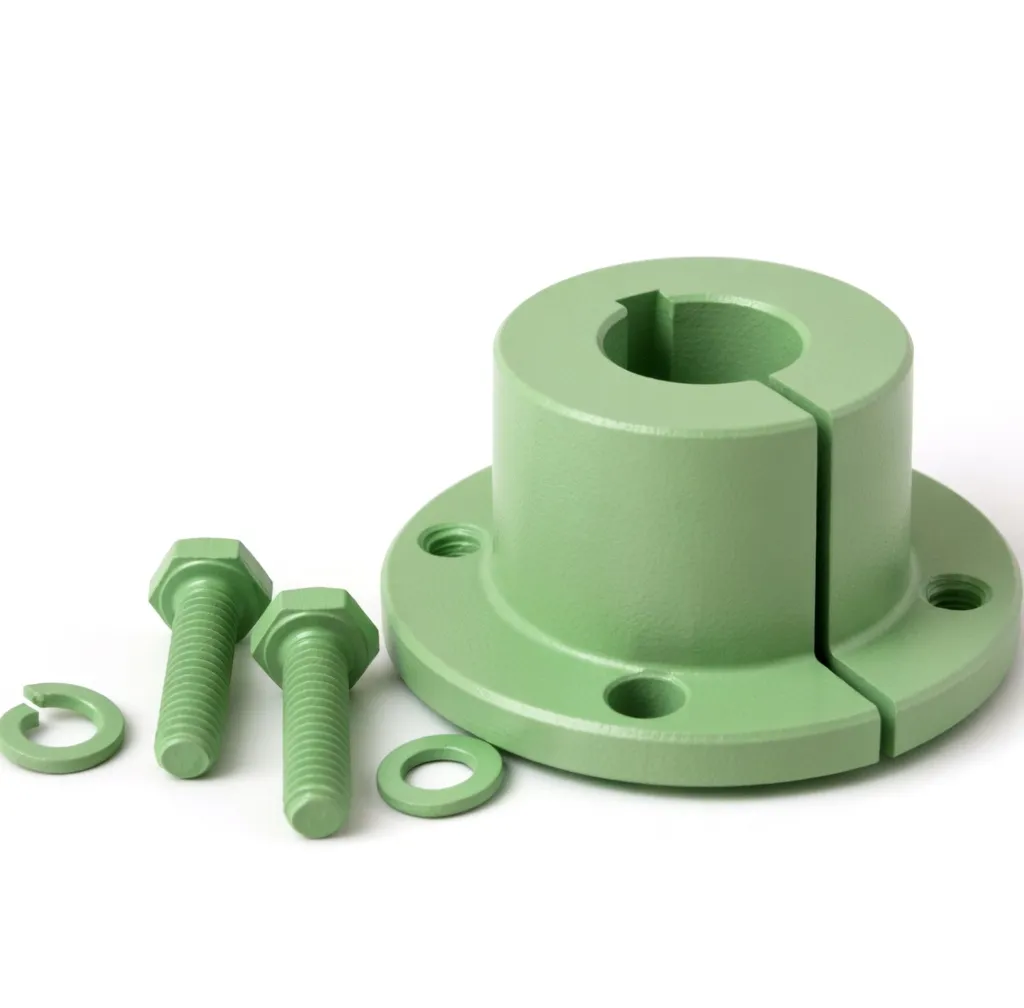
QD bushings — the abbreviation stands for Quick Detachable — are precision-machined tapered split-hub connectors that transmit torque between a rotating shaft and a hub-mounted component such as a sprocket, sheave, or gearbox output flange. The fundamental operating principle relies on a matched taper between the bushing body and the hub bore: as the assembly screws are tightened, the bushing is drawn into the hub, simultaneously compressing the bore onto the shaft and generating a powerful three-way clamping force. What makes this particularly well-suited to bucket wheel reclaimer applications is the self-reinforcing nature of that clamping geometry — under torque loading, the interface pressure actually increases rather than decreasing, which is the opposite behaviour of a conventional keyed connection under peak load. For shafts that may carry 200,000 Nm or more during normal operation, with instantaneous peaks significantly higher during bucket-to-ore impacts, that distinction is not a minor technical nuance. It determines whether a maintenance team replaces a bushing during a planned window or scrambles to recover a damaged shaft during an emergency shutdown.
📧 Get Your Custom QD Bushing Quote →
24-hour response · Free technical consultation · Custom bore sizes available
Why Port Bucket Wheel Reclaimers Represent One of the Most Demanding Drivetrain Environments on Earth
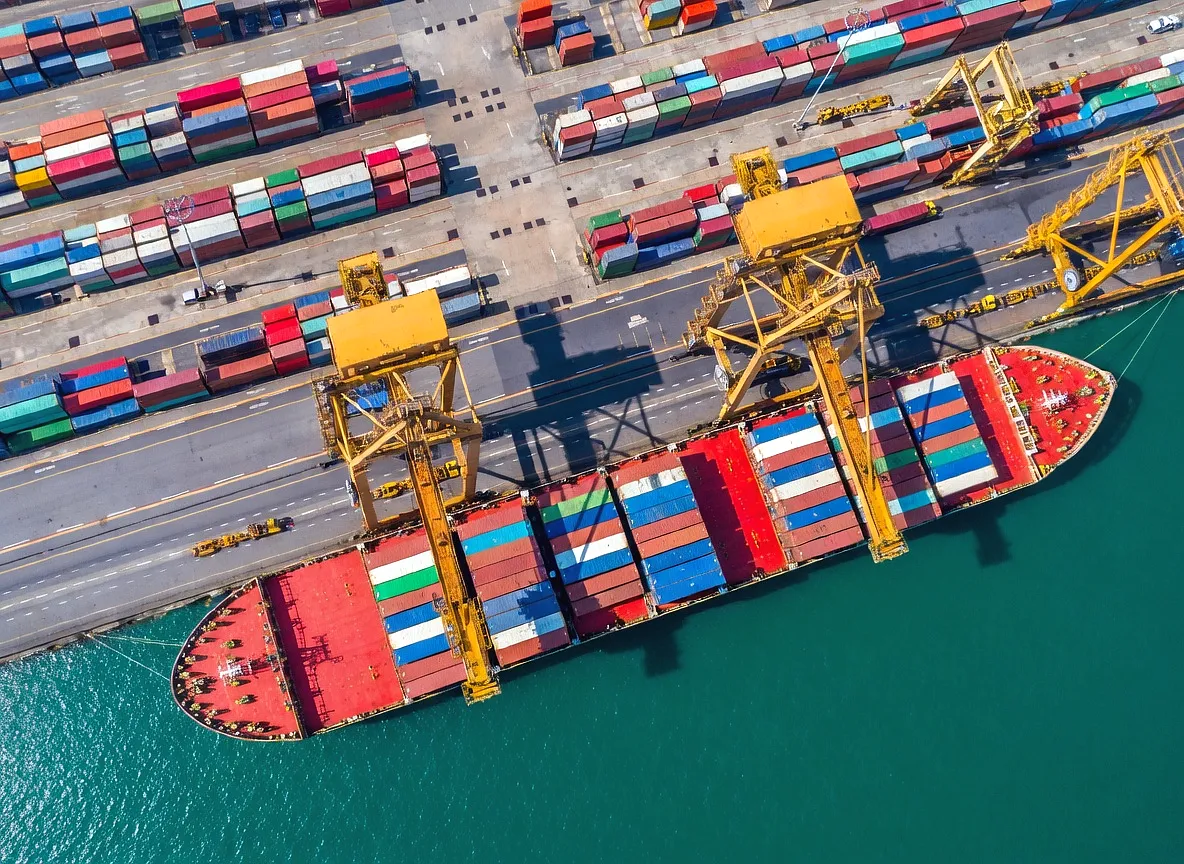
Walk the perimeter of any large UK import terminal — the Port of Immingham, ABP’s facilities at the Port of Tyne, the deep-water quays at Port Talbot — and the scale of the bucket wheel reclaimer machines commands immediate attention. These structures are not large conveyors. A typical reclaimer handling iron ore or coal can weigh upwards of 1,000 tonnes, carry a bucket wheel spanning 7 metres in diameter, and shift material at throughput rates of 3,000 to 8,000 tonnes per hour. The drive system that rotates the bucket wheel at its working speed of 5 to 15 RPM must generate torques that regularly exceed 300,000 Nm in service, with instantaneous peaks driven by bucket impact loads that can reach three to five times that nominal figure. The drivetrain is not in a controlled factory environment — it is outdoors, exposed to weather, operating for 16 to 24 hours a day, and expected to do so reliably for decades.
The coastal environment adds a specific layer of challenge that inland heavy industry does not encounter in the same way. Salt spray — particularly acute at tidal estuary terminals on the Humber, the Severn, the Clyde, and the Thames — attacks ferrous drivetrain components with a persistence that is easy to underestimate until a corrosion failure has occurred and the damage is assessed. Humidity cycling between damp marine air and warm operating temperatures accelerates fretting corrosion at shaft-hub interfaces with particular efficiency. A connection that passes a torque check on day one can develop micro-slip gaps within a few months of marine exposure. Once fretting begins at a keyway or bore interface, the surface deteriorates progressively — and the cost of repairing or replacing a hardened reclaimer shaft, rather than a bushing, is a distinctly different conversation to have with a terminal management team.
Extreme Shock Loading
Bucket impact on consolidated or frozen ore generates instantaneous torque spikes 3–5 times the nominal rated value. These events occur hundreds of times per operating hour and destroy conventional shaft connections within weeks if the design is not suited to dynamic peak loading.
Salt Spray Corrosion
UK coastal terminals expose all drivetrain components to chloride-rich marine air 365 days a year. Unprotected grey cast iron shows significant surface corrosion within 90 days. Fretting corrosion at shaft bores can enlarge keyway clearances measurably within a single winter operating season.
Bidirectional Low-Speed Torque
At 5–15 RPM there is no centrifugal self-tightening effect in the drivetrain. The shaft-hub connection must rely entirely on its mechanical holding force. Reversal loads during mode switching between stacking and reclaiming further fatigue key-based connections over time.
Restricted Maintenance Access
Working on a reclaimer bucket wheel shaft often means access at height, with limited overhead crane reach and confined working space. Components requiring hydraulic presses or hours of heating-and-cooling procedures add risk and cost that a well-designed quick-release bushing eliminates.
The Engineering Principle: Why the Taper Works Better Under Load
The operating principle of a QD bushing is mechanically elegant in a way that holds up clearly under engineering analysis. The bushing body carries a precisely ground external taper — standard series units use a 4-degree half-angle — that mates with a corresponding tapered bore machined into the hub of the sprocket, sheave, or flange. When the assembly screws are tightened in sequence to their specified torque values, the bushing is drawn axially into the hub taper. This creates a radial compression force on the shaft bore and a simultaneous expansion force on the hub outer diameter, generating a high-pressure contact interface that transmits torque through friction across the full bore area rather than through a single stress concentration point at a keyway corner. The critical property that makes this so effective in shock-loaded applications — like a bucket wheel reclaimer encountering a hard ore face — is that the tapered wedge geometry is self-reinforcing. As torque loading increases, the interface pressure at the taper surfaces increases proportionally. The connection becomes more secure precisely when the mechanical event demanding security is occurring.
The split in the bushing body serves a complementary engineering function that is sometimes underestimated. It provides elastic compliance during installation, allowing the bore surface to conform to the shaft profile and distribute contact pressure evenly even where minor shaft runout or surface irregularity exists. A solid hub without a split concentrates contact at high-point areas; the split bushing distributes it. This uniform pressure distribution is particularly important in port environments where fretting corrosion is the primary failure mechanism — fretting initiates at areas of micro-slip, and uniform pressure contact minimises micro-slip areas across the bore. The removal mechanism is equally well-considered: dedicated jack holes in the bushing flange allow extraction screws to apply a pure axial force that breaks the taper cleanly, without impact loading that could damage the shaft surface or the hub bore.
Self-Locking Taper Geometry
The 4-degree wedge creates a clamping action that intensifies under torque load. The connection does not rely on screw preload alone — the geometry works with the applied load rather than against it.
Split Hub Compliance
The longitudinal split allows elastic deformation during assembly, distributing bore contact pressure uniformly and eliminating the stress concentration at keyway corners that initiates fretting damage under reversal loading.
Designed-In Quick Release
Dedicated extraction holes accept the same screws used for assembly, applying pure axial force that breaks the taper without impact damage to shaft or hub surfaces — essential for large reclaimer shaft maintenance under site conditions.
Material Selection and Technical Performance Data
Not all bushing materials perform equally at coastal port terminals. The comparison below outlines the grades we supply for marine and bulk cargo handling environments, with a specific recommendation for bucket wheel reclaimer main drive applications.
| Material | Tensile Strength | Marine Corrosion Rating | Recommended Application |
|---|---|---|---|
| Grade 250 Cast Iron | 250 MPa | ★★ | Inland / dry environments only |
| Ductile Iron (GGG50) | 500 MPa | ★★★ | High shock loads, moderate marine |
| 42CrMo4 Alloy Steel + Geomet® | 900–1100 MPa | ★★★★ | ✓ Primary choice: port reclaimer drives |
| 304 Stainless Steel | 515 MPa | ★★★★★ | Aggressive coastal, grain terminals |
| 316L Stainless Steel | 485 MPa | ★★★★★+ | Severe marine / tidal estuary sites |
Standard & Heavy-Duty Series — Key Performance Parameters
| Series | Bore Range (mm) | Max Torque (Nm) | Flange OD (mm) | Assembly Screw Torque (Nm) |
|---|---|---|---|---|
| JA | 12 – 35 | 450 | 68 | 11 |
| SH | 19 – 55 | 2,200 | 102 | 27 |
| SK | 38 – 90 | 8,500 | 152 | 54 |
| SF | 50 – 120 | 22,600 | 203 | 81 |
| E Heavy Duty | 75 – 180 | 78,000 | 305 | 170 |
| Custom Series | 100 – 350+ | Up to 500,000+ | To drawing | Engineered |
Four Key Locations Where QD Bushings are Specified on a Bucket Wheel Reclaimer
A single large bucket wheel reclaimer typically incorporates QD bushings in four or five distinct drivetrain locations, each with different load characteristics and accessibility constraints. Treating these as one uniform specification is an approach we actively discourage with clients — the drive system of a reclaimer is really a collection of mechanically distinct sub-systems that happen to share a common structure, and selecting the right bushing series and material grade for each application point produces meaningfully better long-term maintenance outcomes than blanket specification. Below are the four primary positions where QD bushing engineering makes the clearest difference at UK port terminals.
Bucket Wheel Main Drive Shaft
The primary connection between the gearbox output flange and the wheel shaft is the most heavily loaded joint on the machine. Custom heavy-duty QD bushings in 42CrMo4 alloy steel with Geomet® 500 coating are standard for this position at UK coastal terminals. Shaft diameters here typically range from 180 to 280 mm, and the quick-detachable feature is particularly valued because the shaft assembly must be periodically withdrawn for main bearing inspection — a task that would require days of work with a conventional interference-fit hub arrangement.
Slewing Mechanism Sprocket Drive
The slewing drive — which allows the reclaimer boom to traverse across the stockpile — operates through a ring gear driven by one or more motor-gearbox units. The sprocket or pinion shaft connections on these drives use SF or E-series QD bushings on larger machines. The slewing mechanism sees high reversal cycle counts, making the uniform bore clamping of the tapered bushing substantially more reliable than key-and-setscrew arrangements that progressively widen their keyway clearance under bidirectional loading.
Luffing / Pitch Winch Chain Sprockets
The luffing mechanism raises and lowers the bucket wheel boom via high-capacity chain drive winches. The sprocket-to-shaft connection here is a textbook application for SK or SF series QD bushings. The infrequent but very high torque nature of the luffing operation means the joint experiences long static dwell periods between actuations — during which moisture can penetrate a poorly fitted connection. The maintained interface pressure of a correctly assembled QD taper resists this moisture ingress effectively compared with key-only connections.
Travel Mechanism Wheel Drive
The reclaimer travels along the full length of the terminal on rail or rubber-tyred bogies, powered by right-angle gearboxes. The output shaft-to-drive-wheel connections use SH to SK series QD bushings depending on machine capacity. Cycling frequency is high and exposure to abrasive ore dust, rain, and salt spray is continuous. Corrosion-resistant bushing materials with sealed hub designs are the correct specification for UK coastal terminal travel drives operating year-round.
Why UK Port Maintenance Teams Specify Our QD Bushings
Six measurable advantages that distinguish a correctly specified QD bushing programme from a compromise drivetrain solution.
Superior Torque Density
The tapered interference connection achieves torque transmission per unit bore diameter that significantly exceeds keyway-only designs. For shafts above 150 mm, the advantage over key-and-setscrew in terms of peak load capacity becomes technically decisive rather than merely marginal.
35-Minute Replacement Time
Two technicians with a torque wrench and the supplied jack screws can complete a heavy-duty QD bushing removal and replacement in under 45 minutes. Conventional interference-fit hubs on the same shaft can require heating, cooling, hydraulic press work, and several hours of crane-assisted access.
Shaft Surface Protection
The bushing acts as a sacrificial interface element. If a shock overload event occurs, the bushing can be replaced without shaft damage. Protecting a precision-ground reclaimer shaft from fretting damage is a significant long-term saving — shaft replacement or in-situ repair at a port terminal is a costly and time-consuming operation.
Marine-Grade Coating Options
For UK port applications, we supply hot-dip galvanising, zinc-phosphate plus epoxy primer, Geomet® 500 coating, and full 316L stainless steel construction. Each coating system is selected based on the specific chloride exposure category of the installation location and the material it will be handling.
Cross-Brand Interchangeability
QD bushings follow standardised taper and bolt-circle dimensions, so a replacement unit from our range fits existing hubs regardless of original manufacturer. For terminals operating mixed fleets of different OEM reclaimers, this cross-compatibility simplifies spare parts stock management and procurement considerably.
Lower 5-Year Ownership Cost
When maintenance labour, shaft protection, and component service life are factored together, the total ownership cost of a correctly specified QD bushing programme at a busy UK port terminal is typically 40 to 60 percent lower than an equivalent keyed connection maintenance programme over a 5-year horizon.
Case Study: Humber Bulk Terminal Cuts Drivetrain Downtime by 68%
Port Bulk Terminal
Iron Ore & Coal Import
Background
A bulk terminal operator on the Humber estuary — handling approximately 12 million tonnes of iron ore and coal per year and operating five bucket wheel reclaimers — was experiencing recurrent drivetrain failures on three of those machines. Each incident required emergency crane mobilisation to access the wheel drive shaft, and the average repair duration had reached 31 hours per event. At an operational throughput value of approximately £85,000 per hour, each failure event was generating losses upwards of £2.6 million when throughput shortfall and direct repair costs were combined.
Root Cause and Solution
Investigation confirmed that the existing keyway-and-setscrew connections on the gearbox output flanges had developed fretting damage over two operating seasons of marine humidity exposure combined with reversal loads from the slewing mechanism. The hub bores were enlarging progressively, reducing effective torque transmission and increasing micro-slip. Our engineering team specified a bespoke heavy-duty QD bushing programme: custom E-series bushings in 42CrMo4 steel with Geomet® 500 anti-corrosion coating, hot-dip galvanised M30 cap screws, and PTFE-based assembly compound to prevent galling during future removal. All five reclaimers were upgraded across a planned 6-week scheduled maintenance window with zero unplanned stoppages during the transition period.
Measured Results — 18 Months Post-Installation
What Maintenance Engineers and Plant Managers Say
We’ve been maintaining reclaimers on the east coast for eleven years. The switch to QD bushings on our gearbox flanges was straightforward in concept, but the actual result — zero fretting failures across three full winter seasons in a salt-spray environment — has genuinely changed how we plan and budget our maintenance programme.
Getting the right custom bore specification took one phone call and an email with our shaft drawing. The technical team came back with a full application report the same day. When the bushings arrived, they dropped straight in without any adjustment. That is the kind of supplier relationship a port terminal actually needs to function efficiently.
The 316L stainless option for our grain reclaimer at the Mersey terminal was exactly what we needed — not just for corrosion resistance, but because food-safety material requirements ruled out standard galvanised fasteners. Their team understood the constraint immediately and specified the right solution without us having to explain the regulatory context twice.
Custom Manufacturing: Every QD Bushing Built to Your Shaft Drawing
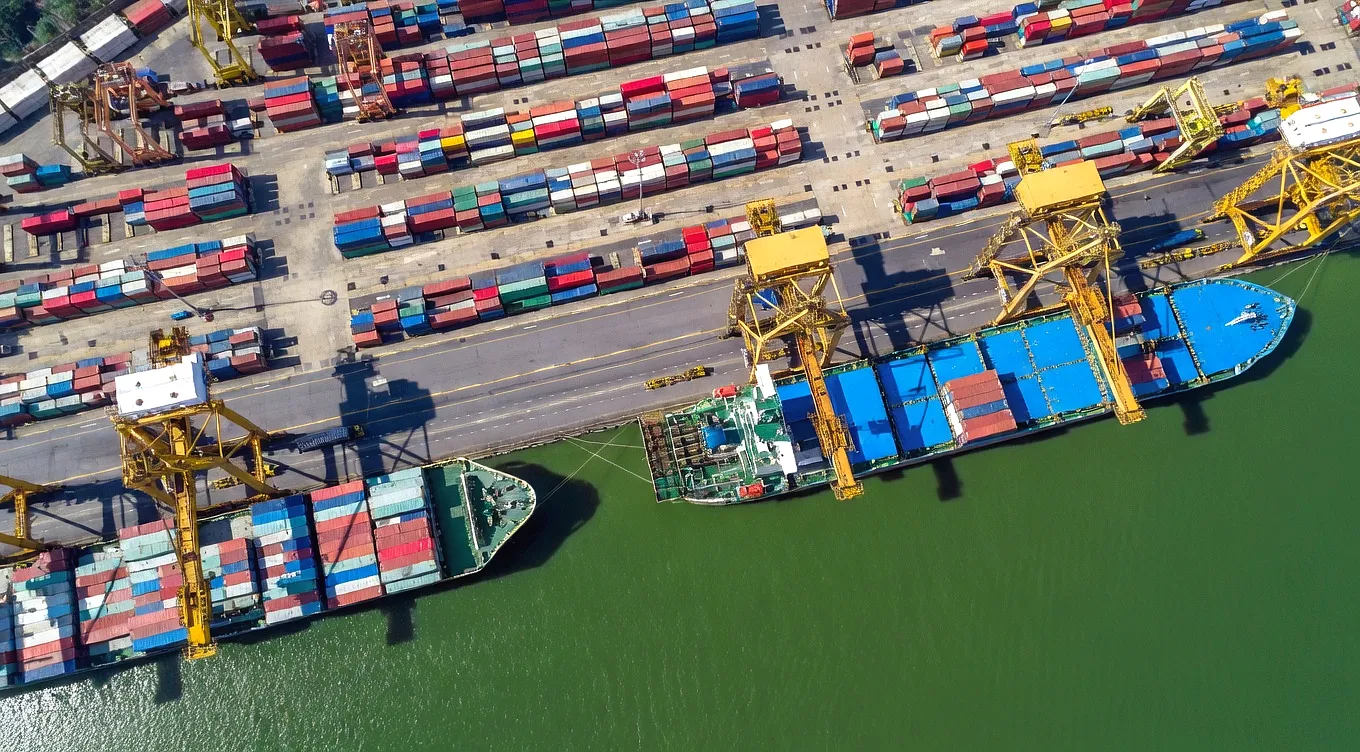 Standard catalogue QD bushings cover the clear majority of travel mechanism and slewing drive applications on bucket wheel reclaimers. But the practical reality of port terminals — particularly those operating older machines built by German, Japanese, or Eastern European OEMs — is that shaft dimensions, keyway configurations, and hub bolt circles frequently fall outside standard series parameters. This is precisely where our bespoke manufacturing capability becomes the deciding factor. Our production facility can manufacture QD bushings to any bore specification from 50 mm through to over 350 mm diameter, with custom keyway widths (metric and imperial), special surface treatment specifications, material grades through to 17-4PH precipitation hardening stainless steel for offshore-adjacent applications, and any flange bolt-circle geometry required to match the existing hub.
Critically, a custom order from our facility is not simply a machined part in a box. Every custom QD bushing programme includes a free application engineering review, dimensional verification against the customer’s shaft drawing or site measurement report, an assembly torque specification document, and a recommended inspection and maintenance interval based on the operating duty and environment. UK terminal operators working to ISO 55000 asset management standards find this documentation directly supports their maintenance management system records and planned maintenance schedules. Standard lead time for custom orders is 2–4 weeks from drawing approval. For operating terminals facing an emergency drivetrain failure, expedited 5-working-day production is available as a priority service.
📧 Get a Quote: [email protected]
Send your shaft drawing or measurement report — free application engineering review included with every enquiry
Frequently Asked Questions
Questions from port maintenance engineers, procurement managers, and reliability teams across the UK.
What type of QD bushing should I use for a bucket wheel reclaimer main drive shaft operating at a coastal UK port terminal where salt corrosion is a serious and ongoing concern?
For coastal UK port terminals — particularly those on the Humber, Mersey, Tyne, or Thames estuaries — the standard recommendation for bucket wheel main drive shaft connections is 42CrMo4 alloy steel QD bushings with Geomet® 500 anti-corrosion coating. For grain handling terminals where food-safety material standards apply, 316L stainless steel construction is the appropriate choice. In both cases, fastening hardware should be specified as A4-70 stainless to prevent galvanic coupling between the bushing body and the screw material in the marine atmosphere.
How long does it actually take to replace a QD bushing on a bucket wheel reclaimer drive shaft when we need to get the machine back into production as quickly as possible?
With two technicians and the correct torque wrench and jack screws supplied with the bushing, a complete removal and replacement on a heavy-duty reclaimer bucket wheel shaft typically takes 35 to 55 minutes from start to machine restart. This compares with 6 to 31 hours for conventional interference-fit or shrink-fit hub replacements, which require heating, cooling, hydraulic tooling, and often crane assistance. For terminals where each hour of downtime carries significant financial or contractual consequences, the reduction in maintenance time is frequently the primary business case for converting to a QD bushing programme.
Where can I find a reliable UK supplier of custom QD bushings for bucket wheel reclaimers with non-standard shaft diameters, and what is the typical price and lead time for an urgent order?
Custom QD bushings for non-standard shaft diameters — common with older German or Japanese-built reclaimers using metric shafts outside standard catalogue ranges — are available with standard lead times of 2–4 weeks from drawing approval, or 5 working days for emergency orders. Pricing for alloy steel E-series equivalents on large reclaimer shafts typically falls between £180 and £750 per unit depending on bore diameter, coating specification, and quantity. Send your shaft drawing or dimensional report to [email protected] for a detailed quotation within 24 hours.
Can QD bushings reliably handle the bidirectional torque loads and frequent reversal cycles that happen when a bucket wheel reclaimer switches between stacking and reclaiming operating modes?
Yes — and this is one of the technical advantages of the QD design that tends to be underappreciated until a keyed connection starts showing early signs of fatigue wear. The tapered interference connection transmits torque through friction across the full bore contact area, making it inherently symmetric in its load-carrying behaviour — it handles bidirectional torque just as effectively as unidirectional. Keyed connections, by contrast, transfer reversed loads through alternate key flanks, creating impact loading that progressively widens keyway clearance with every direction change. For stacker-reclaimers that switch operating modes frequently, QD bushings have demonstrated meaningfully longer service intervals in direct comparison situations at UK bulk terminal installations.
Which QD bushing series is the correct specification for a luffing winch sprocket drive on a medium-sized coal reclaimer at a UK port terminal, and do you offer stainless steel versions?
For the luffing (pitch) winch sprocket on a coal reclaimer rated at 2,000–5,000 tonnes per hour, the SF series QD bushing (50–120 mm bore, rated to 22,600 Nm) is generally the correct starting point. For machines on the upper capacity end or with high-inertia boom structures, the E-series (75–180 mm bore, 78,000 Nm) is more appropriate. Stainless variants in both 304 and 316L are available across these series, with 3–5 week lead times for stainless orders. The choice between 304 and 316L depends on the chloride concentration at the specific terminal site — 316L is recommended for tidal estuary locations with direct salt spray exposure.
How often should QD bushings on a bucket wheel reclaimer be inspected and re-torqued when the terminal is running 24 hours a day across multiple operating shifts?
For continuous 24/7 operation, we recommend an initial re-torque check at 200 operating hours after first installation — thermal cycling and vibration settling can cause small preload losses during this bedding-in period. After that initial check confirms no change, subsequent inspection intervals of 2,000 operating hours or 6 months, whichever comes first, are appropriate for alloy steel units with anti-corrosion coating in a UK coastal environment. Stainless units in demanding salt conditions should follow the same interval but should additionally be inspected for any galling on screw threads, which is mitigated by reapplying PTFE assembly compound at each check. These intervals align well with standard planned maintenance shutdowns at UK bulk terminals.
Is there a significant price difference between standard catalogue QD bushings and custom-engineered versions for reclaimer applications, and does ordering in volume for a multi-machine fleet reduce the cost per unit?
Standard catalogue QD bushings represent the most economical option and cover the majority of travel and slewing drive applications on most reclaimers. Custom-engineered versions for non-standard bore diameters or special materials carry a 35–120% premium over equivalent catalogue sizes, reflecting the machining setup cost for one-off or short-run production. For port operators running fleets of three or more reclaimers, volume consolidation — standardising all machines to the same custom bushing specification and ordering batches of 10 to 20 units — typically reduces the per-unit cost by 25–40% compared with single-unit emergency orders. We also operate a consignment stock programme for qualifying fleet customers, meaning a replacement unit can be on site within 48 hours of a failure notification without the customer carrying full inventory cost.
Ready to Specify the Right QD Bushing for Your Reclaimer?
Whether you are upgrading a single gearbox flange connection or specifying a full QD bushing programme across a multi-machine UK port terminal fleet, our application engineering team can help you select, specify, and document the correct solution. Send your shaft drawing, or simply describe the machine and application — we will handle the engineering analysis.
Get a Quote: [email protected]
Free technical review · Custom bore sizes · UK port terminal specialists · 24-hour response guaranteed
© qd-bushings.top · Bulk Material Handling Drive Solutions · Supplying UK Port Terminals, Mining Operations & Industrial Plant · edit by gzl