
Running a production saw line in a UK timber mill or furniture plant means dealing with spindle speeds that routinely exceed 3,000 RPM, cutting forces that shift unpredictably with grain direction and timber density, and a constant blizzard of fine sawdust that works its way into every gap in your drive train. Under those conditions, the mechanical connection between your motor pulley and the spindle shaft is the critical load path on which your entire production rate depends. A loose pulley creates blade wobble that destroys dimensional accuracy; a fretting bore enlarges under cyclic loading and eventually makes the entire spindle assembly unserviceable. Specifying the wrong fastening method costs UK woodworking operations tens of thousands of pounds per year in avoidable downtime, replacement parts, and lost throughput — costs that are entirely preventable with the right component selection.
QD bushings — quick-detach tapered split bushings — have become the fastening solution of choice for saw machine spindle pulleys across UK woodworking operations ranging from small craft joinery workshops in the Cotswolds to large-scale MDF panel production lines in the East Midlands. The reason is straightforward: the self-centering taper delivers a shaft concentricity and assembly repeatability that a straight key-and-setscrew combination simply cannot match, and the split-hub design means a maintenance engineer can swap a worn pulley in under ten minutes without disturbing the bearing stack or re-aligning the entire drive system. When a panel saw line produces several thousand pounds worth of product per hour, ten minutes saved per blade change recovers the bushing specification upgrade cost within weeks of installation. That arithmetic has driven the adoption of QD bushings across virtually every sector of UK timber processing, from Scottish softwood sawmills to Welsh joinery manufacturers and English kitchen furniture assembly plants.
This guide draws on more than 18 years of application engineering experience with QD bushings in demanding industrial woodworking environments. Whether you are specifying a bandsaw mill drive in Perthshire, retrofitting a high-speed routing line in Birmingham, or sourcing a dust-resistant spindle drive solution for a furniture factory in West Yorkshire, you will find the technical detail and practical guidance here to make the right choice for your specific application, budget, and maintenance capability.
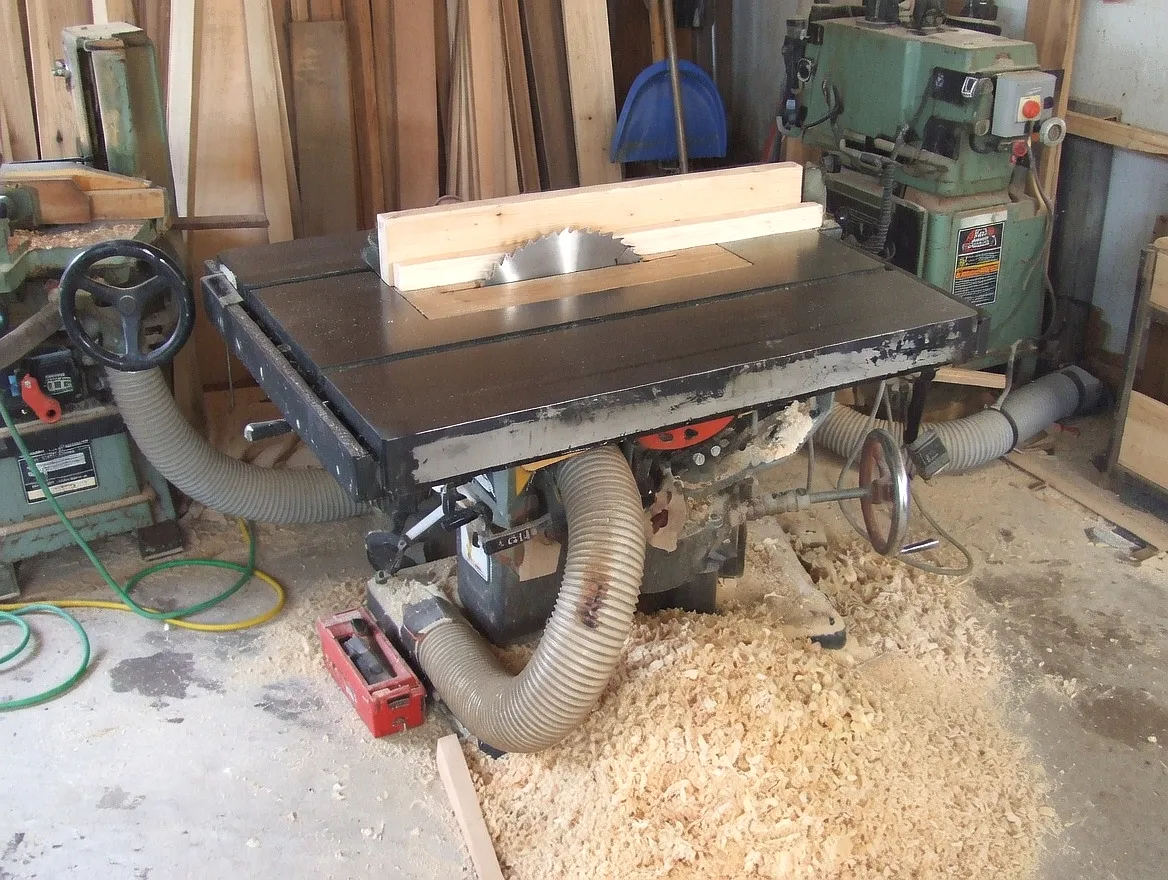
Need QD bushings for your woodworking spindle application? Our engineers can specify the exact bore size, keyway configuration, and surface treatment your saw machine requires — with no minimum-order surcharge on custom sizes.
How QD Bushings Work on High-Speed Saw Spindles
A QD bushing is a precision-machined, split-tapered sleeve that presses into a matching tapered bore in the hub of a pulley, sheave, or sprocket. As the mounting capscrews are tightened progressively in a crossing pattern — always in sequence to ensure even load distribution — the taper compresses the split bushing radially against the shaft. This generates a uniform circumferential clamping force that seats the assembly concentrically without relying solely on keyway shear strength. The most common QD geometry uses a 1:8 included taper, which creates a substantial mechanical advantage: relatively modest capscrew torque translates into several tonnes of radial grip on the shaft surface. That grip is more than adequate for the pulsing torque loads that characterise circular saw and bandsaw drives, where motor start-up peaks and individual tooth engagement events create instantaneous load spikes several times larger than steady-state cutting torque.
For woodworking spindles specifically, the locking mechanism carries a crucial secondary benefit: it is fully reversible on demand. Loosening the capscrews and relocating them into the dedicated push-off threaded holes in the bushing flange drives the bushing cleanly out of the hub taper without any hammering, gear pullers, or applied heat. On a busy production site in Birmingham, Bristol, or Dundee where a saw line runs two full shifts and may need to change blade profiles or pulley ratios between them, that controlled, clean dismount translates directly into measurable uptime recovery. Maintenance teams across UK operations consistently report blade-change cycles falling from 35–45 minutes down to under ten minutes after converting from the straight key-and-setscrew arrangements that older machine designs use as standard.
Material & Construction
Standard QD bushings for woodworking applications are produced from ductile cast iron (Grade 60-40-18) or forged steel. For environments with persistent moisture — common in green timber processing and outdoor log storage areas prevalent across Scotland and Wales — zinc-phosphate coated or electroless nickel-plated variants offer markedly better corrosion resistance without any compromise to dimensional accuracy. The split is produced by precision wire-EDM cutting after all machining operations are complete, ensuring the two halves return to perfect circularity when compressed. Bore tolerances are held to H7 fit as standard, with H6 precision-ground finish available for high-speed spindle applications where runout budgets are tight — typically within 0.015 mm TIR on correctly prepared shafts.
Sawdust Exclusion Performance
Woodworking generates some of the finest and most abrasive dust found in any manufacturing environment. Fine hardwood dust from oak, beech, and teak has Mohs hardness values in the 3–5 range and acts as a lapping compound when trapped inside a bore-shaft interface. The tight tapered metal-to-metal contact of QD bushings, combined with the fully captured capscrews and flat flange face, creates a near-impermeable barrier at the hub-bushing junction. Service trials conducted in UK furniture plants have shown bore wear rates 3–5 times lower than equivalent setscrew-collar assemblies operating in the same sawdust-laden environment, eliminating the abrasion-fretting failure mode that commonly plagues saw spindle drives when open fastening arrangements are used.
QD Bushing Technical Specifications — Woodworking Series
The table below summarises the key dimensional and performance parameters for the most frequently specified QD bushing series in woodworking saw machine spindle applications. Custom configurations including non-standard bore sizes, double-keyway slots, metric capscrew patterns, and specialist surface treatments are available on request with no minimum-order surcharge for repeat specifications.
| Series | Bore Range (mm) | Max Torque (Nm) | Max Speed (RPM) | Capscrew | Typical Saw Application |
|---|---|---|---|---|---|
| JA | 12.7 – 44.45 | 340 | 5,500 | M8 × 3 | Small bandsaw / router spindles |
| SH | 19.05 – 57.15 | 780 | 4,800 | M10 × 3 | Circular saw motor pulleys |
| SK | 25.4 – 76.2 | 1,560 | 4,200 | M12 × 3 | Panel saw / spindle moulder |
| SF | 31.75 – 101.6 | 2,930 | 3,600 | M16 × 3 | Planer / thicknesser main drive |
| E | 44.45 – 127 | 5,430 | 3,000 | M20 × 3 | Large bandsaw mill spindles |
| F | 57.15 – 152.4 | 8,810 | 2,400 | M24 × 3 | Heavy-duty frame saw / breakdown saw |
* Torque ratings at standard capscrew tightening torques with keyed shaft. De-rate by 15% for keyless installations. All dimensions conform to ANSI/AGMA standards. Contact our engineering team for DIN metric variants.
Application Scenarios Across UK Woodworking Equipment
QD bushings serve multiple spindle and drive positions throughout the modern woodworking plant. The configurations below represent the most common engineering solutions deployed across UK timber processing and furniture manufacturing sites.
Bandsaw Machine Spindles
Wide bandsaw mills used in UK primary breakdown of hardwood and softwood logs impose significant dynamic loads on upper and lower wheel spindle bearings. The drive pulley on the bottom wheel shaft sees repeated start-stop torque spikes every time blade tension is released for tracking adjustment or whenever a new billet is presented to the blade. QD bushings specified in the SH or SK series handle these shock loads without micro-slip fretting because the taper contact area is substantially larger than any keyway setscrew arrangement can achieve. Sawyers operating mills in Scotland and Northern England who converted to QD bushing-mounted drive pulleys consistently report eliminating the quarterly bore refacing that had previously been a standard maintenance task on their wheel spindle shafts, recovering hundreds of hours of downtime per machine per year.
Circular Saw & Panel Saw Drives
Panel saw and rip-saw motor pulleys in UK furniture manufacturing facilities typically run at 2,800–3,500 RPM on motors ranging from 7.5 kW to 45 kW. At these power levels, even a few microns of runout in the drive pulley produce measurable vibration that degrades cut quality and shortens bearing service life. SH and SK series QD bushings in this application deliver concentricity within 0.02 mm, keeping vibration velocity at the spindle housing well below the ISO 10816 alarm threshold for production machinery. Several furniture manufacturers in the English Midlands have reported 60–70% reductions in V-belt replacement frequency after eliminating the excess runout that had been accelerating one-sided belt-flank wear on their panel saw drives, generating significant annual savings in consumable parts costs alone.
Planer & Thicknesser Cutter Blocks
Four-sided planer-moulding machines and wide-belt planers use cutter block spindles running at 4,000–5,000 RPM. The imbalance caused by a slightly eccentric pulley at these speeds generates bearing loads that can shorten grease-lubricated bearing life by 40% or more, even when the mass imbalance is small. JA and SH series QD bushings, specified with ground bores to H6 tolerance, provide the shaft concentricity these high-speed spindles demand. Several UK planer manufacturers now specify QD bushing-mounted motor pulleys as standard on their export models, citing improved after-sale parts logistics as a driver: replacement bushings are stocked by British distributors and available for next-day delivery, eliminating the lead-time delays that complicated overseas-sourced proprietary fastening systems.
CNC Routing & Machining Centres
CNC wood routers in UK joinery workshops drive spindles at 18,000 RPM or more, but the belt-driven auxiliary drives — vacuum pump pulleys, dust extraction fan shafts, and tool-change actuator drives — typically run at 1,500–3,000 RPM. These are ideal QD bushing applications: the loads are moderate, the bore diameters are small (JA or SH series), and the drives must be serviceable by a single maintenance engineer without specialist mechanical training. Quick-detach assembly eliminates the need for skilled-trades involvement in routine pulley changes, meaning a production supervisor or even a senior machine operator can complete the task safely within a planned maintenance window without scheduling additional labour.
Edge Banding & Panel Processing Lines
Edge-banding machine lines run continuously for 16–20 hours per day in high-output UK kitchen and bedroom furniture plants. QD bushings on trimming spindle and feed roller drive pulleys allow individual sections to be isolated for maintenance without shutting down the entire line. Kitchen furniture manufacturers report that the ability to complete targeted spindle maintenance during a 20-minute meal break — rather than planning a full-shift shutdown — generates annual downtime savings equivalent to several thousand metres of finished panel production. The moisture from EVA glue-spreading sections also makes the zinc-phosphate-treated QD bushing the only sensible choice for this position, protecting against the rapid oxidation that untreated cast iron components suffer in that specific microenvironment.
Why UK Woodworking Engineers Choose QD Bushings
Self-Centering Precision
The tapered interference fit self-centres the pulley on the shaft during assembly, eliminating the dial-indicator runout checks mandatory with setscrew collar arrangements. Production teams with limited metrology equipment can install a QD-mounted pulley correctly every time, even under time pressure during a blade change between shifts. The mechanical process itself guarantees concentricity — no measurement skill is required from the operator.
Rapid Changeover Speed
Three or four capscrews are all that stand between a running saw drive and a stripped-down spindle ready for pulley replacement. Experienced operators report 6–10 minute disassembly-to-reassembly times as standard. That speed makes mid-shift pulley ratio changes for different product runs operationally viable for the first time on many UK production lines — a flexibility that drives measurable improvements in line utilisation rates.
High Torque Density
The taper-compression mechanism achieves torque capacity per unit shaft diameter that exceeds parallel key connections by 20–35% in standard configurations, and approaches shaft material yield limits in interference-fit double-key variants. On large bandsaw mills where motor frame sizes are constrained by machine geometry, this torque density advantage can be the deciding factor between a safe drive specification and an oversized motor.
Interchangeable Across OEM Brands
QD bushing outer tapers conform to ANSI and ISO dimensional standards, meaning an SK bushing from Ever Power fits any SK-rated hub from any compliant pulley manufacturer. UK maintenance departments can rationalise spares inventory to stock one set of bushings covering pulleys from multiple saw machine OEMs — a significant storeroom simplification on multi-brand production floors common in UK woodworking plants that have grown through equipment acquisition over several decades.
Sawdust-Resistant Sealing
Tight metal-to-metal contact across the full taper face seals the bore-shaft interface more effectively than any other fastening method in dust-laden woodworking environments. Fine hardwood and softwood dust — which carries the abrasive character of 180-grit sandpaper — cannot penetrate the compressed taper zone, definitively eliminating the abrasion-fretting failure mode that shortens bore-shaft connections in sawmill environments to a fraction of their theoretical design life.
UK Stock & Technical Support
Standard series QD bushings (JA through E) are held in UK distribution stock, with next-day delivery to mainland addresses throughout England, Scotland, and Wales. Custom-bore and custom-keyway variants typically ship within 5–10 working days depending on machining complexity. Written application engineering support is available by email for specification queries, with detailed installation procedures supplied as standard with every order.
Customer Success Case Study
CASE STUDY | East Midlands, UK | Furniture Manufacturing
Heartwood Panels Ltd, Nottinghamshire
Established 1987 • 120 employees • Output: 1.8 million m² finished panel product per annum
Results at a Glance
68% ↓
Monthly spindle maintenance time
£42,000
Estimated Year 1 direct saving
The Challenge
Heartwood Panels operated four beam saw lines and two continuous edge-banding machines producing kitchen cabinet carcasses and wardrobe panel components. Their main beam saw motor pulleys — 132 kW drives at 2,980 RPM — were mounted using traditional taper-lock bushings from a mid-tier supplier whose dimensional consistency had declined noticeably over a two-year supply period. The consequence was recurring fretting wear on 75 mm spindle shafts that required shaft journals to be re-ground every six to eight months. Planned maintenance intervals were compressing, unplanned stoppages were increasing in frequency, and the company’s head of engineering calculated that spindle-related issues were costing the business in excess of 180 hours of productive machine time per year, with shaft regrinding alone accounting for over £12,000 annually in external engineering contractor fees.
The Solution
Following a site visit and complete drive-train audit, the engineering team specified Ever Power SF series QD bushings with ground bores to H7 tolerance for all four beam saw motor pulleys, and SK series for the edge-banding trimming spindle drives. The SF bushings were supplied with a zinc-phosphate passivation treatment to resist the moisture from the glue-spreading section of the edge-banding line — an application detail identified during the audit that the previous supplier had not considered. Installation was completed over a planned weekend shutdown by Heartwood’s own in-house maintenance team of four engineers, following the written installation procedures and torque specifications supplied as part of the product documentation package.
The Outcome
Over the 14 months following conversion, Heartwood Panels recorded zero fretting-wear failures on any of the converted spindles. Shaft regrinding was removed from the planned maintenance schedule entirely. The average blade-change time on the beam saws fell from 34 minutes to 11 minutes as operators became comfortable with the QD push-off removal procedure. The engineering manager’s independent calculation, presented to the board at the 12-month review, put the direct cost saving — combining labour hours, replacement parts, contractor fees, and recovered production time — at approximately £42,000 in Year 1. Heartwood subsequently extended the specification to two additional rip-saw lines and has placed a standing annual order for replacement bushings as part of a planned preventive maintenance programme.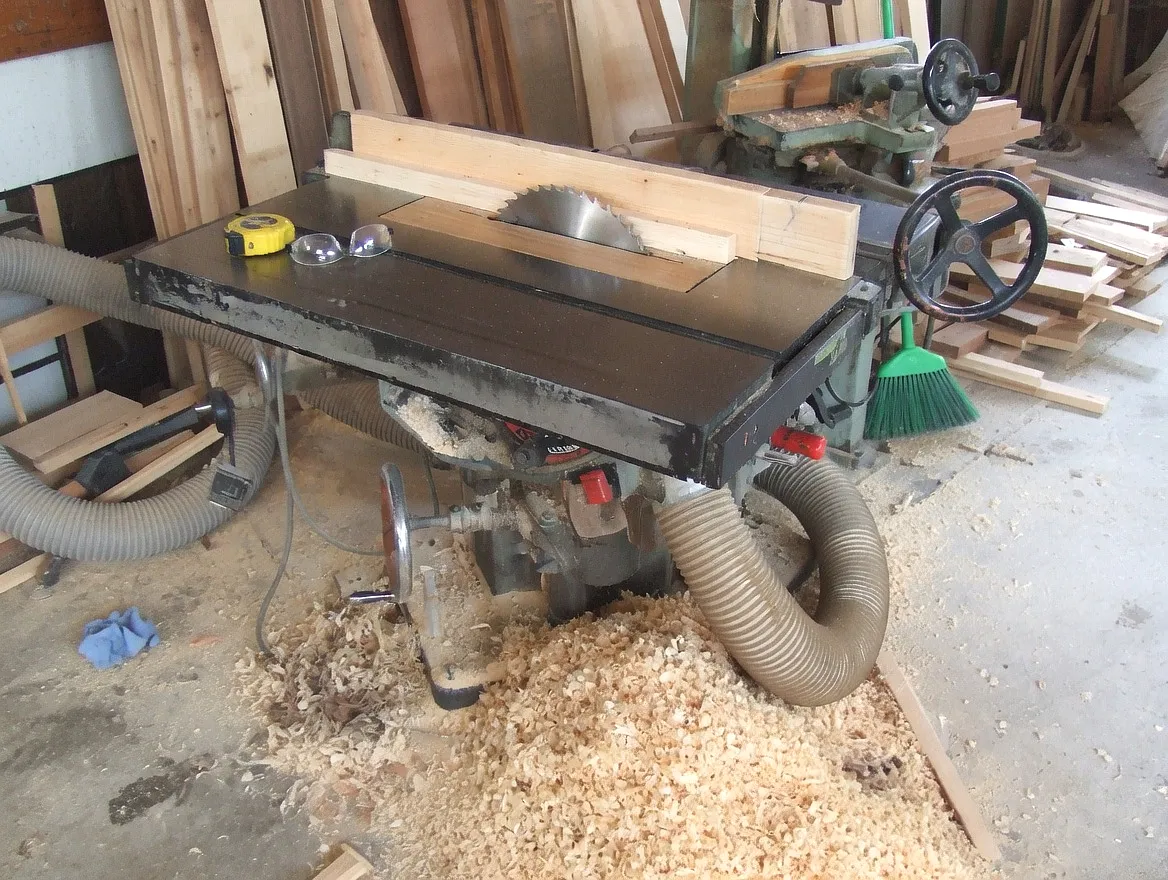
What UK Woodworking Professionals Say
“
We have been changing saw spindle pulleys since 1996, and the QD bushing arrangement is simply the fastest, most repeatable method we have used. Changing a V-belt pulley on our Striebig panel saw used to require both an electrician and a fitter working together. Now one of our apprentices can do it safely in eight minutes. The dimensional consistency from Ever Power has been excellent across every order we have placed over the past three years.
James Hartley
Workshop Manager, Hartley Bespoke Joinery, Harrogate, North Yorkshire
“
Our bandsaw mill in Perthshire processes around 6,000 tonnes of Sitka spruce and Scots pine per year. The sawdust and resin in that environment destroys conventional drive components surprisingly fast. Since switching to Ever Power SK series QD bushings on the main drive pulleys, we have not had a single case of bore enlargement on the wheel spindle shafts. The zinc-phosphate finish was a sensible call given our outdoor log storage and the humidity levels we deal with every Scottish winter.
Alistair Mackenzie
Maintenance Engineer, Tay Forest Products, Perth & Kinross, Scotland
“
We evaluated several QD bushing suppliers before specifying for our Homag edge-banding line refurbishment. Ever Power offered custom metric bore sizes matching our spindle shafts without the large special-order minimum quantity two other suppliers insisted on. Email technical support was responsive and provided a detailed installation procedure specific to our application. The bushings arrived on time and fitted perfectly on first assembly. We have since placed two additional orders without any issues.
Sarah Griffiths
Production Director, Severn Valley Cabinets Ltd, Worcestershire, West Midlands
Custom QD Bushing Manufacturing for UK Woodworking OEMs & Retrofit Projects
Ever Power operates a fully integrated manufacturing facility with dedicated CNC turning centres, vertical machining centres, and thread-grinding equipment producing precision drive components at high volume and high accuracy. Our QD bushing production line machines bore diameters from 12 mm to 200 mm in standard increments and to any intermediate diameter within that range, with no minimum-order surcharge on custom bore specifications for repeat customers. Bore tolerances are CNC-held to H7 as standard; H6 precision-ground finish is available for high-speed spindle applications where runout budgets cannot accommodate any nominal variance.
Keyway configurations routinely supplied include: single parallel keyway to DIN 6885 or ANSI B17.1; double 180-degree opposed keyways for high-torque or vibration-prone spindle positions; woodruff keyway for compact shaft-end installations common on smaller circular saw machines; and keyless friction-only bores for applications where keyway-induced stress concentrations must be avoided. We also produce bushings with additional oil-groove features on the shaft-contact face for applications requiring periodic re-lubrication as part of the maintenance schedule. Non-standard taper angles — including the 1:10 taper used by certain European saw machine manufacturers — are available from our specials machining cell, with no tooling surcharge for proven repeat specifications.
Surface treatment options include: self-colour natural cast iron; zinc-phosphate oil dip for general corrosion resistance; electroless nickel plate 25 μm for moisture and mild-acid environments; hot black oxide for interior machinery; and Geomet® zinc-flake coating for severe outdoor or green-timber processing environments where salt contamination is a factor. All surface treatments are applied after final bore machining to preserve bore dimensional accuracy, and all coating batches are documented and traceable to the production batch record.
UK-based OEM customers specifying QD bushings for new saw machine models receive a full product documentation package with every approved drawing: 2D DXF, 3D STEP files, installation and removal procedures in PDF format, and material certificates traceable to cast or forging batch. Lead times for first-article specials are 10–15 working days from approved drawing; repeat orders from standing tooling ship in 5–7 working days. Our engineering team is available to review your drive specifications and provide written application guidance at no charge as part of the quotation process.
Custom Specification Capabilities
- ✓ Bore: 12 – 200 mm (any increment)
- ✓ Tolerance: H6 / H7 / custom
- ✓ Keyway: single / double / woodruff / keyless
- ✓ Material: ductile iron / forged steel / SS
- ✓ Surface: zinc-ph / nickel / oxide / Geomet®
- ✓ Taper: 1:8 standard / 1:10 / custom angle
- ✓ Full OEM documentation package
Ready to specify QD bushings for your woodworking spindle drive? Send our engineering team your shaft diameter, operating speed, and motor power.
[email protected] — Response within 1 working day
Frequently Asked Questions
Answers to the most common questions from UK woodworking engineers and maintenance managers considering QD bushing solutions for saw machine spindles.
Ready to Upgrade Your Saw Machine Spindle Drive?
Our application engineers are available to review your shaft dimensions, operating speed, and torque requirements and recommend the exact QD bushing series and configuration for your woodworking spindle application.