
Tire Manufacturing Drives
Maximizing Uptime in Rubber Tire Curing Presses: The Engineering Behind QD Bushings
High-Torque Transmission Mechanics for UK Automotive Component Producers
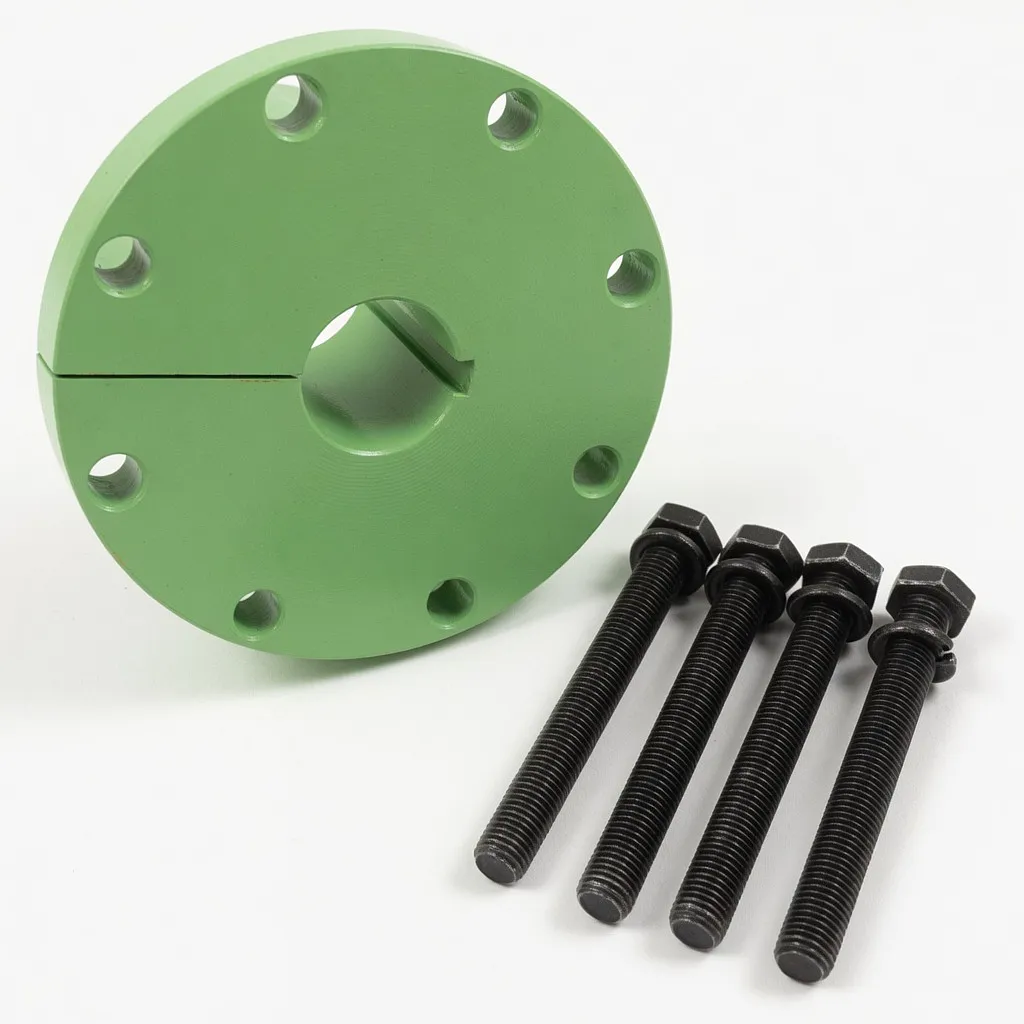 Operating a mechanical linkage rubber tire curing press demands uncompromising reliability from every power transmission component. In the demanding environment of modern tire manufacturing, the final molding phase subjects the machinery to intense cyclical stress. The mold opening and closing mechanisms are required to control massive displacement and apply immense clamping pressure with absolute precision. We regularly see workshop ambient temperatures hovering persistently between 35 to 45 degrees Celsius, creating an atmosphere dense with sulfurized steam and harsh rubber volatiles. This corrosive, high-temperature environment aggressively attacks standard mechanical joints. When analyzing the linkage between the crankshaft and the drive chain sprocket, standard keyed shafts frequently succumb to fretting corrosion and fatigue failure due to the intermittent, massive torque shock loads. A standard press cycle holds the pressure for 8 to 15 minutes, repeating this heavy clamping action 4 to 7 times per hour. This is precisely where engineered QD bushings demonstrate their superiority.
By utilizing a split-tapered design, QD bushings convert the clamping force into a massive radial grip along the entire shaft interface, eliminating the localized stress concentrations that destroy traditional keyways. As a veteran application engineer, I have witnessed countless UK tire plants eliminate catastrophic drive-train failures simply by upgrading their sprocket and shaft interfaces to premium QD bushings. These components not only survive the sulfur-rich atmosphere but drastically reduce maintenance downtime during mold changeovers, keeping continuous production lines moving efficiently.
Kinematic Demands of Mold Opening/Closing Drives
The core application of QD bushings within the tire sector lies deep within the mechanical heart of the curing press. The opening and closing drive operates on a mechanical crank-gear system, designed to generate maximum mechanical advantage at the point of mold closure. As the massive steel molds clamp shut to vulcanize the green tire, the drive sprocket connected to the main crankshaft experiences extreme torsional shock. If the connection between the sprocket and the shaft possesses even a millimeter of backlash, the resulting kinetic hammer effect will rapidly shear standard keys and deform the shaft. QD bushings lock the sprocket to the shaft with a 360-degree compression fit. When the heavy-duty motor decelerates and stops, holding the tonnage force for the 15-minute curing window, the QD bushings prevent any micro-slippage. Furthermore, the specialized corrosion-resistant coatings applied to customized QD bushings repel the aggressive sulfur off-gassing inherent to the vulcanization process, maintaining their structural integrity year after year.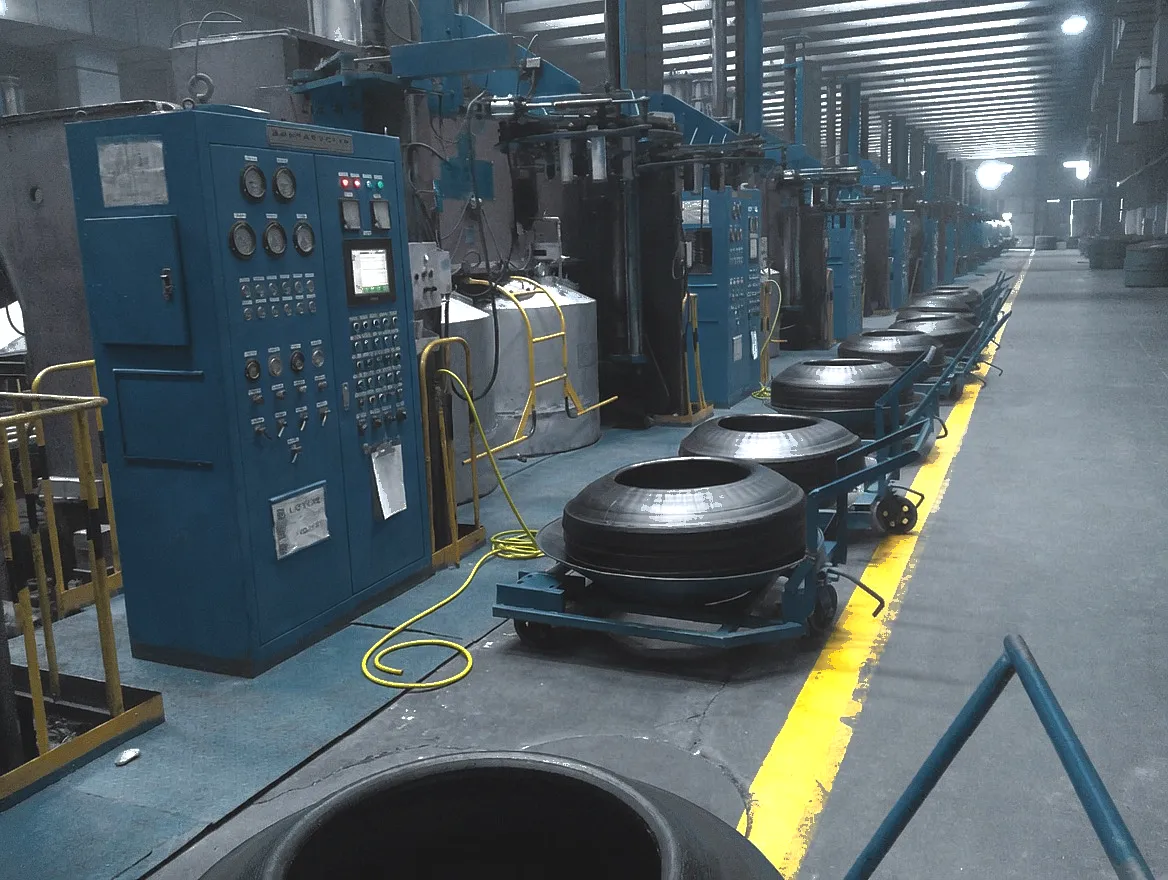
Technical Specifications for Curing Press Environments
| Parameter | Standard Capability | Ever Power Customization |
|---|---|---|
| Shock Load Capacity | Standard intermittent rating | Optimized for 4-7 heavy cycles/hr |
| Operating Temperature | Up to 80°C | Continuous safe operation at 45°C ambient |
| Corrosion Resistance | Basic anti-rust oil | Advanced sulfur/steam resistant coating |
| Base Material | GG25 Cast Iron | High-grade ductile iron options available |
Core Operational Advantages for Tire Factories
Rapid Maintenance Protocol
The Quick Detachable architecture allows maintenance crews to dismount heavy drive sprockets in a fraction of the time required for traditional press-fit hubs, drastically reducing thermal exposure for personnel in the 45°C curing room.
Zero-Backlash Transmission
By converting clamping bolts into radial compression forces, QD bushings ensure the sprocket acts as a monolithic extension of the crankshaft, entirely neutralizing the kinetic shock of mold impact.
Thermal Stability Integration
Engineered materials ensure consistent grip parameters even as the ambient workshop temperature fluctuates between 35°C and 45°C, preventing thermal expansion from loosening the critical drive connection.
Ever Power Customization
Our factory module emphasizes bespoke manufacturing. We provide custom boring, specific keyway configurations, and specialized anti-corrosion treatments tailored directly to your specific press blueprints.
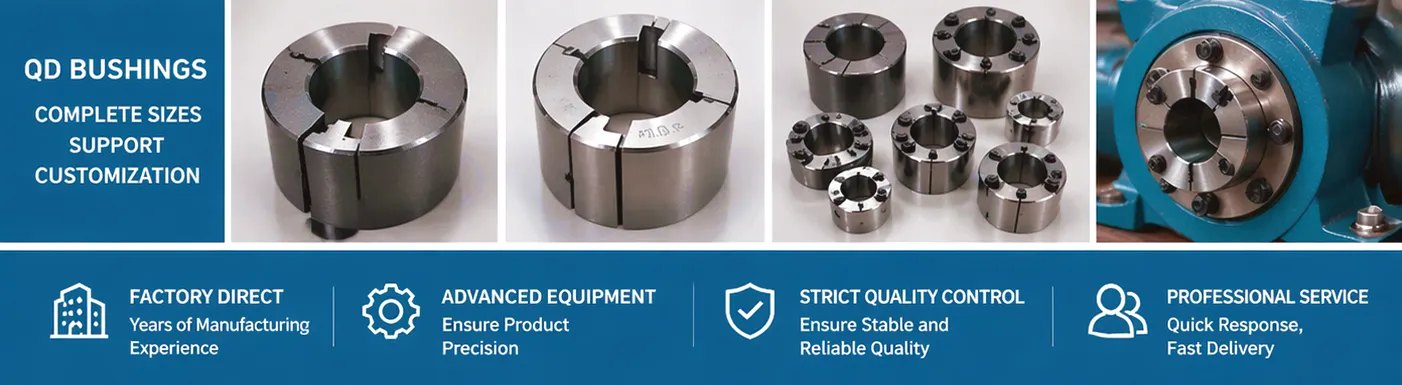
Mechanical Principles & Material Sciences
Tapered Interference Fit
The geometry relies on a split tapered barrel. As the installation bolts are torqued down, the bushing is drawn into the tapered bore of the mating sprocket. This mechanical wedge action multiplies the bolt force, creating a formidable radial interference fit that grips the shaft like a shrink-fit hub, utterly impervious to the reversing shock loads of the mechanical crank.
Ductile Iron Integrity
Standard cast iron can become brittle under constant impact. For high-stress applications like mold clamping forces, QD bushings cast from high-grade ductile iron exhibit excellent elongation properties. They flex elastically under extreme momentary shock forces, absorbing kinetic energy without cracking, ensuring uninterrupted performance during the 8 to 15-minute pressing stage.
Surface Metallurgy Defense
Combating the harsh environment requires advanced surface defense. The high ambient temperatures and aggressive sulfur compounds act as a catalyst for oxidation. Specialized phosphate or black oxide coatings penetrate the porous structure of the iron matrix, creating an impenetrable barrier that prevents fretting corrosion from seizing the bushing to the motor shaft.
Proven Success in the UK Rubber Industry
A prominent automotive tire manufacturing plant situated in Birmingham faced critical production bottlenecks. Their 24/7 continuous operation saw severe degradation of the traditional sprockets on their curing presses, leading to catastrophic keyway shearing and unscheduled halts. By consulting with our engineering team and retrofitting their massive drive linkages with precision-machined QD bushings engineered by Ever Power, they successfully stabilized the crank-gear system. The result? A documented 40% reduction in unexpected drive-line maintenance and significantly faster planned mold changeovers, saving tens of thousands of pounds annually.
“The high-torque impact during our 15-minute curing cycles was destroying our old hubs. Ever Power’s customized QD bushings completely eliminated the backlash. Our production uptime in the Birmingham facility has never been better.”
— James T., Maintenance Director
“We needed a supplier capable of handling custom bore specifications and rapid delivery for our heavy-duty tire presses. Their engineering team delivered components that easily withstand the 45°C ambient steam environment.”
— Sarah L., Procurement Engineer
“Installation times have been cut in half. The split-taper design is phenomenal for quick mold changeovers. We rely entirely on these QD bushings for all our heavy linkage upgrades across the North West.”
— Marcus B., Plant Operations Manager
Frequently Asked Engineering Questions
How much does a custom QD bushing quote cost for UK tire manufacturers?
Requesting a specialized quote from our Ever Power factory is completely free; the final price depends on the specific bore sizing and anti-corrosion treatments required for your curing presses.
Where can I find a reliable QD bushing supplier near Birmingham?
We supply premium power transmission components directly to automotive and industrial hubs across the UK, including swift delivery to Birmingham facilities with full factory support.
Which bushing material prevents sulfur corrosion in high temperature curing workshops?
We highly recommend specifying ductile iron QD bushings treated with our proprietary black oxide coating, specifically engineered to withstand heavy sulfur outgassing and continuous 45°C ambient temperatures.
What causes standard keyed shafts to fail during continuous press cycles?
Standard keyways suffer from fretting corrosion and stress fractures due to the repetitive, intense mechanical backlash generated when the press rapidly transitions from opening speeds to holding massive tonnage.
When should maintenance teams replace heavy-duty QD bushings on linkage drives?
Routine inspections should occur quarterly; however, engineered QD bushings from our factory often vastly outlast conventional hubs, usually requiring replacement only during major systemic machine overhauls.
Upgrade Your Press Drive Integrity Today
Leverage Ever Power’s profound factory customization capabilities. We engineer superior power transmission solutions designed to eradicate downtime and conquer the harshest manufacturing environments in the UK.
edit by gzl