
Mining Industry · Power Transmission · UK Supply
QD Bushings for Mining Conveyor Belt Drive Systems: Engineered to Perform Where Others Fail
Heavy-load torque transmission · Quick-change design · Corrosion-resistant grades · UK-wide supply & custom engineering
 In the extractive industries, very few mechanical environments test power transmission components as relentlessly as a working mine. Whether you are operating an open-cast limestone quarry on the Yorkshire Wolds, running crushed granite belts in the Scottish Highlands, or maintaining underground heading conveyors at a potash mine in North Yorkshire, the conveyor belt drive system sits at the absolute centre of your production throughput. When a drive drum hub fails — when the connection between shaft and drum loosens under load — the financial consequence is immediate: lost tonnes per hour, broken production schedules, and emergency maintenance that invariably costs far more than a planned intervention would have. That is precisely why the specification of QD bushings in mining conveyor applications deserves far more engineering attention than it typically receives on the initial procurement list.
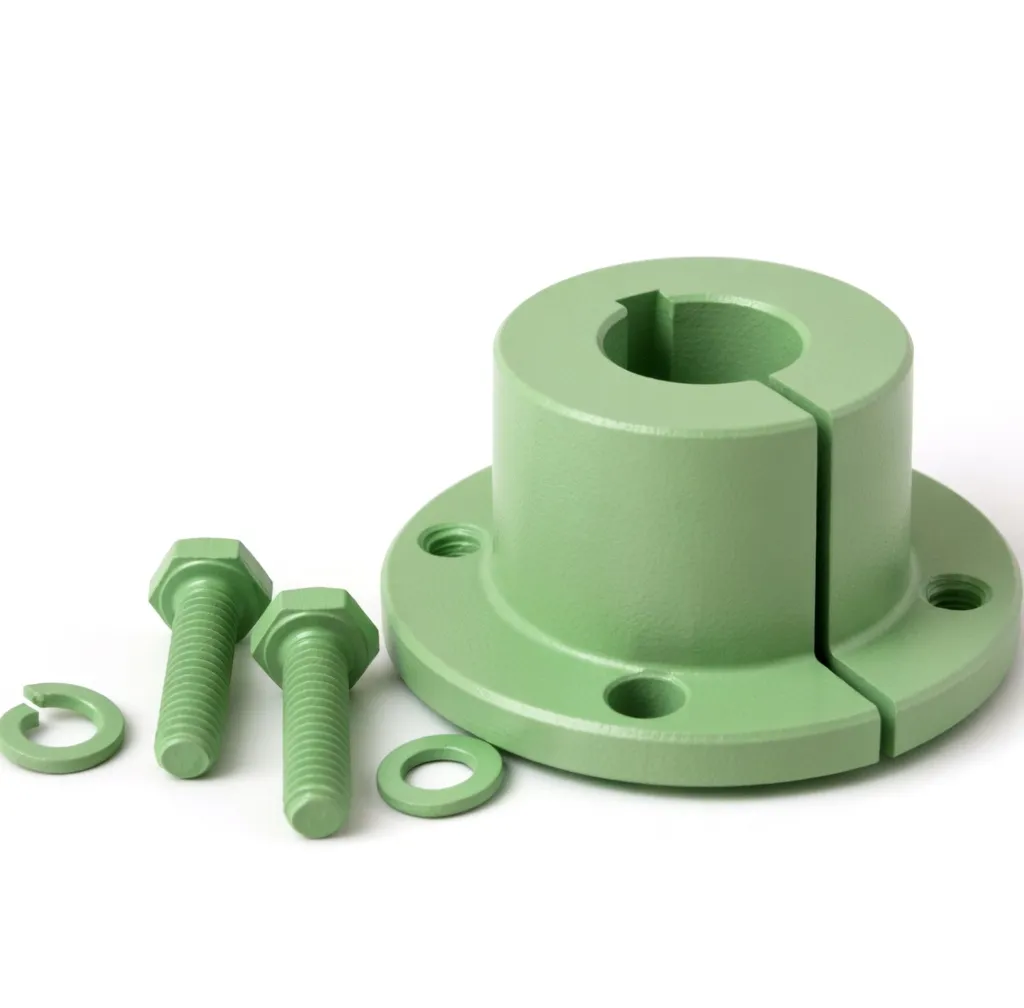
QD bushings — Quick Detachable bushings — form the critical mechanical interface between the drive shaft and conveyor drum hub. Their tapered-bore, split-sleeve design allows installation and extraction without specialist tooling, which is a genuine operational advantage when your maintenance crew is working three hundred metres underground or on an exposed hillside quarry bench in the middle of winter. Across the UK mining and quarrying sector, QD bushings have become the de facto standard for reliable, serviceable drive connections on belt widths ranging from 600 mm up to 2,400 mm and drive powers from a few dozen kilowatts through to several megawatts. Understanding why they dominate at these power levels — and what separates a mining-specification QD bushing from a standard industrial-grade component — is the purpose of this article.
What Makes a QD Bushing the Right Fit for Heavy Mining Applications?
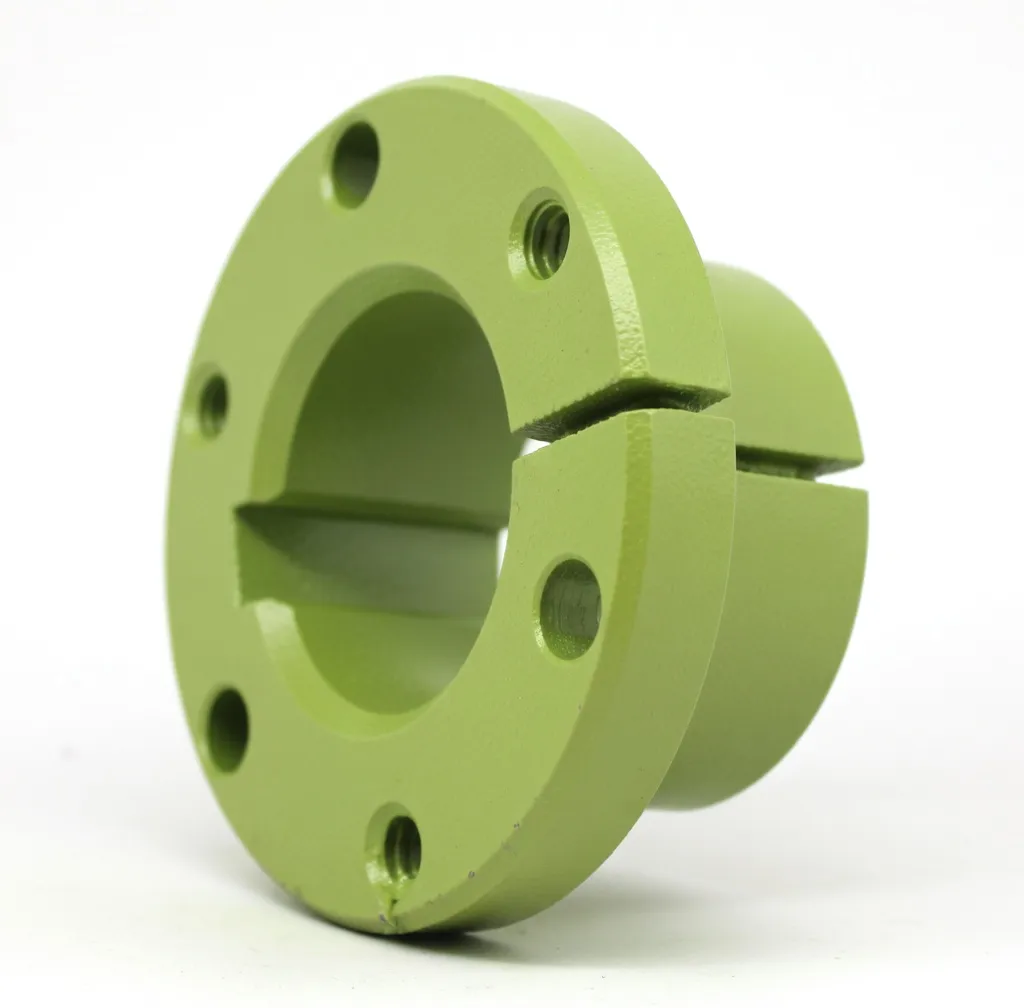
A QD bushing — sometimes referred to as a Quick-Detach bushing — operates on a straightforward but highly reliable engineering principle. A split, tapered sleeve is located inside the matching tapered bore of the sprocket, sheave, or drive drum hub. As the mounting screws are progressively torqued to specification, the taper wedges against the shaft and generates a concentric, friction-based grip that transmits torque without relying on keyway drive alone. The split in the sleeve means that the same mounting screws, relocated to the dedicated withdrawal threaded holes machined into the bushing flange, can be used to jack the assembly free of the taper at service time. No hydraulic press, no oxy-acetylene heat, no risk of shaft damage: removal takes fifteen to thirty minutes rather than several hours of destructive work.
In a mining conveyor context, this translates directly into reduced planned maintenance windows. A 1,200 mm belt system driven by a 750 kW motor-gearbox set at a UK quarry will typically need drive drum attention every eighteen to twenty-four months. With QD bushings correctly specified and fitted, the engineering team can strip and replace worn drum components within a single weekend shutdown rather than cutting into production shifts. Beyond the time saving, the QD bushing standard is maintained across ANSI/AGMA dimensions, meaning our bushings are dimensionally interchangeable with most existing drive hubs regardless of the original equipment manufacturer — an important consideration for UK sites where conveyor systems from multiple eras and vendors coexist.
The tapered bore — ground to a 4° 45′ included angle — creates a self-centring action that ensures the drive drum runs true through multiple removal and reinstallation cycles. In mining environments, even minor eccentricity in the drum assembly accelerates belt edge wear, increases idler bearing loads, and compounds maintenance costs across the entire conveyor system. Precision taper geometry is not a manufacturing luxury in this context; it is a direct contributor to total system reliability and operating cost per tonne.
QD Bushing Technical Performance Parameters — Mining Conveyor Drive Reference
| Bushing Series | Bore Range (mm) | Max Torque (Nm) | Drive Power Range | Typical Belt Width | Standard Material |
|---|---|---|---|---|---|
| JA / SH | 12.7 – 38.1 | Up to 620 | ≤ 75 kW | 600 – 800 mm | Cast Iron ASTM A536 |
| SK / SF | 25.4 – 76.2 | Up to 4,500 | 75 – 400 kW | 800 – 1,400 mm | Ductile Iron / Steel |
| E / F Series | 38.1 – 114.3 | Up to 18,000 | 400 – 1,500 kW | 1,200 – 1,800 mm | Alloy Steel 42CrMo4 |
| J / M / N Series | 76.2 – 165.1 | Up to 65,000 | 1,500 – 5,000+ kW | 1,800 – 2,400 mm | Alloy Steel / SS 316L |
* Values are indicative. Custom bore diameters, non-standard keyway profiles, and specialised surface treatments available on request. All dimensions supplied metric (mm) or imperial (inch) per BS/ISO or ANSI standards.
Why Mining Conveyor Systems Push Standard Components to Their Limits
 Mining operations present a combination of mechanical, environmental, and operational stresses that would rapidly degrade components specified for lighter industrial service. The challenge begins with sheer load magnitude. A single overland conveyor serving a major UK aggregate quarry might carry 2,000 tonnes per hour of crushed limestone, imposing belt tensions exceeding 300 kN on the head drum. The drive drum must transmit this torque continuously, often for twenty or more operating hours per day across every day of the year. QD bushings used in these applications must carry their rated torque with zero slip — even minute creep between the shaft and the bushing bore generates fretting corrosion that will progressively destroy the taper interface.
Environmental contamination adds a further and distinct challenge layer. Underground coal or potash mines expose components to acidic groundwater that attacks cast iron aggressively over time. Open-cast aggregate operations in northern England subject drive components to alternating freeze-thaw cycles, with water carrying fine silica abrading any unprotected metal surface. Standard-grade QD bushings specified from a general industrial catalogue will corrode, seize to the shaft, and require destructive removal under these conditions. Mining environments demand enhanced surface protection as a minimum — phosphate pre-treatment, zinc dichromate plating, or for the most aggressive conditions, full stainless or Duplex grade material.
Shock loading from material surge — particularly at crusher discharge belts where broken rock drops from height directly onto the belt — creates impact torque spikes that can be four to six times the nominal running torque. QD bushings selected for these positions must be sized on peak shock torque rather than average power, with the taper bore manufactured to tight tolerances that maintain positive grip through repeated impulse cycles without working loose. Selecting correctly for these conditions is not complicated, but it does require an applications engineer who understands both the bushing component and the conveyor system it is serving.
Six Core Advantages of Mining-Grade QD Bushings
Rapid Installation & Removal
The Quick Detachable design means a skilled fitter can remove and replace a drive drum QD bushing assembly in under thirty minutes. No hydraulic press, no oxy-acetylene, no shaft damage risk. At major UK quarry sites, this single characteristic typically halves planned maintenance downtime on large conveyor systems — and when unplanned failures do occur, the speed of intervention is dramatically reduced. In confined underground workings where access is physically restricted, the self-extracting screw mechanism is not just convenient; it is the only practical method of hub removal without damaging surrounding equipment.
Superior Corrosion Resistance
Mining-specification QD bushings incorporate zinc-phosphate pre-treatment followed by electrophoretic coating on cast iron grades. Alloy steel variants are available with hard chrome or nickel-plate options. For potash and brine-contaminated mine environments — such as those characteristic of the Boulby and Sirius operations in North Yorkshire — full 316L stainless steel QD bushings with molybdenum content are available. The Mo addition provides chloride-pitting resistance that standard 304-grade stainless cannot match. The cost premium over standard grades is recovered within twelve to eighteen months through avoided corrosion-related replacements in most UK underground mining applications.
Precision Taper Geometry
The 4° 45′ taper on our mining-grade QD bushings is ground to ISO tolerance H7/k6 on all critical mating surfaces. This precision ensures consistent contact area and predictable torque transmission across every drive duty cycle, including the variable loading patterns characteristic of long-haul overland conveyors that experience tension fluctuations during controlled starts, emergency stops, and load variation. A poorly ground taper that makes contact on only part of its surface area will eventually frette the shaft and necessitate the very unplanned downtime that the QD bushing design philosophy exists to prevent.
Interchangeability & Spares Rationalisation
QD bushings conform to ANSI/AGMA dimensional standards, making them interchangeable with most existing drive hubs regardless of the original OEM. For UK quarry and mine operators managing fleets of ten to thirty conveyor systems from multiple eras, this standardisation delivers enormous benefit: a relatively modest stock of common bushing series covers the majority of drive variants on site, cutting the capital tied up in spare parts inventory and reducing the number of emergency procurement decisions that arise when a specific hub variant is unavailable from local stock at a critical moment.
High Shock Load Capacity
Mining-grade QD bushings are rated with a service factor of up to 2.0 applied to nominal torque for shock-loaded applications, including crusher discharge conveyor head drives where material surges momentarily multiply shaft torque by a factor of three to five. The alloy steel grades — 42CrMo4 and EN24T equivalents — provide the combination of high yield strength and fracture toughness needed to absorb these impulses without yielding the taper bore geometry or stripping the keyway. Correctly applying the shock service factor at selection stage is the single most important step in preventing premature failure in this application.
Complete Size Range — One Source
From JA series QD bushings at 12.7 mm bore for light feeder conveyors right through to N series and custom-machined units at 165 mm and beyond for high-power main haul drives, a complete mining site can be supplied by a single specialist. Consolidating onto one QD bushing supplier reduces procurement overhead, improves delivery reliability, and simplifies maintenance training. The applications engineering support provided by our team also becomes more effective as we build familiarity with the full conveyor asset register on your site.
Materials, Working Principle & Design Considerations for Mining Service
How the QD Bushing Actually Works
The QD bushing operates on interference-fit mechanics generated through a tapered wedge action. When the external taper of the split bushing engages with the matching internal taper of the sprocket, sheave, or drum hub, and mounting screws are brought up to specified installation torque, the wedging action compresses the split sleeve against the shaft. The friction coefficient between the bore surface and the shaft — typically 0.12 to 0.15 for steel on steel with appropriate surface finish — determines the grip force and the achievable torque capacity. This is why bore and shaft surface finish specifications matter: a rough bore surface or a shaft with mill scale left on it reduces the effective friction coefficient and cuts actual torque capacity below the rated value.
Removal is achieved by relocating the mounting screws into the withdrawal threaded holes provided in the bushing flange. As the screws bear against the hub face during withdrawal, they jack the bushing free of the taper — releasing the interference without hammering or thermal expansion. In confined underground workings where there is simply no room to swing a hammer or manoeuvre a hydraulic puller, this self-extracting mechanism is genuinely transformative for maintenance practice.
Selecting the Right Material Grade
Cast grey iron (ASTM A48 Class 40 or BS EN 1561 equivalent) remains the most cost-effective material for conveyor drive QD bushings in dry or moderately humid surface environments. Its inherent vibration-damping properties make it a logical choice in crusher buildings where high-frequency vibration is endemic. Where groundwater is present, or where the conveyor passes through a wash zone or wet classification area, ductile iron (EN-GJS-500-7) provides meaningfully better impact resistance and resistance to stress corrosion cracking at a modest cost premium over grey iron grades.
For the most demanding UK underground mining environments — particularly potash operations at depth where brine concentrations are high — austenitic stainless steel 316L QD bushings are the engineered choice. The 2–3% molybdenum content of 316L resists chloride pitting at levels that standard 304 cannot approach. Higher first cost is more than recovered over a five-year service contract when you compare against the repeat replacement cost and lost production time associated with corroded standard-grade bushings in the same service.
Four Key Application Scenarios in UK Mining & Quarrying Operations
Crusher Discharge Conveyor
The position immediately downstream of a primary jaw or cone crusher is arguably the harshest application in the entire plant for any power transmission component. Material drops onto the belt at irregular intervals from the crushing chamber, creating surging belt loads and severe shock torque. QD bushings at the head drive of a crusher discharge belt must handle peak torque multipliers of three to five times the running value while also being easily removable for the frequent drum lagging changes that this dusty, highly abrasive environment demands. Alloy steel grade with proper service factor and zinc-phosphate surface protection is the standard specification for this position.
Underground Haulage Incline Belt
Incline conveyors in underground mines — particularly those on gradients of 12° to 18° — combine high static belt tension with the dynamic braking torques generated during controlled deceleration and emergency backstop engagement. The drive drum QD bushing must sustain bi-directional torque loading: forward drive under normal operation and reverse braking torque when the backstop activates. The taper interference grip handles this bi-directional loading more reliably than keyway-only retention, and the ductile or alloy steel grades specified for underground wet conditions ensure the interface remains cleanly removable at the next planned inspection interval.
Overland Transfer Conveyor
Surface overland conveyors at UK limestone, chalk, and aggregates quarries — some extending two kilometres or more — are driven by high-power motor-gearbox units transmitting up to 3,000 kW through the head drum shaft. At these power levels, the QD bushing interface is a precision friction coupling, and the taper geometry is verified through FE analysis to confirm even pressure distribution across the full contact surface. Localised high-stress regions from non-uniform contact are the initiating mechanism for fatigue cracking in lower-quality alternatives. Our overland conveyor QD bushings are dimensionally verified on a coordinate measuring machine as part of the production quality plan.
Chute Loading Belt & Transfer Points
At transfer points where material is loaded from a chute onto a stationary or slow-moving belt, start-up torque can reach 150–200% of full-load running torque as the loaded belt is accelerated from rest. QD bushings sized correctly for this starting load profile prevent the hub slippage that occurs with under-specified press-fit hubs in this application, protecting both the shaft surface and the drum from fretting damage. Given the frequency with which chute-loading belt drives are started and stopped during normal quarry shift operations, the cumulative benefit of a correctly specified QD bushing over a three-year service period is substantial.
Client Case Study: North Yorkshire Limestone Quarry — Eliminating Chronic Drive Downtime
The Problem: A major limestone quarry operation near Harrogate, North Yorkshire, was recording an average of thirty-two unplanned conveyor downtime hours per month across three of its six primary production belts. The root cause traced consistently to press-fit drive drum hubs that had seized onto the drive shafts. Each removal event required heat application and improvised pulling arrangements, causing shaft surface damage that then accelerated the next failure cycle. Maintenance costs on these three conveyors alone were running at over £85,000 per year in labour, parts, and lost production.
The Solution: Our applications engineer reviewed the full drive specifications for all three belts — motor ratings, gearbox output shaft diameters, starting method, and operating environment — and specified a programme of F-series QD bushings in 42CrMo4 alloy steel with zinc-phosphate surface treatment. The existing press-fit hubs were rebored and tapered in a local machine shop to accept the new QD bushing interface. A set of critical spares was established on-site covering all three belt variants, and the quarry’s maintenance team received a two-hour practical installation and torque-setting session from our engineer.
The Outcome: Over the twelve months following installation, conveyor-related downtime on the three refitted belts fell from thirty-two hours per month to under three hours — a 91% reduction. The on-site spare parts inventory was simplified from forty-three individual hub variants down to seven QD bushing sizes covering all three conveyors. The total project investment was recovered in under six months based on production uplift and reduced labour cost alone. The operation subsequently extended the programme to cover all six production belts and one overland conveyor serving the secondary crushing plant.
What UK Mining & Quarry Engineers Say
“We’ve been running these on all our primary drive drums at the potash operation for three years now. Before the switch we’d lose a full day every five or six weeks dealing with seized hubs. Since fitting the 316L grade we haven’t had a single unplanned removal. The right material choice was crucial in our brine environment.”
“The technical support was genuinely thorough. They sized the QD bushings for our crusher discharge application accounting for the shock factors we had been under-specifying for years on the OEM hubs. Three-week lead time for a custom bore — frankly exceptional for a specialist component at short notice.”
“Price and quality are both exactly right for a medium-sized operation. We compared three other QD bushing suppliers active in the UK market and Ever Power consistently delivered on dimensional accuracy, surface finish, and hardness specification. Minimum order quantities also suited us — no forced bulk buying.”
Ever Power — Custom QD Bushing Manufacturing for UK Mining, Quarrying & Heavy Industry
At Ever Power, the standard catalogue is only the starting point. Our manufacturing facility operates CNC turning centres and precision grinding machines capable of holding taper tolerances to ±0.002 mm on production runs, matching the highest-demand specifications from conveyor OEMs and engineering contractors working on major UK mining infrastructure. ISO 9001:2015 certification covers the full design-to-delivery process for both standard and custom QD bushing manufacture, providing the documented quality trail that major mining operators increasingly require from their supply chain.
Custom manufacturing capabilities include: non-standard bore diameters in both metric and imperial, including non-decimal legacy sizes that appear on older British and European-origin equipment; special keyway configurations including double keyways and profiles bored to DIN 6885, ANSI B17.1, or BS 4235; modified flange geometry for restricted-access drive housings common in underground mine headings; enhanced surface treatments including thermal spray coatings, hard chrome plate, and electrophoretic painting for corrosion resistance in wash-down environments; and individual component marking and batch serialisation for traceability-critical mine safety contracts.
We supply UK mining engineers, quarry plant managers, and conveyor system OEMs across England, Scotland, Wales, and Northern Ireland. Standard stocked sizes ship next day through our UK distribution partner network. Custom-specified QD bushings with non-standard bore diameters typically ship within two to three weeks of drawing confirmation. Applications engineering consultation is provided at no charge — from initial selection through to installation verification if required on site.
✓ Custom Engineering Services
• Custom bore diameters — metric & imperial
• Non-standard keyway profiles (DIN / ANSI / BS)
• Special material grades (SS 316L, Duplex, EN24T)
• Enhanced corrosion protection coatings
• Batch marking & serialisation
• FEA-verified taper geometry for critical drives
• Modified flange geometry for confined access
Frequently Asked Questions — QD Bushings for Mining Conveyor Systems
Ready to Upgrade Your Mining Conveyor Drive System?
Our applications engineers have experience across the full range of UK mining and quarrying operations — from small aggregate quarries in the Welsh Valleys to major potash operations in North Yorkshire and open-cast coal sites in Northumberland. Whether you need standard stocked QD bushings dispatched tomorrow or a bespoke-engineered solution for a challenging drive specification, talking to us first will save you time and money. That is not a marketing claim — it is what the UK mining engineers who use our products tell us year after year. Contact us today and let us put together a properly engineered recommendation for your application at no charge.
📫 Get a Quote — [email protected]
UK-wide supply · Custom engineering · Applications support included · ISO 9001:2015
edit by gzl