
Agricultural Drive Engineering · Ever Power
QD Bushings for Combine Harvester Threshing Systems: The High-Torque Drive Solution Built for British Agriculture
Season-ready reliability, fast field maintenance, and precision torque transfer — engineered for the uncompromising demands of UK cereal and oilseed rape harvest.
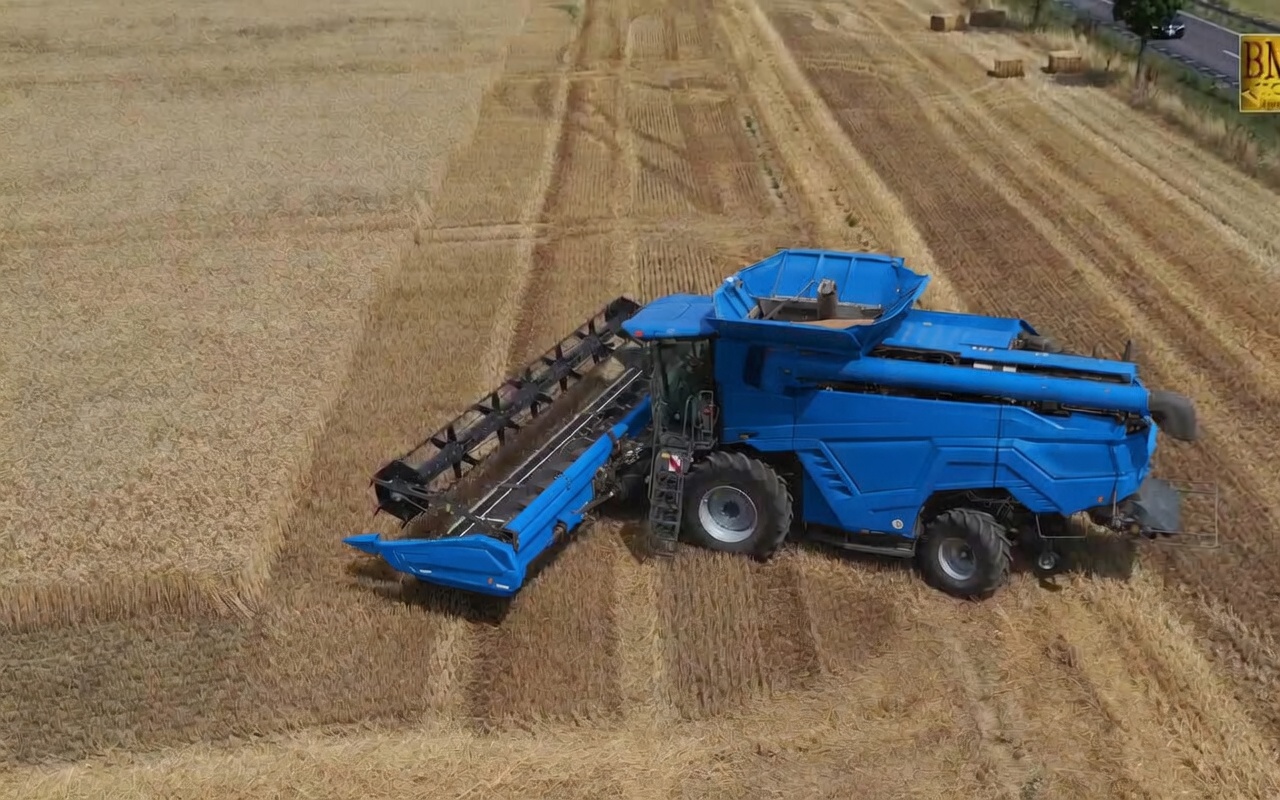 When the first combine rolls into a field of winter wheat on a clear July morning in Lincolnshire or the Yorkshire Wolds, every component in the machine’s drivetrain is tested without mercy. The threshing drum — the mechanical heart of any combine harvester — rotates at between 500 and 1,200 RPM, subjecting every shaft connection to relentless cyclic loading, sharp shock torques, and the abrasive environment of grain dust, chaff, and crop moisture. This is the precise operating context where QD bushings demonstrate engineering advantages that no other shaft-to-hub connection method can match at the same combination of torque capacity, installation speed, and seasonal serviceability. The term QD stands for “Quick Disconnect” — a name that barely hints at the full depth of the design’s mechanical logic, which goes well beyond simply being easy to remove. QD bushings provide a precision tapered locking interface between the drum shaft and the belt-drive pulley, transmitting full operating torque with zero angular play while enabling the entire connection to be disassembled with standard hand tools in under twenty minutes. For a British arable farmer whose harvest window may last no more than three weeks, that saving in maintenance time is not a convenience — it is a commercial necessity.
Agricultural engineers and procurement specialists at combine harvester OEMs and aftermarket dealerships across England, Scotland, and Wales are increasingly standardising on QD bushings across multiple drivetrain locations — not just the threshing drum main drive pulley, but also the eccentric crankshaft drives on grain-cleaning sieves, feeder house roller shafts, and straw-walker crank sections. The underlying reason is consistent: QD bushings offer a standardised, interchangeable, and dimensionally predictable connection that reduces parts inventory complexity, simplifies pre-season inspection, and eliminates the shaft surface damage caused by seized keyed hubs during the long off-season storage period typical of UK arable operations. A combine that sits idle from October through to late June faces genuinely harsh storage conditions — moisture condensation, grain-dust residue, and temperature cycling — all of which accelerate the corrosion bonding of traditional hub connections. QD bushings, with their lubricated taper interface and jacking-screw removal system, are designed to remain serviceable through exactly these conditions.
Custom bores · Fast UK delivery · Agricultural engineering support
Why QD Bushings Are the Engineering Standard for Threshing Drum Drive Connections
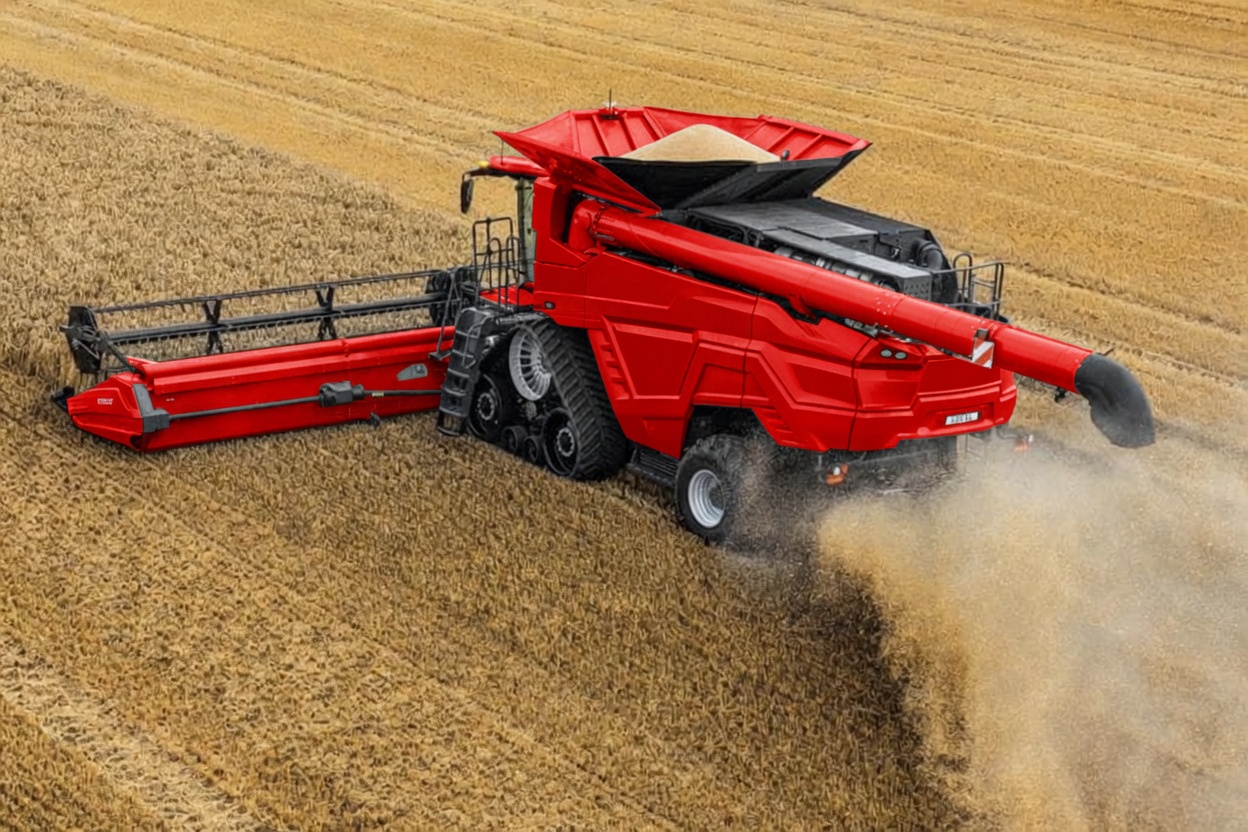 The mechanical demands placed on a combine harvester’s threshing drum drive connection rank among the most severe encountered in any agricultural machine. During peak threshing — when dense, wet, or lodged crop material surges into the concave in an irregular mass — shock torques can momentarily spike to two or three times the steady-state drive load. Traditional keyed shaft connections, particularly those in which keyway fits have relaxed through wear or in which hub-to-shaft clearances were imprecise from the outset, respond to these spikes with micro-movement at the bore-to-shaft interface. That micro-movement, repeated thousands of times per operating hour, generates fretting corrosion on the shaft surface, progressively widens the keyway, and eventually leads to catastrophic loosening of the pulley — an event that, if it occurs mid-harvest, typically requires a minimum of three to four hours of emergency repair and may incur belt damage, shaft regrinding, or hub replacement at considerable cost.
QD bushings address these failure modes at a fundamental design level. The bushing’s internal bore is machined to a taper of 4 degrees 21 minutes — matching the external taper of the mating sheave or sprocket hub — so that as the flange bolts are tightened, the taper draws inward simultaneously gripping the shaft with 360-degree compressive contact and concentrically locking the hub without any radial clearance or angular play. There is no reliance on friction at a single keyway face; the grip is generated uniformly around the entire shaft circumference, distributing load in a way that produces zero fretting motion under even the most aggressive shock-loading event. The result is a connection that behaves mechanically as a rigid joint while remaining fully reversible through the simple action of transferring the flange bolts to the jacking holes provided in the bushing flange — a process that takes minutes and leaves the shaft surface completely undamaged for reuse.
For OEM engineers designing or updating combine drivetrain architectures for the UK and European markets, the standardisation advantages of the QD system are equally compelling. Because the bore specification is entirely contained within the bushing itself, a single casting for a sheave or sprocket can accommodate a wide range of shaft diameters simply by pairing it with different QD bushing sizes from the same series. A dealer parts network serving farms across East Anglia, the East Midlands, and the Scottish Borders can therefore stock a manageable inventory of bushings in standard metric and imperial bores and service a broad fleet of combine brands and vintages without holding multiple unique hub castings for each machine.
Technical Specifications: QD Bushings for Combine Harvester Threshing Applications
Selecting the correct QD bushing series requires matching the bore range and maximum torque rating to the specific shaft diameter and drive load of each application point within the combine. The following table covers the series most commonly specified for UK combine harvester threshing and cleaning drivetrain locations, including indicative torque ratings, maximum RPM, and typical application positions.
| Bushing Series | Bore Range (mm) | Max Torque (Nm) | Max RPM | Keyway | Typical Agricultural Application |
|---|---|---|---|---|---|
| JA | 12.7 – 28.6 | 170 | 4,500 | Yes | Cleaning sieve eccentric shaft, small auxiliary drives |
| SH | 19.1 – 44.5 | 560 | 4,200 | Yes | Feeder house roller, straw-walker crankshaft |
| SK | 25.4 – 76.2 | 1,450 | 3,600 | Yes | Threshing drum main drive pulley (mid-size combines) |
| SF | 31.8 – 88.9 | 2,820 | 3,200 | Yes / Optional | Large combine drum drive, axial-rotor input shaft |
| E | 44.5 – 127 | 5,650 | 2,500 | Yes | Heavy-duty rotor drive, grain elevator chain sprocket |
| F | 50.8 – 152.4 | 11,300 | 2,000 | Yes | Very large combine / agricultural contractor spec |
Torque ratings are indicative. Final selection should account for shaft diameter, keyway geometry, and the application’s service factor. Contact our engineering team for a confirmed recommendation.
Six Engineering Advantages of QD Bushings in Agricultural Combine Drivetrains
Rapid Field Installation and Removal
A QD bushing can be installed or removed using only standard hex-head bolts and a calibrated torque wrench, in under twenty minutes, directly in the field. No hydraulic press, no heat application, and no specialist workshop facility are required. For British arable farmers who may need to swap pulleys between crops — shifting from oilseed rape concave settings to wheat mid-season — this speed advantage directly protects harvested area and daily throughput.
360-Degree Compressive Shaft Grip
The tapered bore of a QD bushing engages the shaft uniformly around its full circumference, generating radial compressive grip that significantly exceeds the holding force of a standard parallel-bore keyed connection. Under the shock torques typical of wet, heavy crop entering the threshing drum, this grip maintains zero angular play between shaft and pulley — eliminating the fretting wear that leads to expensive shaft regrinding on older combine designs used across the UK.
Off-Season Storage Compatibility
UK combines are typically stored from October through June — a seven to eight month layup in which moisture, condensation, and grain-dust residue cause keyed hub connections to seize on shaft surfaces beyond the capacity of normal hand tools. QD bushings resist this problem: the taper interface is lubricated on installation, and the jacking screws built into the flange release the taper cleanly regardless of surface corrosion. Pre-season inspection and bushing replacement becomes a planned, predictable task rather than an emergency.
Standardised Interchangeable Sizing
The QD standard defines consistent flange bolt circles, taper angles (4° 21′), and keyway dimensions across all bushing series. A hub designed for a specific QD bushing size will accept any compliant bushing from that series. UK agricultural dealers can stock fewer part numbers while covering a broader range of bore sizes — a meaningful advantage for parts availability during the critical harvest window when waiting for a non-standard component is simply not an option.
Cast Iron and Ductile Iron Construction
Agricultural-duty QD bushings are manufactured from Grade 30 grey cast iron or ductile iron to ASTM A536 Grade 65-45-12, offering tensile strength up to 448 MPa. For combines operating in damp coastal regions of the UK — including parts of Scotland, Wales, and South West England — stainless steel or zinc-phosphate-coated variants provide corrosion resistance through long off-season storage. The bushing material is specified to outlast multiple generations of belt pulleys and sheaves, delivering long-term value.
Lower Total Cost of Ownership
When reduced downtime during harvest, lower maintenance labour, the ability to replace only the bushing rather than the full shaft-and-hub assembly, and the complete elimination of shaft damage from seized keyway connections are factored together, QD bushings deliver a demonstrably lower total cost of ownership than conventional connection methods — even accounting for their higher unit price compared to setscrew hubs. For UK agricultural contractors running multi-machine fleets, the cumulative savings across a season are substantial.
Materials, Surface Finish, and Precision Manufacturing for Agricultural Duty
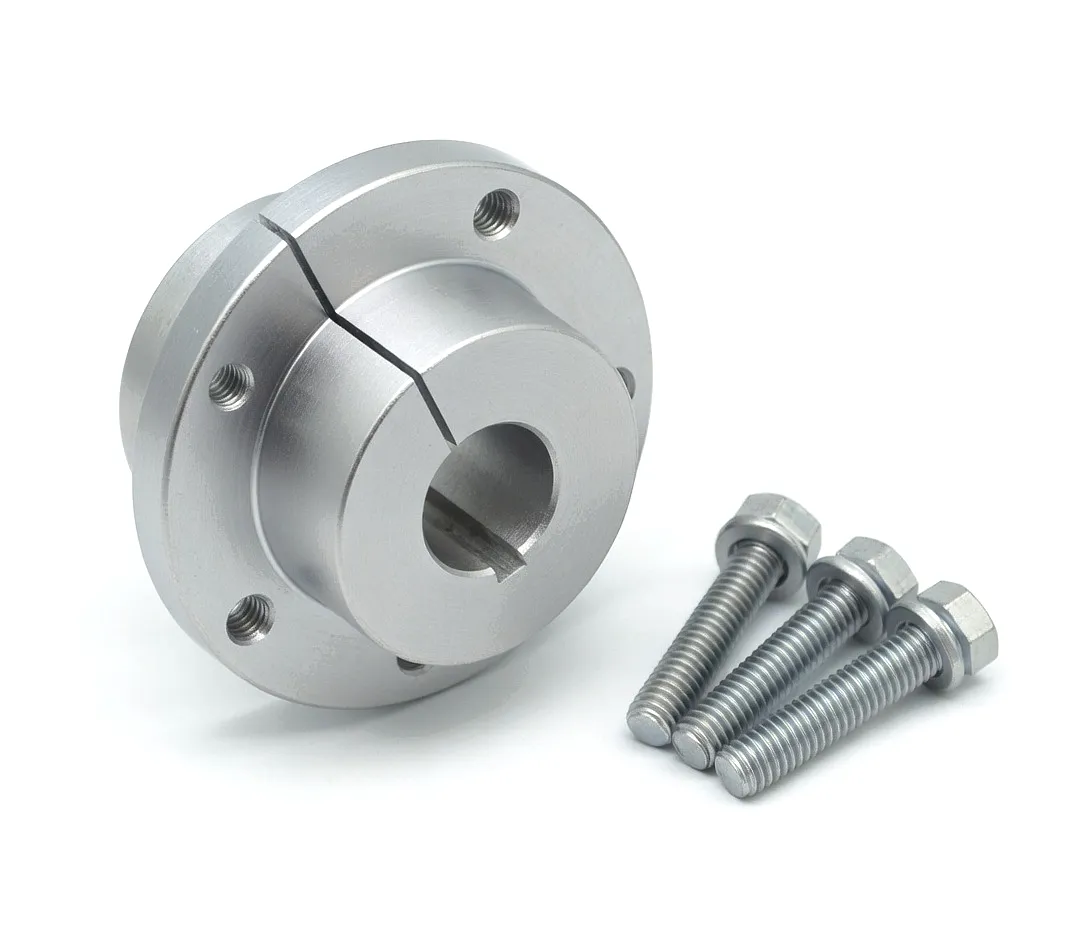 Material selection for a QD bushing destined for combine harvester service is not a default decision. In the context of a threshing drum drive, the bushing must simultaneously resist torsional shear, withstand compressive loading from the taper interface, and survive the corrosive effects of grain oils, straw moisture, and airborne abrasive fine particles over repeated seasonal cycles. The industry baseline for agricultural applications is Grade 30 grey cast iron, which combines machinability, inherent vibration-damping properties, and adequate tensile strength for the majority of threshing drum duties. Where higher impact energy absorption is needed — typically on large axial-rotor combines processing heavy-yielding winter wheat or processing crops in wet conditions common to northern England and Scotland — ductile iron to ASTM A536 Grade 65-45-12 is the preferred choice, offering approximately 40% greater tensile strength and significantly improved ductility against sudden shock loading events.
Surface finishing is equally important to long-term performance. The tapered bore and flange face of every QD bushing we produce are finish-machined to a surface roughness of Ra 1.6 µm or better, ensuring maximum taper contact area and preventing the micro-slip that causes heat generation and fretting under high-torque conditions. Keyway slots are broached to DIN 6885 tolerances, maintaining consistent dimensional accuracy across the full bore range. For agricultural-duty bushings, the external surfaces are protected by zinc-phosphate or black-oxide conversion coatings, which provide meaningful corrosion resistance during the seven to eight months of off-season storage on UK farms without adding any dimensional bulk that could interfere with the hub-bore engagement fit.
The manufacturing detail that most distinguishes a precision agricultural QD bushing from budget-grade imports is the taper angle accuracy. The nominal taper angle for all QD-series bushings is 4 degrees 21 minutes (4.35°). Deviation from this angle — even by a fraction of a degree — produces either insufficient grip (if the taper is too shallow) or dangerous stress concentration at the bore minor diameter (if the taper is too steep). Our CNC turning process uses in-process laser gauging to hold taper angle tolerance within ±2 arc minutes on every bushing produced, verified by coordinate measuring machine inspection on sampled finished parts. It is this level of manufacturing precision that allows our QD bushings to perform consistently season after season in the demanding environment of a combine threshing drive.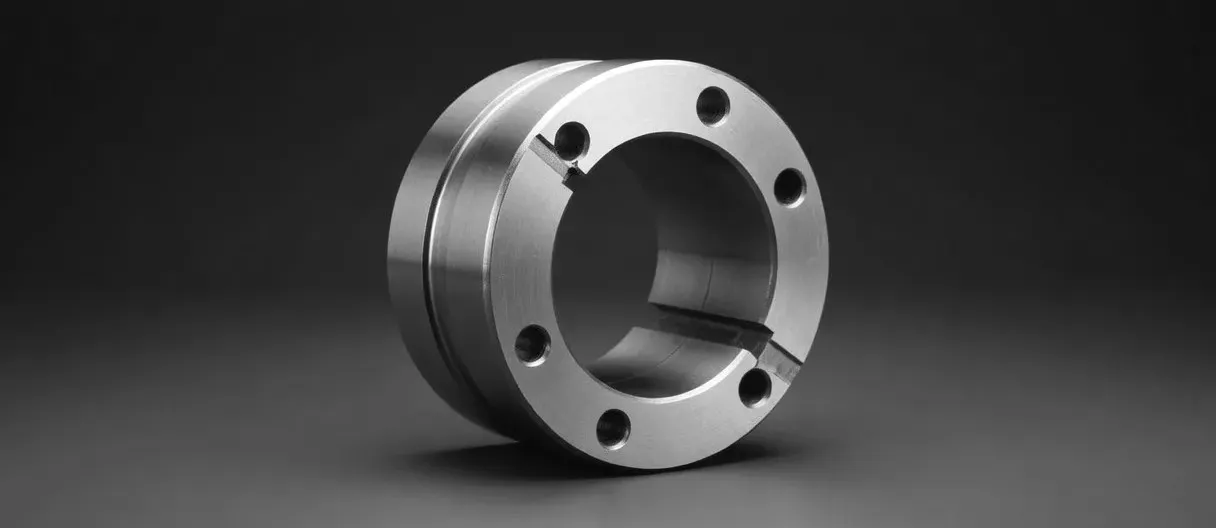
Where QD Bushings Are Used Throughout the Combine Harvester Drivetrain
Beyond the threshing drum itself, QD bushings appear at multiple critical drive points in a combine harvester. The four positions where they deliver the most significant reliability and maintenance benefits on UK combine harvesters are explored below.
1 — Threshing Drum Main Drive Pulley
The most heavily loaded QD bushing position on any combine. The drum shaft — typically 60 to 90 mm in diameter on mid-to-large UK machines — receives multiple V-belt loads via a large-diameter cast-iron or steel sheave. SK and SF series QD bushings are standard for this location, with torque capacity exceeding 1,400 Nm to handle peak loads during heavy-crop surge. The ability to swap the sheave in under twenty minutes is critical when belt or pulley damage occurs mid-harvest.
2 — Cleaning Sieve Eccentric Drive
The grain-cleaning shoe uses an eccentric crankshaft running continuously throughout the working day. JA and SH series QD bushings mount the eccentric drive pulleys to the crankshaft, providing concentricity and grip on smaller shaft diameters (22 to 45 mm) while permitting rapid end-of-season disassembly for bearing replacement. In wet UK harvest conditions, the zinc-phosphate coated variants resist the seasonal corrosion that commonly seizes plain keyed connections.
3 — Feeder House Roller and Elevator Chain Drive
Feeder house conveyor chains and grain elevators are driven via chain sprockets mounted on through-shafts. QD bushings allow the sprocket to be positioned axially along the shaft before locking, providing a setup advantage when configuring the combine for different header widths or crop types. The ability to fine-tune axial position without removing the shaft from its bearings saves several hours during annual pre-season setup across the UK’s diverse arable systems.
4 — Straw Walker Crankshaft Phasing
On conventional straw-walker combines, each crank section of the walker crankshaft must be precisely timed relative to the others. QD bushings permit the phasing angle of each section to be set independently and then locked, making pre-season synchronisation straightforward and repeatable — without permanent deformation of the shaft as would occur with press-fit or welded connections. Incorrect walker phasing leads to uneven crop distribution, measurable grain losses, and costly residue management issues on UK arable farms.
Customer Success Story: Lincolnshire Arable Farm Cuts Mid-Harvest Drive Failures by 74%
Client
Thornfield Farms Ltd
Location
Lincolnshire Wolds, England
Crop Types
Winter wheat, spring barley, oilseed rape
Fleet
3 × large combine harvesters / 2,400 ha
The Challenge
Thornfield Farms operated three large combines using setscrew-style hub connections on the threshing drum drive pulleys. Over two consecutive seasons, fretting wear on keyway contacts caused drum pulleys to loosen mid-harvest on two separate machines — a total of 31 unplanned downtime hours across the fleet, estimated at £38,000 in lost output, emergency repair labour, and contractor hire for the affected parcels.
The Solution
Following a technical consultation with our UK-facing engineering support team, Thornfield retrofitted all three combines with Ever Power SF-series QD bushings on the threshing drum main drive sheaves and SH-series QD bushings on the cleaning sieve eccentric drives. The retrofit was completed during the pre-season service — approximately four hours per machine — with no shaft modifications required. Custom bore sizes were machined to suit the non-standard shaft diameters on two of the older machines.
The Results — Harvest Seasons 2022 to 2024
74%
Reduction in unplanned downtime
£31K
Estimated annual savings
15 min
Average pulley swap time vs. 75 min before
0
Mid-harvest drive failures across three seasons
What UK Agricultural Customers Are Saying
★★★★★
“We made the switch to Ever Power QD bushings on our two CLAAS Tucano machines three seasons back and we have not had a single drive failure in harvest since. The taper-lock design makes the end-of-season stripdown straightforward enough that our trainee mechanic handles it without supervision. Delivery to our depot in Norfolk arrived within five working days. We would not go back to the old setscrew hubs under any circumstances.”
— James R., Farm Manager
Norfolk Arable Holdings, East Anglia, UK
★★★★★
“As a parts supplier covering farms across Yorkshire and Humberside I need manufacturers who can deliver non-standard bores quickly. Ever Power’s custom QD bushing service is genuinely excellent — we had a bespoke SF-series with an 82 mm bore delivered within six working days of emailing the drawing. Quality matched or bettered OEM spec on both dimensional and surface finish checks. Our customers have picked up on the difference and are asking for Ever Power by name.”
— David S., Parts Manager
Pennine Agricultural Supplies, Yorkshire, UK
★★★★★
“Our company designs bespoke feeder house upgrade kits for agricultural contractors across the UK. Specifying Ever Power QD bushings on all our roller drive shafts has allowed us to offer a genuinely modular configuration that our customers can set up and adjust in the field without workshop support. Dimensional consistency batch to batch is exceptional — critical when we are building assemblies for independent field configuration. Lead times are consistently reliable and the documentation meets our OEM quality system requirements.”
— Sarah M., Lead Design Engineer
AgriDrive Engineering Ltd, Cambridgeshire, UK
Ever Power: Custom QD Bushings Manufactured for UK Agricultural OEMs and Dealers
Ever Power manufactures QD bushings across a comprehensive range — from JA through to M series — covering bore diameters from 12.7 mm to 203 mm and torque capacities extending beyond 28,000 Nm. Our manufacturing facility operates CNC turning centres, precision broaching machines, and automated coordinate measuring equipment, enabling production of both standard catalogue items and fully custom QD bushing variants to customer-supplied drawings or reverse-engineered specifications. For UK agricultural OEMs designing new combine models, updating drivetrain architectures, or supporting legacy fleet maintenance programmes, our engineering team is available to collaborate on bore tolerance analysis, keyway sizing, and surface treatment selection from concept stage through to first-article inspection approval.
Our product customisation capabilities extend considerably beyond simple bore resizing — and this is where we genuinely differentiate from catalogue-only suppliers. Agricultural customers regularly request: non-standard taper angles for compatibility with legacy or proprietary equipment; metric or imperial keyway dimensions to precise DIN or ANSI tolerances; phosphate, zinc-plated, black-oxide, or stainless steel surface options for varying storage and environmental conditions; and dual-keyway configurations for applications requiring higher-than-standard torque transfer in a given bushing series. We produce in quantities from a single prototype piece to production batches exceeding 10,000 units, with lead times typically between 5 and 15 working days depending on specification complexity. All products ship with full dimensional certification and material compliance documentation, satisfying the traceability and inspection requirements of UK agricultural machinery OEM quality systems and ISO 9001-aligned dealer programmes.
Our Custom Manufacturing Capabilities
✓
Custom bore — metric and imperial sizes
✓
Non-standard keyway geometry
✓
Ductile iron, stainless steel, special alloys
✓
Zinc, phosphate, black-oxide surface treatment
✓
Dual-keyway high-torque configurations
✓
1 piece prototype to 10,000+ production runs
✓
Full material certs + dimensional reports
✓
UK-wide next-day despatch on catalogue stock
Frequently Asked Questions
What size QD bushings do I need for a combine harvester threshing drum drive shaft in the UK, and how do I work out the right series?
The answer depends on two measurements: your shaft diameter and the estimated drive torque at the threshing drum. On the mid-to-large combine harvesters most common in UK arable operations — CLAAS LEXION, John Deere S-series, New Holland CR-series — the threshing drum shaft typically falls between 60 mm and 90 mm. SK series QD bushings cover 25.4 to 76.2 mm bore with a maximum torque of 1,450 Nm, while SF series extends to 88.9 mm bore at 2,820 Nm. If your shaft falls outside these ranges, or if you are unsure of the operating torque, send the shaft diameter, keyway dimensions, and combine model to our engineering team at [email protected] for a confirmed recommendation with no obligation.
How much do QD bushings for agricultural combine harvesters cost in the UK, and do you offer trade pricing for machinery dealers or farm supply companies?
Pricing for standard catalogue QD bushings varies by series and bore size — smaller JA and SH series bushings used on cleaning sieve applications are priced differently from the SF and E series bushings specified on main threshing drum drives. We operate a formal trade pricing structure for registered UK agricultural machinery dealers and farm supply companies, with volume-based discounts above defined minimum order thresholds. To receive a formal trade price quotation for your required part numbers and volumes, contact us at [email protected] with your company name, registered address, and a list of part specifications or application details. We typically respond within one working day.
Where can I find a reliable QD bushing supplier in England or Scotland who can deliver non-standard bore sizes within the same week before the harvest season starts?
Ever Power holds catalogue stock of the most common QD bushing series in standard metric and imperial bores, available for next-day despatch to all UK delivery addresses. For non-standard bores — common with legacy combine models or feeder house modification projects — our custom machining service delivers straightforward bore alterations in 5 to 8 working days and fully bespoke specifications within 10 to 15 working days. Orders can be placed by email to [email protected] and we serve customers throughout England, Scotland, Wales, and Northern Ireland, with dedicated pre-harvest priority handling for orders received between April and June.
How do I install a QD bushing correctly on a combine harvester threshing drum pulley without causing damage to the shaft or hub?
Correct installation follows a simple sequence: clean and dry both the shaft surface and the QD bushing bore; slide the bushing into the hub bore until the flange bolt holes align; apply anti-seize compound to the bolt threads only — never to the taper surfaces; insert all flange bolts and hand-tighten evenly; torque in a star pattern using a calibrated torque wrench to the manufacturer’s specification for the series. For SF series on a 75 mm shaft, the recommended torque is typically 135 Nm. Never hammer or press the bushing in — the taper draws in under bolt tension alone, and forcing it damages the taper contact surface and compromises grip. For removal, transfer the bolts to the jacking holes and tighten evenly to release the taper without shaft damage.
When is the right time to inspect and replace the QD bushings on a UK combine harvester before the summer wheat or barley harvest season begins?
Pre-season inspection of all accessible QD bushings should be completed in May or the first two weeks of June at the latest — well before harvest begins in late June for oilseed rape or mid-July for winter wheat across most of England. Check for: corrosion on the taper bore or shaft contact surface; cracks or chips in the bushing flange; keyway elongation or damage; and any wobble or angular play in the mounted sheave or sprocket. If any of these are present, replace the QD bushing immediately. The cost of a replacement bushing is a fraction of the expense of a mid-harvest breakdown on a high-output arable farm, and the installation time is measured in minutes.
Which QD bushing series and surface treatment is best for a combine harvester cleaning sieve eccentric drive operating in wet British harvest conditions in Scotland or northern England?
For cleaning sieve eccentric drives on combines operating in the damp harvest conditions typical of Scotland, Northumberland, or the North Yorkshire Moors — where late-season cereal harvesting frequently occurs in high-humidity or lightly wet conditions — we recommend JA or SH series QD bushings with zinc-phosphate surface treatment. The JA and SH bore ranges suit the eccentric crankshaft diameters of 22 to 45 mm common in current combine designs, and the zinc-phosphate coating provides meaningful corrosion protection through the eight-month off-season storage period. For combines stored in unheated buildings with condensation exposure, a light application of corrosion-inhibitor wax to the taper bore at end-of-season disassembly adds an additional layer of protection at minimal cost.
Can Ever Power supply custom QD bushings for older or discontinued combine harvester models where the original manufacturer no longer offers replacement parts in the UK?
Yes — this is among the most frequent requests we receive from UK agricultural dealers and independent repair workshops. Older combines from discontinued Massey Ferguson, Case IH, early New Holland, and Deutz-Fahr platforms sometimes used non-standard bore dimensions or proprietary keyway specifications that are no longer available through OEM channels. Our reverse-engineering service accepts worn bushings, engineering drawings, or dimensional data measured in the field, and produces replacement QD bushings that meet or exceed the original specification. Minimum order quantity for fully custom items is one piece, and all custom bushings are supplied with a dimensional inspection report and material certificate. Contact [email protected] with as much technical detail as you can provide and our engineering team will respond with a lead time and price within one working day.
Ready to Upgrade Your Combine Harvester’s Threshing Drive Before This Season?
Contact Ever Power’s agricultural engineering team for expert QD bushing selection, custom bore quotations, and rapid delivery across England, Scotland, Wales, and Northern Ireland.
🌿 Get a Quote: [email protected]
Custom bore diameters · Next-day UK despatch on catalogue stock · Agricultural OEM engineering support · Competitive trade pricing · edit by gzl