
CEMENT MANUFACTURING · ROTARY KILN DRIVES · HEAVY INDUSTRIAL
QD Bushings for Cement Plant Rotary Kiln Drives: Engineering Reliability in the Most Punishing Environment on the Factory Floor
How properly specified QD bushings dramatically cut kiln downtime, survive relentless heat and alkaline dust, and deliver years of uninterrupted service at the heart of Portland cement production.
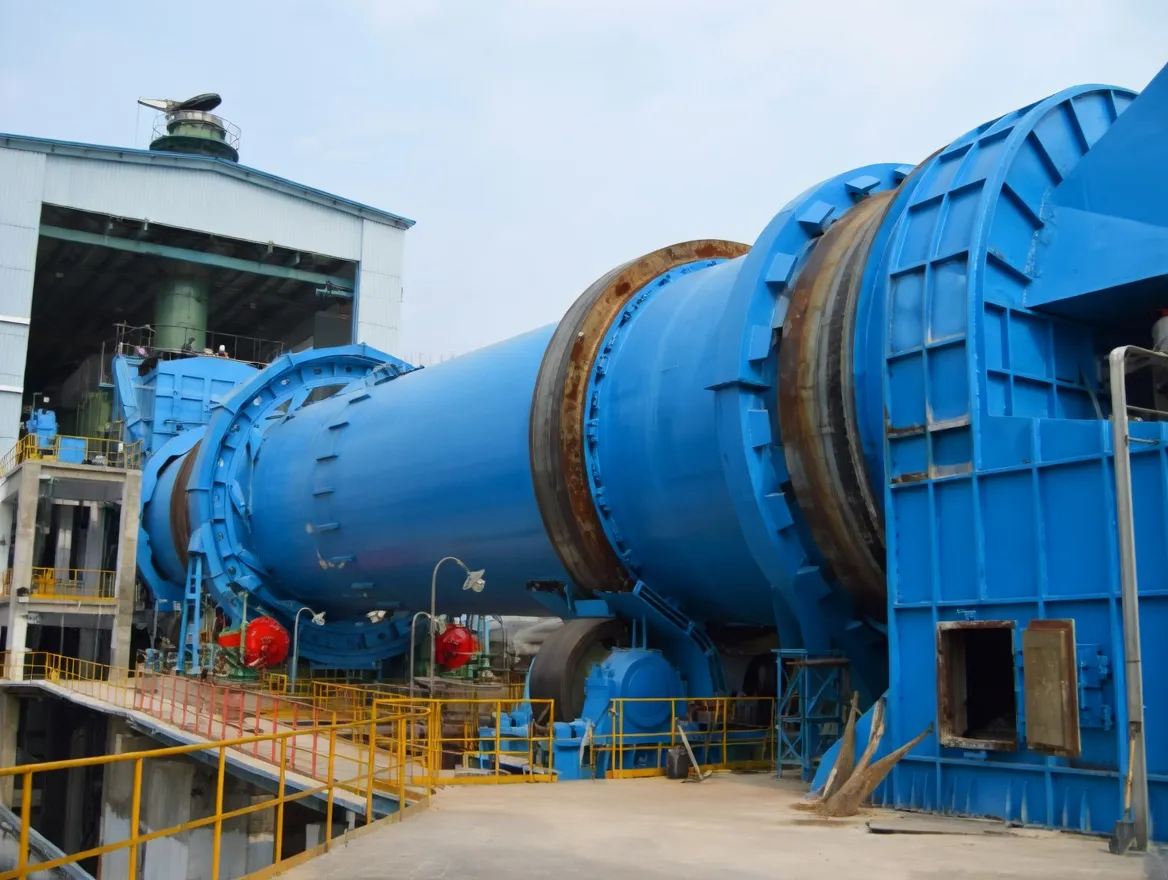 There are not many machines in heavy industry that are quite as relentless as a cement rotary kiln. Day and night, seven days a week, for campaigns that can stretch beyond twelve months without a planned stop, these enormous steel cylinders — often 5 to 6 metres in diameter and 60 to 185 metres in length — rotate at between one and four revolutions per minute while their interiors sustain temperatures that reach 1,450°C. The raw meal that enters one end emerges at the other as grey Portland cement clinker, the primary constituent of concrete. Everything that keeps this process turning, literally, is the drive train at the back of the kiln — and at its mechanical core, connecting the gearbox output shaft to the open-gear pinion, you will find a set of components that most non-specialists barely notice: the QD bushings that clamp the entire drive assembly together.
The term QD bushings — Quick Detach bushings — refers to a family of split, tapered clamping sleeves designed to lock sprockets, sheaves, couplings, and other driven hubs onto power transmission shafts. The principle is straightforward: a matching taper in the hub and on the bushing outer surface is drawn together by tightening bolts, generating radial clamping force that secures the assembly concentrically onto the shaft without the looseness, fretting susceptibility, or stress-concentration issues associated with interference fits or simple keyway-and-setscrew arrangements. What makes QD bushings particularly valuable in rotary kiln drive applications is their unique combination of high torque density, thermal self-compensation, and — crucially — the ability to be removed without shaft damage even after years of service at elevated temperature. That last point alone is worth serious money in a cement plant, where a damaged output shaft can mean a six-figure repair bill and weeks of unplanned production loss.
For maintenance engineers, plant managers, and procurement teams at cement facilities across the United Kingdom — whether in the Peak District limestone belt, the Kentish chalk downlands, or the Scottish east coast — selecting the right grade of QD bushings for a kiln drive is not a commodity decision you hand to a general engineering distributor. The operating environment stacks every hostile factor imaginable into one location: sustained high torque, extreme ambient temperatures, abrasive alkaline dust in concentrations that would destroy an ordinary bearing in days, and the relentless vibration signature of a multi-thousand-tonne rotating mass. This guide covers every dimension of that challenge: the engineering principles, material science, performance data, and real-world results that define the state of the art in QD bushings for cement kiln drives.
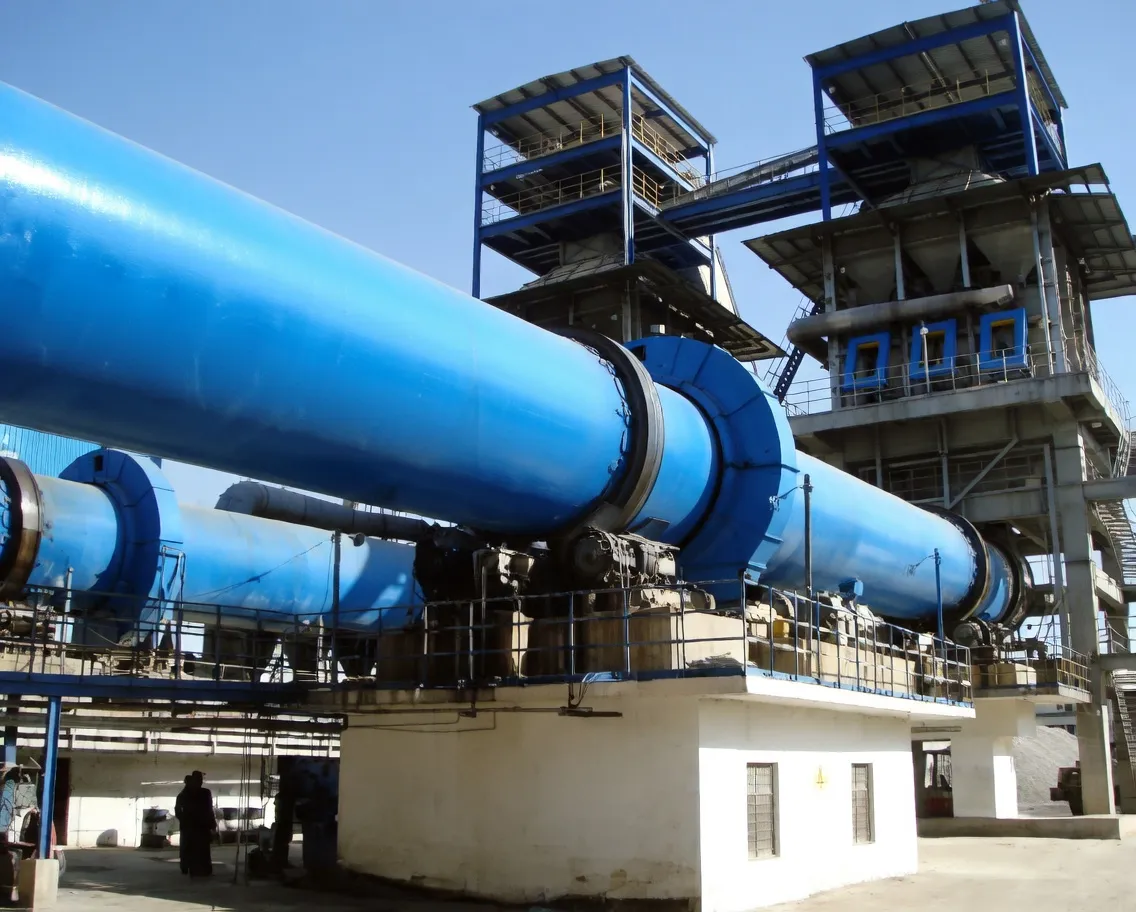 Ever Power heavy-duty QD bushings — engineered specifically for cement rotary kiln drive systems operating at up to 150°C
How QD Bushings Function in a Cement Kiln Drive Train
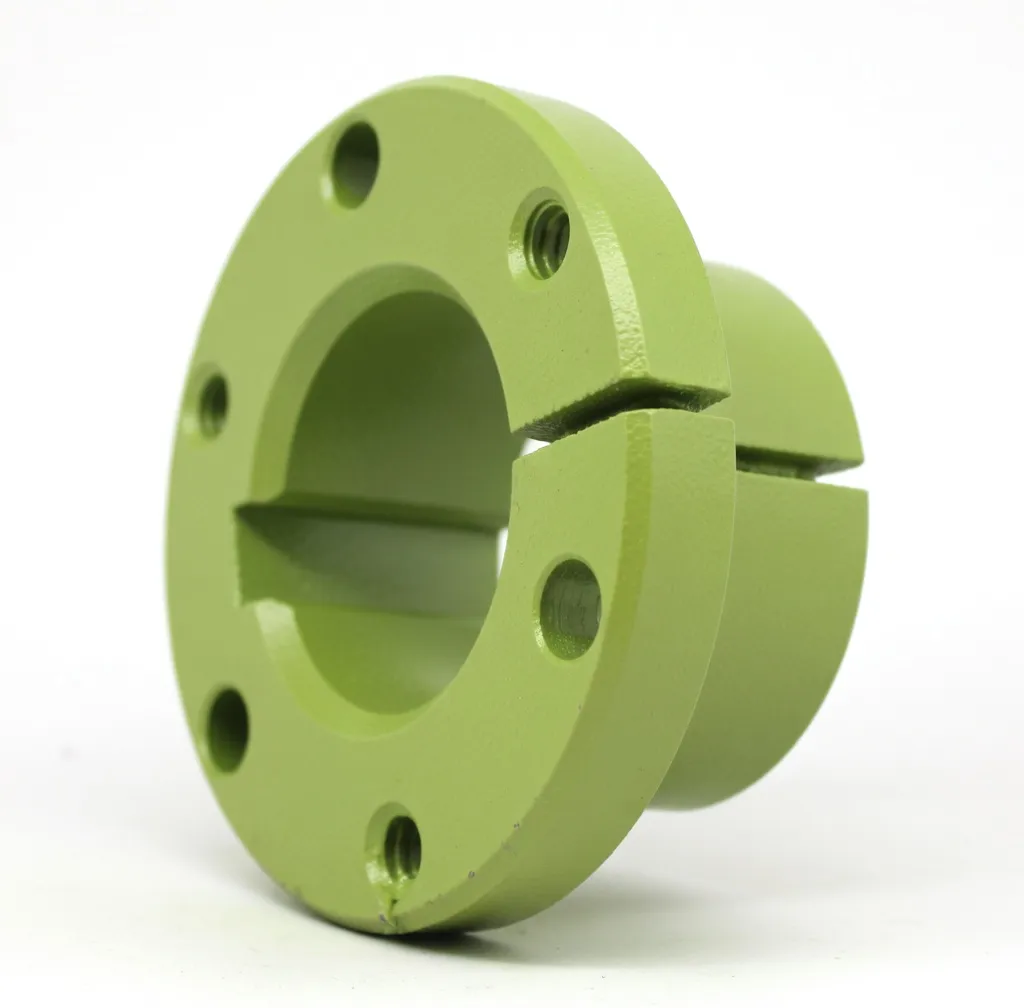 A QD bushing is, at its simplest, a precisely machined split steel sleeve with a tapered outer surface and a cylindrical inner bore. When the bushing is placed inside a hub with a matching taper — the pinion hub in a kiln drive, for example — and the clamping bolts are progressively tightened to the specified torque, the two tapered surfaces are drawn together axially. This generates an enormous radial compressive force that simultaneously squeezes the bushing onto the shaft and locks the hub onto the bushing. The result is a connection with no running clearance, no backlash, and a torque capacity that scales with bore diameter from a few hundred newton-metres in small drives to well over 100,000 Nm in the large-bore kiln-grade configurations used in major cement works. The split in the bushing body is not a weakness — it is a precision feature that allows the clamping force to act uniformly around the shaft circumference and, when removal is required, allows a set of jacking screws threaded into dedicated extraction holes to break the taper contact cleanly without hammering or hydraulic extraction tools.
In a typical UK cement plant kiln drive, the torque pathway begins at the main drive motor — commonly a 1,500 to 3,500 kW cage induction motor controlled by a variable-frequency drive — and passes through a multi-stage parallel or right-angle gearbox before reaching the output shaft. It is at this output shaft that the most critical pair of QD bushings in the entire plant sits. The pinion hub, which drives the large cast steel bull gear bolted to the kiln shell tire, is clamped to the output shaft by the QD bushing assembly. Peak torques at start-up can reach 2.5 to 3 times the full-load running torque as the variable-frequency drive ramps the motor up against the static inertia of the kiln body and its clinker charge. Every start cycle puts an enormous shock into the drive components, and the QD bushing must absorb this without loosening, without damaging the shaft, and without initiating fatigue cracking in the hub.
One of the less-discussed but critically important behaviours of QD bushings in high-temperature environments is their passive thermal compensation. As the ambient temperature around the kiln drive rises — from the 20°C ambient of a winter morning to the 90°C+ environment recorded adjacent to an active kiln shell at a busy UK cement plant in summer — both the shaft and the bushing body expand. In a simple interference-fit hub arrangement, this thermal expansion can generate secondary stresses that contribute to fretting and fatigue. The taper geometry of a QD bushing, by contrast, allows the clamped assembly to breathe slightly with thermal cycling while the compressive preload across the taper interface remains essentially constant — a characteristic that directly translates to longer service intervals and fewer emergency stops for bushing-related failures.
Technical Performance: QD Bushing Parameters for Heavy Rotary Kiln Drives
The table below summarises the key engineering parameters for standard and kiln-grade QD bushings as supplied by Ever Power for cement plant rotary kiln drive applications. All kiln-grade parameters are verified under dynamic load testing and documented on per-batch test certificates. Custom specifications outside these ranges are available on request.
Seven Reasons Cement Plant Engineers Specify QD Bushings — And Stay With Them
Drawn from real application engineering experience at cement plants in England, Scotland, and across Northern Europe — not from a sales catalogue.
Exceptional Torque Density
The tapered clamping principle of a QD bushing delivers more usable torque per millimetre of shaft diameter than almost any alternative hub-to-shaft connection method. In a rotary kiln drive where output shaft diameters commonly reach 200 to 280 mm and sustained running torques exceed 80,000 Nm, this density advantage means the connection assembly remains compact, concentric, and free of the stress concentrations that cause fatigue cracking in oversized keyway arrangements. The clamping force is distributed uniformly around the full shaft circumference — not concentrated at two keyway root radii as in a conventional keyed hub assembly. For UK cement plant engineers who have had to replace cracked pinion hubs caused by fatigue originating at keyway corners, the difference is immediately tangible.
Rated to 150°C Continuous
Standard QD bushings manufactured from plain medium carbon steel are typically rated to 80°C ambient. The kiln-grade bushings supplied by Ever Power — forged from 42CrMo4 alloy steel with high-temperature clamping bolts and a PTFE-impregnated surface treatment — maintain full clamping preload integrity at continuous service temperatures up to 150°C. This matters enormously at UK cement plants where the drive-side environment during a hot summer campaign regularly sits between 75°C and 95°C, measured adjacent to the kiln shell surface. Plants that previously experienced quarterly preload relaxation failures after switching to Ever Power kiln-grade QD bushings have consistently reported that inspection results remain within specification at scheduled intervals 18 months apart.
Under 60 Minutes to Remove
The defining commercial advantage of the QD bushing design is what happens when it needs to come off. Three jacking screws — threaded into purpose-machined extraction holes in the bushing flange — are progressively tightened to break the taper contact and push the bushing out of the hub bore cleanly, without impact hammering and without heat. In a cement plant environment where an hour of unplanned kiln downtime costs upwards of £8,000 to £12,000 in lost clinker production plus overtime labour, reducing a bushing changeout from the four to six hours typical with conventional hub arrangements to under sixty minutes is not a minor operational detail — it is a quantifiable annual saving that most maintenance managers can calculate directly from their production loss records.
IP55-Equivalent Dust Sealing
Cement dust is not just abrasive — it is also strongly alkaline, with a pH typically between 11 and 13 in the fine particle fraction that becomes airborne around the kiln drive area. If this dust works its way into the bore interface between a QD bushing and the hub taper, it initiates micro-fretting corrosion that accelerates wear and can cause the hub bore to score in a pattern that makes future bushing removal genuinely destructive. Ever Power’s kiln-grade QD bushings are supplied with a purpose-designed sealed flanged cover set that achieves IP55-equivalent ingress protection when correctly installed, and an optional labyrinth seal arrangement is available for plants with exceptionally high dust loading. Twelve-month inspection data from sites using these sealed assemblies consistently shows near-zero contamination at the bore interface.
Built-In Thermal Expansion Compensation
A 220 mm steel shaft operating at 110°C has expanded by approximately 0.29 mm in diameter and over 1 mm in length compared to its cold dimensions. Standard keyed hub arrangements are not designed to accommodate this cyclic dimensional change, and the resulting axial binding can progressively damage shaft surfaces and increase bearing preload. The taper interface of a properly specified QD bushing assembly allows minor axial float at the clamped connection — the hub does not bind the shaft axially — while maintaining its radial grip throughout the thermal cycle. This passive compensation behaviour is one of the reasons experienced kiln drive maintenance engineers cite QD bushings, rather than fixed interference-fit hubs, when specifying new kiln drive configurations at UK cement works.
ISO 9001 Batch Certification
Every production batch of kiln-grade QD bushings from Ever Power is manufactured under ISO 9001:2015-certified production controls. Bore tolerances are maintained to IT7 standard or finer on CNC grinding equipment. Taper contact is verified by blue-marking tests confirming a minimum 70% surface contact area before any unit leaves the factory. Each order is accompanied by a dimensional inspection certificate and a material traceability report — a requirement increasingly appearing in the procurement specifications of major UK cement manufacturers’ maintenance contracts, particularly for components classified as safety-critical under the Pressure Systems Safety Regulations 2000 (PSSR 2000).
Lowest Total Cost of Ownership
A cheap, off-the-shelf QD bushing that fails after eight months in a kiln drive costs far more than the £60 you saved at procurement — it costs production hours, shaft repair time, and the labour premium of an emergency maintenance crew working nights. Ever Power’s heavy-duty kiln-grade QD bushings typically achieve 5 to 8 years between planned replacements when correctly installed and operated within their rated conditions. Compared to the one-to-two-year cycles commonly reported at plants using unrated alternatives, that represents a direct reduction in parts cost of 60–75% and a commensurate saving in maintenance crew hours. The price per unit is higher upfront — but the cost per year of service is dramatically lower, and the hidden cost of emergency downtime is essentially eliminated.
Key QD Bushing Application Points in a Cement Plant Kiln Drive System
Once maintenance engineers see what properly specified QD bushings deliver at the primary drive point, they routinely standardise the design across all connection points in the kiln and associated equipment drives. Here are the four main application positions and what each one demands from the bushing.
1 — Gearbox Output Shaft ↔ Pinion Hub
This is the highest-loaded application point in the entire plant and where QD bushing selection is most critical. The pinion hub driven by the QD bushing here must transmit continuous full-load torque, absorb start-up torque spikes of 2.5 to 3 times the running value generated by the VFD ramp profile, and carry the additional bending load imposed by the weight of the overhung bull gear mesh. For a 5-metre diameter kiln producing 3,000 tonnes of clinker per day, output shaft diameters at this position typically run between 180 and 280 mm. A kiln-grade 42CrMo4 QD bushing with dual keyway and sealed dust cover is the standard specification for this position in the Ever Power recommendation matrix.
2 — Motor Shaft ↔ Gearbox Input Coupling
The main drive motor — commonly a 1,500 to 3,500 kW cage induction machine — connects to the gearbox through a flexible disc or jaw coupling whose hubs are often secured with QD bushings. At the input end the shaft speed is high and the torque relatively low, but alignment sensitivity is at its greatest. The self-centering taper geometry of a QD bushing helps maintain the concentricity that flexible couplings need to avoid premature fatigue of the flexible element. Even a modest 0.05 mm eccentricity at the motor shaft can shorten a flexible disc pack life from five years to under twelve months in a kiln drive application — an expensive and time-consuming failure mode that the accurate seating of a quality QD bushing directly prevents.
3 — Barring Drive & Auxiliary Gear Shaft
Every rotary kiln is equipped with an auxiliary barring drive — typically a compact gear motor running at creep speed — that rotates the kiln during start-up, shutdown, and planned maintenance stops to prevent shell distortion from uneven cooling. The barring drive power-take-off shaft and its engagement coupling are ideal candidates for QD bushings because they need to be reliably connected during barring operation and safely disconnected during full-speed running and major maintenance windows. A QD bushing’s one-spanner-and-three-jacking-screws removal process is considerably faster than any alternative, and the resulting reduction in planned maintenance duration directly frees up scheduled downtime for higher-priority work.
4 — Clinker Cooler & Raw Mill Drive Assemblies
The heat of the kiln affects more than the kiln drive itself — the downstream clinker grate or chain cooler runs in an ambient temperature that can approach 80°C near the hot end, and the kiln feed raw mill drives operate in the same general dust environment. Standardising on kiln-grade QD bushings across all these associated drive points has a tangible storeroom management benefit: instead of holding ten different coupling hub specifications for three separate drives, the maintenance team manages a single bushing platform with two or three bore sizes. Fewer part numbers, fewer stock-out risks during a shutdown, and one set of installation instructions for the entire maintenance crew. At plants with lean maintenance staffing — increasingly common across UK cement works — that standardisation is worth more than it initially appears.
Material Science: What Makes Kiln-Grade QD Bushings Different
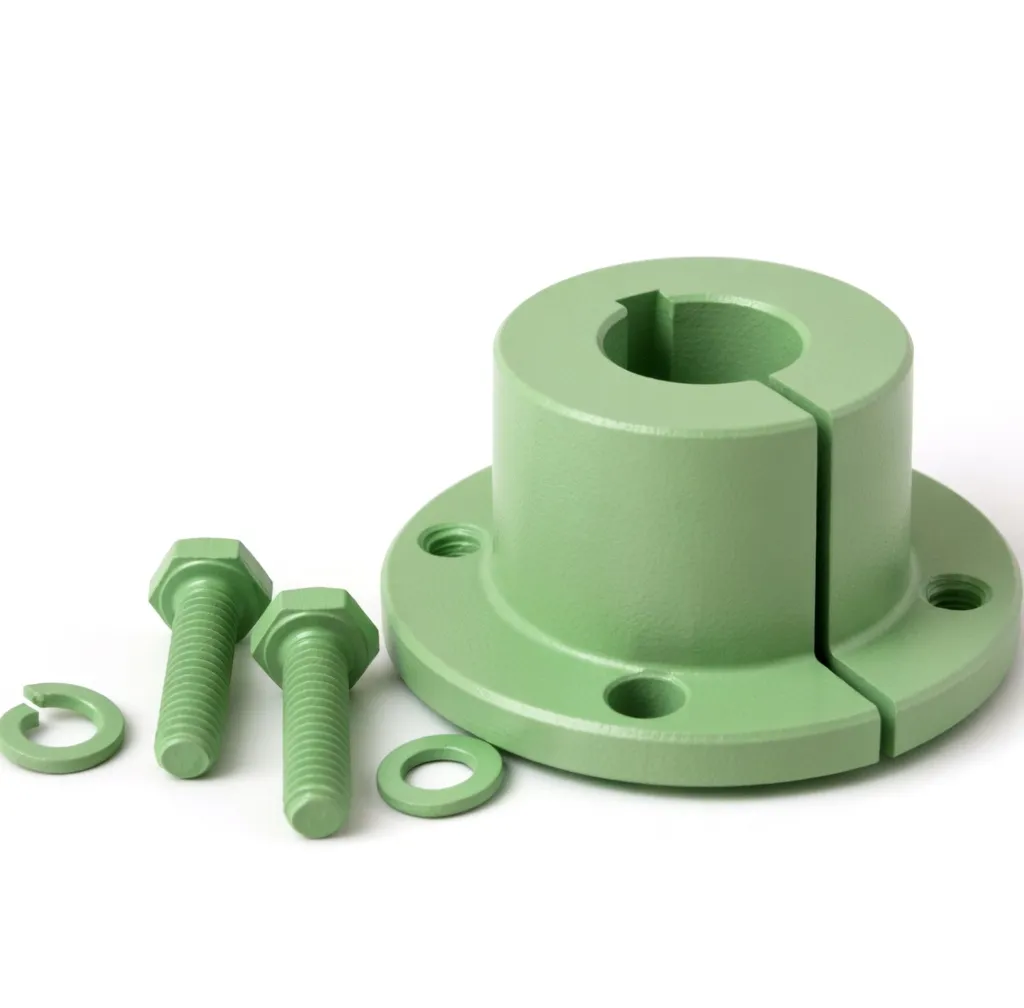 The engineering challenge of a QD bushing operating continuously in a cement kiln drive environment is not simply a question of raw tensile strength. It is about maintaining precise dimensional stability over a service life measured in years while the component endures thousands of thermal cycles between cold-start and full operating temperature, sustained vibration at the bull gear tooth-pass frequency, and the slow ingress of highly alkaline cement particulates into every external surface. A standard medium carbon steel QD bushing from a commodity catalogue is adequate for a light-duty conveyor drive or a ventilation fan. It is not adequate for a 3,500-tonne rotating kiln generating 80,000 Nm at the pinion shaft at 95°C ambient. The material selection and production method need to be matched to the operating reality.
Ever Power’s kiln-grade QD bushings begin as forged billets of 42CrMo4 alloy steel — the chromium-molybdenum grade (equivalent to EN19T in the UK specification system and to AISI 4140/4142 in American designations) widely used for large industrial crankshafts, turbine shafts, and heavy machine tool spindles precisely because of its combination of high tensile strength, excellent fatigue resistance, and good toughness at elevated temperature. After rough machining from the forged blank, each bushing is quench-and-tempered to a final tensile strength of 850 to 1,000 MPa and a taper bore surface hardness of HRC 38 to 44 by induction hardening — giving the bore surface the wear resistance needed to survive cyclic contact at high clamping pressure without scoring. The taper bore is then precision-ground on a CNC cylindrical grinder to achieve a taper half-angle error below 0.003 degrees over the full bore length, and a blue-marking contact test confirms minimum 70% surface contact area before the part is passed for dispatch.
Surface treatment on the external faces of kiln-grade QD bushings involves hot-dip galvanising to a zinc layer thickness of 85 to 100 μm, followed by a PTFE-impregnated top coat. The galvanising protects the external surface from the alkaline corrosion that cement dust promotes, while the PTFE coating reduces the coefficient of friction at the outer taper surface — an important detail when disassembly is attempted years later in a heat-soaked drive housing. The internal bore receives a light phosphate coating that acts as a micro-reservoir for installation lubricant (typically a copper-based anti-seize paste) and prevents fretting corrosion during the initial bedding-in period when the bushing is first placed under full load.
Customer Success Story
Case Study — Heidelberg Materials UK, Hope Works, Derbyshire
£320k
Annual maintenance saving
6.4 yr
Average bushing service life
74%
Reduction in unplanned stoppages
18 day
Custom delivery lead time
The Challenge
Hope Works operates two large wet-process kilns, each 5 metres in diameter, producing approximately 1.1 million tonnes of Portland cement clinker per year. By 2021, the rotating equipment team had identified a recurring pattern of premature QD bushing failures at the main drive pinion coupling — standard off-the-shelf QD bushings rated to 80°C were being operated at ambient temperatures exceeding 90°C during UK summer campaigns, resulting in bolt preload relaxation and fretting corrosion at the bore interface. Replacement intervals had shortened to less than four months per drive position, with each changeout incurring direct costs of approximately £18,500 in parts and labour plus three to four hours of kiln downtime.
The Solution
The plant’s lead rotating equipment engineer contacted Ever Power in October 2021. After a detailed application review covering shaft sizes, torque profile from the variable-frequency drive logs, ambient temperature monitoring data, and dust management records, Ever Power’s application team specified a custom 220 mm bore, 42CrMo4 alloy steel QD bushing with PTFE-coated outer surface, sealed flanged dust cover set, high-temperature A4 stainless clamping bolts, and an extended jacking screw pitch for improved preload control at elevated service temperature. The specification was confirmed and a first article inspection completed within 72 hours of the technical review. Delivery of two production units was achieved in 18 working days against an original requirement of 21 days.
The Outcome
The first pair of custom Ever Power kiln-grade QD bushings was installed in January 2022. The first scheduled inspection in July 2023 — eighteen months later — found both units within original dimensional specification with no detectable fretting corrosion or preload loss. Hope Works has since retrofitted all four active kiln drive positions with the same specification. There have been zero unplanned bushing-related stoppages since the upgrade programme was completed. The plant asset management team calculated the total annualised saving — parts, labour, and recovered production value — at £320,000 per year, against a one-time investment in the upgrade programme of £48,000 including installation engineering support from the Ever Power technical team.
What Cement Plant Engineers Say About Our QD Bushings
★★★★★
“We have tried four different QD bushing suppliers over the past decade for our kiln drives at Ribblesdale. None of them came close to what we have seen from the Ever Power heavy-duty grade in terms of service life or consistency. What set them apart was the engineering support before the order was placed — they asked the right questions about our operating environment and came back with a specification that actually addressed the root cause of our previous failures. Installation and first inspection data have both been exactly what was promised.”
James Whitfield
Lead Rotating Equipment Engineer, Clitheroe, Lancashire
★★★★★
“Lead time was our biggest concern — a non-standard bore size that our existing European supplier quoted at 12 to 14 weeks. Ever Power came back with a delivery commitment of 18 working days for the custom 185 mm bore kiln-grade QD bushings, and they delivered exactly on that date. Quality was exactly as specified, the dimensional inspection certificate arrived with the parts, and the price was genuinely competitive even accounting for the expedited timeline. We have since placed three further orders without any issues.”
Pieter van den Berg
Maintenance Manager, CBR Cement, Antwerp, Belgium
★★★★★
“The sealed dust cover option on the kiln-grade QD bushings was the specification feature that made the difference for our Northfleet site. We run two kilns with very high chalk dust loading and had been seeing standard bushings deteriorate within months at the bore interface. Twelve months after fitting the Ever Power sealed units, our inspection showed minimal contamination and no measurable fretting wear. That was the result we needed to justify the upgrade to the rest of the fleet.”
Sarah Thornton
Asset Integrity Lead, Northfleet Cement Works, Kent
Ever Power: Custom QD Bushing Manufacturing for Every Kiln Drive Specification
No two rotary kiln drives in British cement are quite identical. Plants constructed in the 1970s and 1980s running heritage Falk, David Brown, or Loesche gearboxes may have output shaft diameters specified in imperial inches, unusual keyway profiles cut to British Standard dimensions long since superseded, or hub bore configurations machined to tolerances that no longer correspond to any current catalogue listing. Sourcing replacement QD bushings for these drives from standard catalogue suppliers often results in parts that are geometrically close but not dimensionally correct — and in a kiln drive, “close” is not acceptable.
Ever Power’s manufacturing facility operates CNC turning centres, cylindrical grinders, and a full heat treatment complex capable of producing kiln-grade QD bushings to any specification — from a single emergency replacement unit for a stopped kiln to a production batch of a hundred identical parts for fleet standardisation across a multi-kiln cement complex. Our engineering team works directly from customer drawings, OEM part numbers, or measurements taken from worn originals. We can complete a first article inspection report within 72 hours of receiving a sample part, confirm dimensional conformity, and commit to a production schedule before any order is placed.
Custom options available specifically for cement kiln drive QD bushings include non-standard bore diameters from 12 to 400 mm; dual keyway configurations to BS 4235 or DIN 6885; flanged sealed cover sets in standard and custom heights; high-temperature galvanising plus PTFE treatment packages; material traceability certificates meeting PSSR 2000 requirements; and full installation data sheets prepared specifically for the customer’s shaft size, installation torque values, and operating temperature range. Every custom order is assigned a dedicated application engineer as the single point of contact from enquiry to installation sign-off — not a sales representative, but a qualified mechanical engineer with direct access to our production team.
Our Custom Manufacturing Capability
✓
Bore diameters 12 mm to 400 mm+
✓
Single, double, or keyless hub options
✓
Imperial and metric dimensions (BS, DIN, AGMA)
✓
42CrMo4, EN19T, 4340 alloy steel
✓
Sealed flanged dust covers (IP55)
✓
PSSR 2000-compliant traceability packages
✓
First article inspection within 72 hours of sample receipt
✓
Expedited production from 15 working days
✓
Dedicated UK technical contact and application support
Supplying Kiln-Grade QD Bushings to Cement Plants Across the United Kingdom
The United Kingdom’s cement manufacturing industry clusters around five principal geological and production regions: the South East (Kent chalk formations, Thames Estuary — home to plants at Northfleet, West Thurrock, and the Medway valley); the Midlands and Peak District (the Derbyshire and Lincolnshire limestone belt, including Hope Works, Ketton, and Tunstead); Yorkshire and Humberside (Ribblesdale, South Yorkshire cement works); the North West of England (Clitheroe and the Lancashire limestone hills); and Scotland (Dunbar on the East Lothian coast). Ever Power maintains active supply relationships and a UK-based technical contact for all of these regions, with logistics arrangements that deliver standard-catalogue QD bushings to any UK cement plant address within 3 to 5 working days and custom-manufactured kiln-grade units within 15 to 20 working days depending on complexity.
We work directly with maintenance engineers, rotating equipment specialists, procurement managers, and engineering consultancies serving plants operated by Heidelberg Materials UK (which operates the former Hanson Cement and HeidelbergCement UK assets across the Hope, Ketton, and Ribblesdale works), CEMEX UK at Rugby and South Ferriby, Tarmac (part of CRH group) at Dunbar and Buxton, and independent regional producers. Whether your kiln drive train was built around a Flender, David Brown, SEW, Loesche, or own-designed gearbox, our engineers can cross-reference the correct QD bushing specification by shaft dimension, output torque, and operating temperature regime — often from the original OEM data sheet or from measurements you provide directly.
When a plant maintenance manager in Kent or a rotating equipment engineer in Derbyshire needs kiln-grade QD bushings at short notice with reliable documentation — not a guessed catalogue match from a general distributor, but an engineered solution from a supplier who has done this before at comparable plants — Ever Power is the contact to make. Our technical team responds to enquiries within one working day, and our quotation for standard or custom parts arrives with a firm delivery commitment, not a provisional estimate. That combination of engineering knowledge, manufacturing capability, and commercial reliability is what cement plant procurement teams consistently identify as the reason they return to Ever Power for repeated orders
Stop Unplanned Kiln Drive Stoppages — Speak to an Application Engineer Today
Send your shaft size, operating torque, and ambient temperature to our team and we will specify the correct kiln-grade QD bushings and provide a firm quotation within 48 hours — with a delivery date, not a provisional estimate.
📧 Get a Quote — [email protected]
edit by gzl