
Timber & Furniture Manufacturing · UK Industrial Engineering
The complete engineering guide of QD Bushings for Woodworking Saw Machine Spindles
The complete engineering guide for UK sawmill operators, joinery workshops, and furniture manufacturers seeking precision, fast tool changeover, and dust-resistant drive connections
The Drive Connection at the Heart of Every Saw Spindle
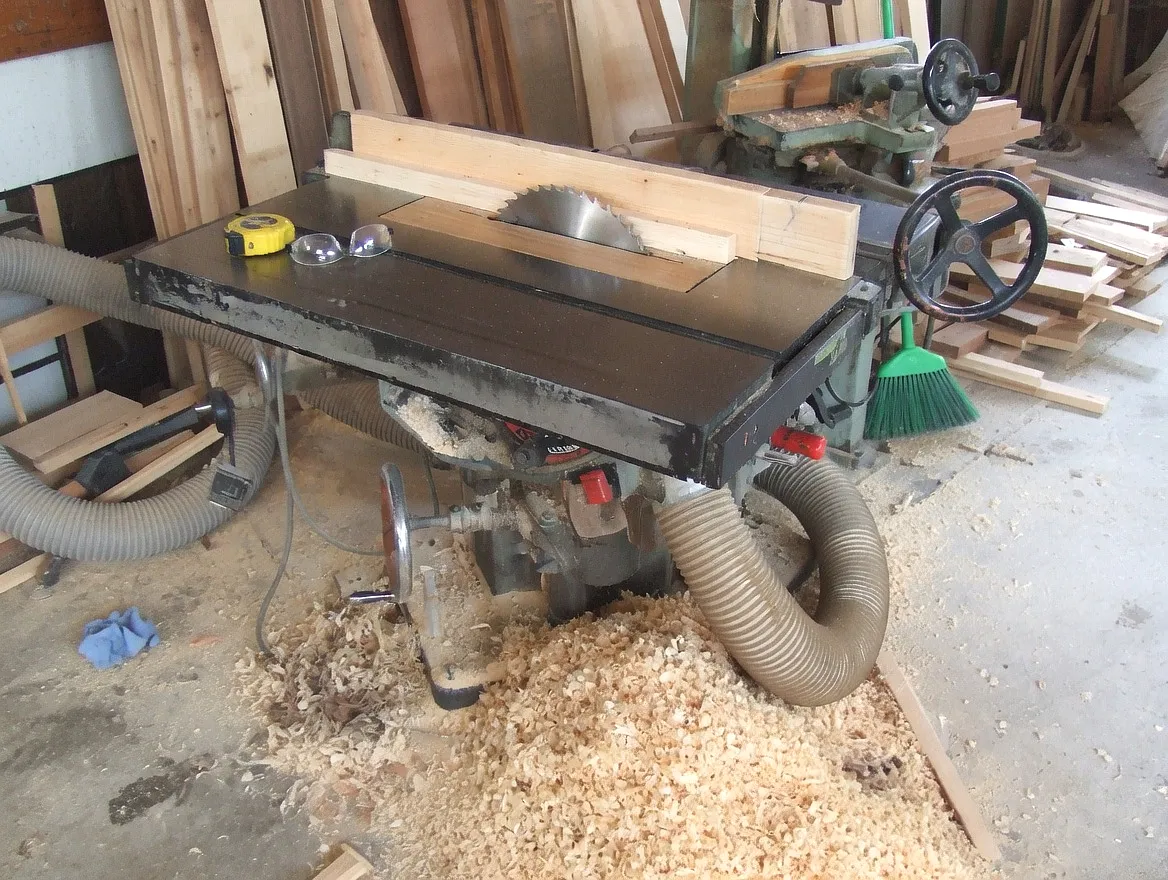
 Step into any working sawmill in North Yorkshire, a furniture component factory in the West Midlands, or an architectural joinery workshop in Edinburgh, and the dominant sensory experience is the same: the high-pitched scream of high-speed circular saws cutting through dense European oak, the fine white haze of MDF dust hanging in the air, and the steady rhythm of planer blades surfacing rough-sawn timber to finished specification. Behind every one of these processes is a precision spindle assembly — a ground shaft rotating at anywhere from 1,500 to 5,000 RPM, transmitting drive power through a belt pulley or sprocket into a cutting tool that generates enormous radial and axial forces with every pass.
For decades, the standard method of fixing a pulley or sprocket to that spindle shaft was a keyed or interference-fit hub: a connection that works adequately under stable conditions but becomes a serious maintenance liability in the demanding reality of woodworking production. Keyways fill with sawdust and shavings. Hubs corrode in place. Removal requires pullers, heat, and sometimes specialist intervention. Blade changes — which on a busy band saw line may happen four to six times per shift — become slow, risky procedures that eat directly into productive machine hours. QD bushings were designed precisely to eliminate these problems, and their adoption across the UK timber processing and furniture manufacturing sector has accelerated sharply over the past decade as production pressures continue to intensify.
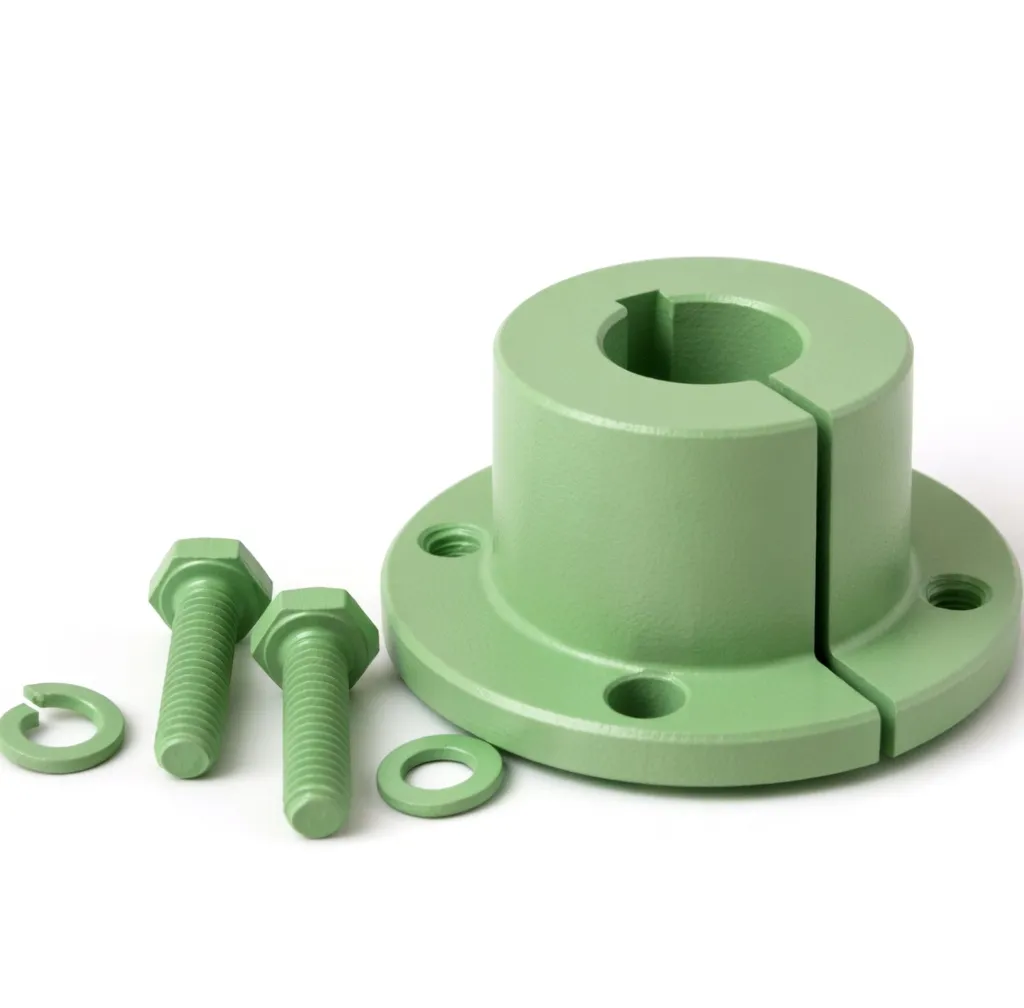
QD stands for Quick Detach — a standardised split-taper bushing concept first developed for industrial machinery and now one of the most widely used shaft-hub connection systems in global manufacturing. The bushing body is machined with a tapered outer surface that mates with a corresponding taper inside the pulley hub. When the mounting cap screws are tightened, the wedging geometry forces the split bushing to clamp inward around the shaft with uniform, concentric pressure, creating a rigid, zero-clearance connection that can transmit high torque reliably at elevated speeds. When the same screws are reversed and inserted into the extraction holes, the connection releases quickly and cleanly — no pullers, no heat, no risk to the shaft surface. For woodworking spindle applications, this combination of precision, strength, and practical convenience represents a genuine step forward from every other connection method available.
QD bushings mounted on a circular saw spindle drive pulley — the split-taper design provides zero-clearance concentric clamping with rapid tool-free release
Technical Specifications: QD Bushing Series for Woodworking Applications
Selecting the right QD bushing series for a woodworking spindle application requires matching the bore diameter range, maximum rated torque, and speed capability to the specific machine design. The table below summarises the principal series used across UK sawmill, joinery, and furniture manufacturing machinery, reflecting the standard dimensional ranges that UK maintenance and design engineers encounter most frequently when specifying or retrofitting drive components.
| Series | Bore Range (mm) | Max Torque (Nm) | Max RPM | Typical Woodworking Use | Standard Material |
|---|---|---|---|---|---|
| JA | 12.7 – 31.75 | Up to 230 | 5,000 | Small bench saw pulleys, scroll saw drives | Grey cast iron |
| SH | 15.875 – 44.45 | Up to 540 | 4,500 | Planer-thicknesser motor pulleys, mid-range table saws | Grey cast iron |
| SK | 19.05 – 76.2 | Up to 1,350 | 4,000 | Industrial band saws, panel processing circular saws | Grey cast iron / Steel |
| SF | 22.225 – 88.9 | Up to 2,400 | 3,500 | Heavy-duty sawmill rip saws, multi-blade systems | Ductile iron / Steel |
| E | 25.4 – 101.6 | Up to 3,900 | 3,000 | Sawmill head rig line shafts, large planer spindles | Grey cast iron / Steel |
| F | 31.75 – 127 | Up to 6,100 | 2,500 | Primary sawmill drive assemblies, large-capacity planers | Grey cast iron / Steel |
* Performance values are indicative for standard grey cast iron bodies. Actual torque capacity depends on shaft surface finish (Ra 1.6 µm recommended), screw torque, and bore fit. Custom materials and surface treatments are available on request.
Engineering Principles: How QD Bushings Perform in Woodworking Environments
⚙️ Split-Taper Clamping Principle
The QD bushing body is machined with a precision external taper that mates with the corresponding internal taper in the pulley or sprocket hub. When the mounting bolts are tightened to the specified torque, this wedging geometry forces the split bushing to contract radially around the shaft, distributing clamping force uniformly across the entire bore length. The result is a self-centring, zero-clearance grip that achieves total indicated runout (TIR) values of 0.05 mm or better — critical for balanced, smooth rotation at the 3,000 to 5,000 RPM speeds typical of woodworking saw spindles. Unlike a simple setscrew hub, there is no point-contact load stress on the shaft surface, and no risk of the hub migrating axially under variable cutting loads.
🔩 Materials for Sawmill-Grade Durability
Standard QD bushings for woodworking spindle applications are produced in ASTM Class 30 grey cast iron. This material offers a combination of properties that is particularly well suited to sawmill and joinery environments: good machinability for precise taper and bore dimensions, inherent vibration-damping characteristics that absorb the intermittent shock loads of blade-tooth engagement, and adequate corrosion resistance for indoor use. The bore and taper faces are finished to Ra 1.6 µm or better to ensure full-area contact with both shaft and hub. For green timber processing sites with elevated humidity, or outdoor sawmill applications, zinc-plated and black-oxide-treated variants are available. Ductile iron and carbon steel (C45) options provide additional strength for the highest-torque SF and F series applications.
🌧 Dust Ingress and Contamination Resistance
Woodworking environments — particularly MDF cutting, sanding, and shaping — generate some of the most aggressive particulate contamination in any manufacturing setting. Wood dust, especially from hardboard and tropical hardwoods, is hygroscopic (it absorbs and retains moisture), abrasive, and capable of penetrating into the smallest mechanical clearances. The full-contact taper geometry of QD bushings leaves no open annular gap around the shaft bore for dust to settle and compact, unlike keyed or splined connections where the keyway slots become reservoirs for sawdust over time. This self-sealing characteristic is one of the main reasons UK maintenance engineers report that QD bushings release cleanly and consistently after months of continuous operation in heavily contaminated conditions — even when conventional hubs have become effectively permanent.
Key Application Scenarios in UK Woodworking Machinery
Industrial Band Saws
UK sawmills processing mixed hardwoods typically run their principal band saw drives at 1,500 to 3,000 RPM, with the drive belt connecting the motor pulley to the upper wheel shaft through a substantial V-belt or flat belt arrangement. The QD bushing is installed at both connection points — the motor pulley shaft and the wheel shaft hub — carrying the full belt tension load superimposed on the variable cutting reaction from the blade. Band saw blades on a busy primary conversion mill may be changed four to eight times per shift as the blade loses set when processing dense oak or knotty hardwood logs. The SK and SF series QD bushings, fitted to shaft diameters in the 40 to 80 mm range typical of industrial band saws, enable the maintenance team to remove and replace the entire pulley assembly in under fifteen minutes without any alignment re-checking, because the taper re-engages concentrically with the shaft each time.
This time saving across a four-machine band saw line over a six-day working week translates directly into additional production capacity — a benefit that is straightforwardly quantifiable and that UK mill managers consistently cite as the single most compelling reason for converting their existing machinery to QD bushing-based drive assemblies.
Circular Rip Saws and Panel Saws
Circular saw spindles in furniture manufacturing and panel processing applications spin at 3,000 to 5,000 RPM, with the blade experiencing significant radial cutting forces each time it engages the workpiece. At these speeds, any hub runout or concentricity error is amplified into vibration that manifests as surface waviness on the cut, shortened blade life, and accelerated bearing wear. The SH and SK series QD bushings, in bore sizes of 30 to 60 mm, are the most widely specified components for UK furniture-grade panel saw spindles, providing TIR values well within the 0.05 mm threshold that precision cutting demands.
MDF and particleboard processing — the bread and butter of UK flat-pack and cabinet manufacturing — dulls saw blades far more aggressively than solid timber due to the abrasive resins and fibres in the board composition. UK factories running double shifts on MDF panel saws report that QD bushings reduce blade-change cycle time by 60 to 70 percent compared with conventional locking hubs, with several hundred additional production hours recovered annually across a typical six-saw line.
Planer-Thicknessers and Surfacing Machines
The cutterhead spindle of a planer-thicknesser or wide-belt surfacer is arguably the most demanding woodworking spindle application for any drive component. Running at 4,000 to 6,000 RPM, it must absorb repetitive, high-frequency impact loads each time a knife engages the timber surface, while maintaining the concentricity that makes the difference between a mirror-smooth finish and a washboard. Drive pulley replacement — required whenever the belt profile is changed or the motor is serviced — must not disturb the cutterhead balance, a task that is genuinely simple with QD bushings but fraught with risk using interference-fit hubs.
JA and SH series QD bushings suit the compact pulley assemblies typical of joinery-grade planer-thicknessers widely used across UK bespoke furniture and architectural joinery workshops. Their small flange dimensions clear the cutterhead guards without modification, while the taper-lock grip holds the pulley securely against the pulsating drive load of a spiral cutter block — a loading pattern that would quickly loosen a conventional setscrew hub.
Six Performance Advantages for Woodworking Spindle Applications
⚡
Rapid Blade and Pulley Changeover
Pull and refit any drive pulley in under ten minutes using only standard cap screws. No hydraulic press, no heat gun, no specialist puller. On a busy hardwood sawmill line running multiple blade changes per shift, this alone recovers several hours of productive machine time each week — a measurable, direct improvement in throughput and profitability.
🎯
Self-Centring Precision
The taper-lock principle delivers TIR values of 0.05 mm or better regardless of who performs the installation, eliminating the alignment-checking step that follows every conventional hub change. For circular saw and planer spindles where concentricity directly determines surface finish quality, this consistent precision has a tangible effect on the quality of finished furniture components and timber products leaving the factory.
🌧
Clean Release After Extended Dust Exposure
The full-contact bore clamping geometry leaves no open void around the shaft for sawdust or wood chip to accumulate and compact. UK maintenance engineers consistently report that QD bushings release cleanly and reproducibly after months of operation in heavily dust-laden sawmill and MDF processing environments, where conventional keyed hubs have become effectively seized and required cutting equipment to remove.
🔄
Universal Interchangeability
The QD standard interface is shared across pulleys, sprockets, and sheaves from a wide range of manufacturers worldwide. A maintenance stores holding QD bushings in three or four common sizes can cover the majority of drive pulley replacements across an entire woodworking facility, replacing the sprawling inventory of machine-specific hubs that conventional connections demand and reducing the risk of stock-outs during urgent breakdowns.
🔨
Vibration Absorption
Grey cast iron QD bushing bodies absorb and dissipate the high-frequency shock loads generated by blade-tooth engagement in intermittent cutting operations. This damping effect reduces the fatigue loading on adjacent bearings, the shaft itself, and the machine frame, extending the service life of the entire spindle assembly beyond what is achievable with all-steel hub connections and contributing to lower bearing replacement frequency across the woodworking production line.
💲
Lower Total Cost of Ownership
The unit price of a QD bushing is higher than a plain bore hub, but the total maintenance cost across a three-to-five-year production cycle is substantially lower. Reduced labour per blade change, elimination of shaft surface damage from seized hubs, avoided emergency shutdowns, and extended bearing life combine to produce a return on investment that most UK woodworking production managers calculate at well under twelve months from the date of installation.
Case Study: Yorkshire Hardwood Processing Ltd, West Yorkshire
Case Study
Yorkshire Hardwood Processing Ltd
Industry: Sawmill and Timber Conversion
Location: West Yorkshire, England
Fleet: 4 industrial band saws, 6 circular rip saws, 3 planer lines
Annual Volume: ~8,000 m³ mixed hardwood
Primary Challenge: Hub seizure and excessive blade change time
The Problem
Yorkshire Hardwood had been running its band saw and circular saw spindle drives with conventional keyed, setscrew-locked hubs for over twelve years. The site processes primarily European oak, ash, and sycamore — dense hardwoods that blunt band saw blades rapidly. During peak periods, each band saw required blade changes four to six times per day. Maintenance staff reported spending between 45 and 90 minutes per change cycle due to keyway contamination, hub corrosion, and the need to re-check belt alignment after each change. Over an eighteen-month period, three separate hub-seizure incidents required full spindle dismantling, resulting in machine downtime of one to three days per incident, unplanned parts costs, and knock-on disruption to customer deliveries.
The Solution
After a detailed application review with our engineering team — covering spindle load profiles, shaft dimensions, and operational duty cycles for each machine type — Yorkshire Hardwood retrofitted SK-series QD bushings to all four band saw main drive pulleys and SF-series bushings to the heavier circular rip saw spindles. The entire installation was completed over a planned Saturday-Sunday shutdown with no shaft modification required. Our application engineer attended site during the changeover to confirm installation torque sequences and provide on-site guidance to the maintenance team.
Results After 12 Months
67%
Reduction in average blade-change time
0
Hub-seizure incidents in 12 months
£18k+
Estimated annual maintenance labour saving
+11%
Net increase in production volume
What UK Timber and Furniture Professionals Say
★★★★★
“We retooled our entire band saw line with SK-series QD bushings about eighteen months ago. Blade changes that used to take one of our engineers the better part of an hour now take twenty minutes, often less. The time saving across six machines has made a genuine difference to our weekly output, and we haven’t had a single hub-related stoppage since the conversion. I genuinely wish we had done it years earlier.”
— James H., Maintenance Manager
Hardwood Sawmill, North Yorkshire, England
★★★★★
“Our panel processing line runs MDF and chipboard twelve hours a day. The dust accumulation is relentless, and we used to dread every pulley change because the keyways would be packed solid. Since fitting QD bushings, every removal has been clean and consistent without exception. The supplier’s application engineers were helpful on sizing, and the quality of the product matches what they promised.”
— Sarah P., Production Engineer
Furniture Component Manufacturer, West Midlands, England
★★★★★
“We produce bespoke architectural joinery for listed buildings and high-specification residential projects across Scotland, so blade runout on our planer stock is simply not acceptable. QD bushings have given us the concentricity and drive rigidity we need. When we needed a non-standard bore size for one of our older spindle profiles, the supplier turned it around quickly and the fit was perfect first time.”
— Angus M., Workshop Director
Architectural Joinery Specialist, Edinburgh, Scotland
Custom QD Bushing Manufacturing: Built for Your Exact Spindle
Not every woodworking spindle runs a standard shaft diameter or keyway profile. Older UK sawmill equipment, imported European machinery, and purpose-built production planers often call for bore sizes, keyway geometries, or flange configurations that fall outside standard catalogue ranges. Our manufacturing facility has the CNC turning, boring, and milling capability to produce fully custom QD bushings to any specification — from individual prototype units to high-volume OEM batch supply for machinery manufacturers. Every custom component is dimensionally verified before despatch, and our engineering team works directly with your maintenance or design engineers at every stage from initial enquiry to installed performance.
📐
Custom Bore and Keyway
Any metric or imperial bore diameter. Non-standard keyway profiles machined to DIN 6885 or to your own drawing — including offset keyways, double keyways, and splined bores.
🔮
Material Selection
Grey cast iron, ductile iron, C45 carbon steel, 304/316 stainless steel, and 6061 aluminium alloy. Matched to the load profile, environment, and weight constraints of each application.
🛡
Surface Treatment
Zinc plating, black oxide, phosphate, and Geomet coating. Recommended for green timber processing sites and outdoor sawmill environments with elevated humidity and condensation risk.
📦
OEM and Batch Supply
From single prototype units to scheduled OEM batch delivery. Dedicated account management for UK woodworking machinery manufacturers and large sawmill groups with ongoing supply requirements.
Frequently Asked Questions About QD Bushings for Woodworking Spindles
Ready to Solve Your Woodworking Spindle Drive Challenges?
Our engineering team works with UK sawmills, joinery workshops, and furniture manufacturers to specify, supply, and custom-manufacture QD bushing solutions that genuinely perform. Fast delivery on standard sizes. Custom bore options for non-standard spindles. Competitive pricing and expert application support.
edit by gzl