
 Britain’s woodworking and timber manufacturing sector is among the most mechanically intensive industries in the country. From the large-scale commercial sawmills operating across Scotland and Wales — processing vast quantities of Sitka spruce and Scots pine grown in the UK’s commercial forestry estates — to the bespoke hardwood joinery workshops of the English Midlands and the high-output furniture component factories concentrated in Buckinghamshire and Nottinghamshire, every facility depends on rotating machinery running at speeds and loads that put real stress on every drive component in the system. Band saws, circular saws, spindle moulders, and planer-thicknessers all rely on shaft-mounted pulleys and arbor assemblies that must transmit power accurately, absorb vibration, and be exchanged quickly when maintenance demands it. QD bushings — the quick-detach, tapered-bore shaft couplings that have been a standard in power transmission engineering for decades — have firmly established themselves in UK timber machinery, valued for their precision fit, rapid installation and removal, and exceptional reliability across a wide range of spindle speeds.
The woodworking environment presents a uniquely demanding combination of conditions that no ordinary shaft coupling handles with ease. Spindle speeds of 1,500 to 5,000 RPM generate significant centrifugal and torsional loads on the drive assembly. Dense hardwoods — particularly oak, ash, and beech widely processed across English and Welsh timber operations — produce sudden shock loads as saw teeth bite into grain and knots. And the incessant generation of fine wood dust, shavings, and sticky resin particles means that any component with open gaps or loose fits risks contamination that degrades clamping force over time. QD bushings address each of these realities through their precision-tapered bore geometry, high clamping torque, and the ability to be torqued to exact specification on every single installation — whether during a planned weekly maintenance window or an emergency midnight blade swap in a production facility running three shifts.
What Are QD Bushings and Why Do They Matter for Saw Machine Spindles?
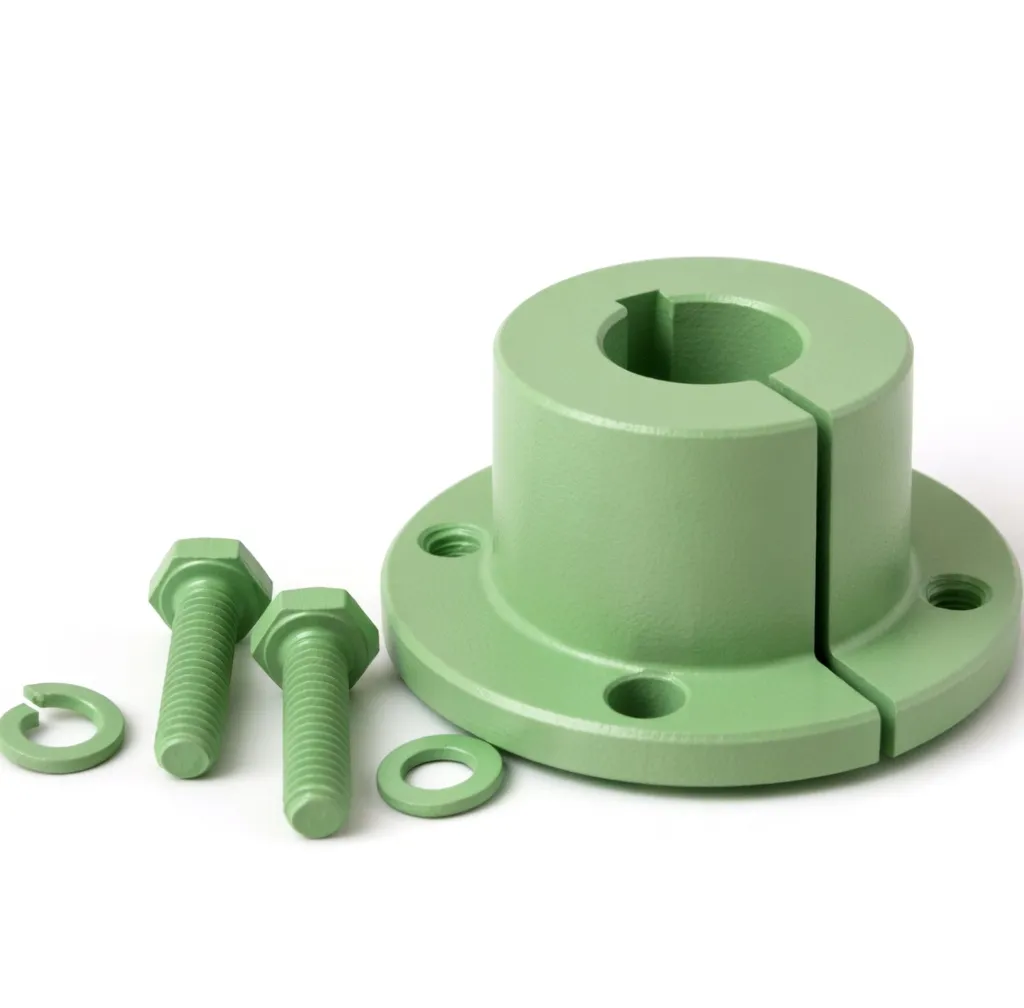
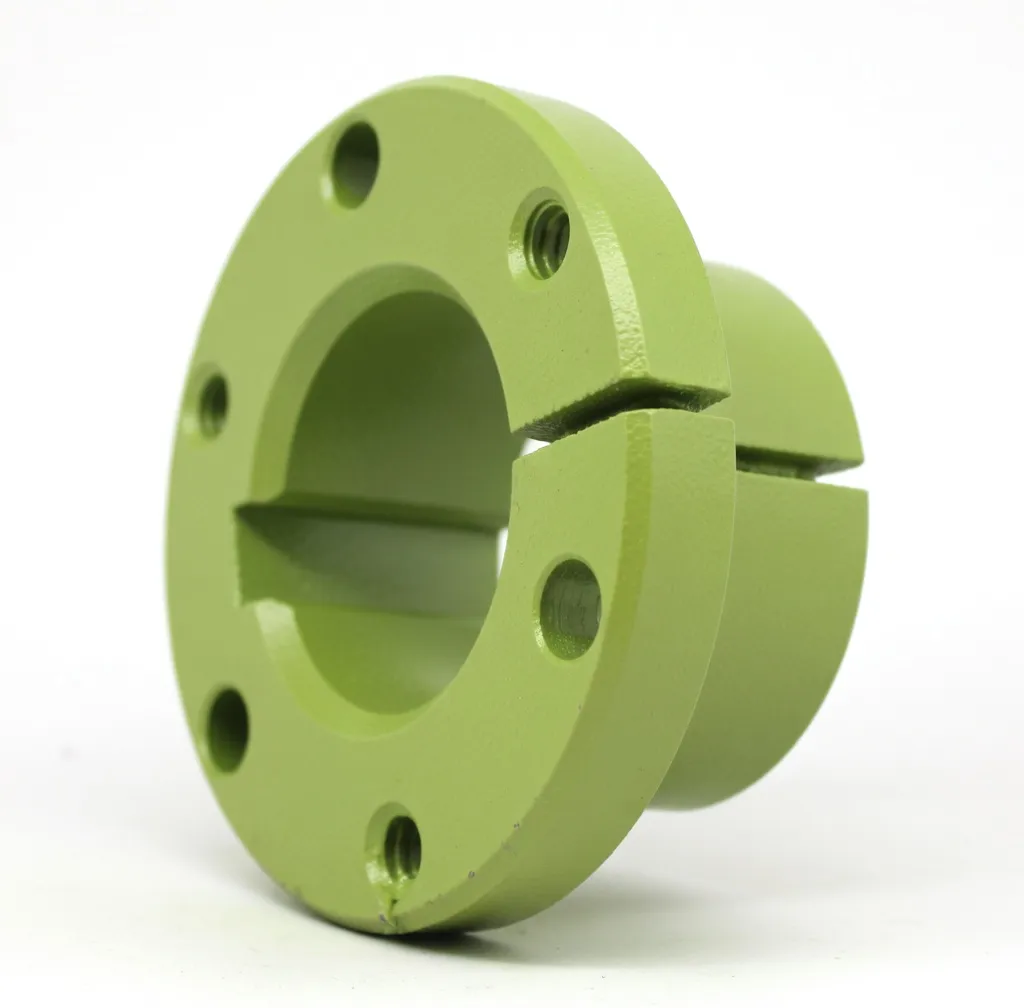
A QD bushing — Quick-Detach bushing — is a precision-machined, split-tapered shaft bushing designed to mate with a corresponding tapered bore machined into a pulley hub, sprocket, or coupling. The tapered interface, typically a 4-degree included angle, generates an enormous clamping force when the bushing’s flange bolts are tightened in sequence. This force simultaneously presses the bushing OD against the component hub bore and grips the shaft with a powerful, uniform radial load. The result is a zero-clearance interference fit that transmits torque through both the friction generated by this clamping force and a standard parallel or Woodruff key, delivering exceptional concentricity and superb resistance to the dynamic loads common in rotating machinery. The split design means that when the bolts are reversed — drawn back against the flanged face of the hub — the taper is released by wedge action, and the assembly separates cleanly without the need for a puller or hydraulic press.
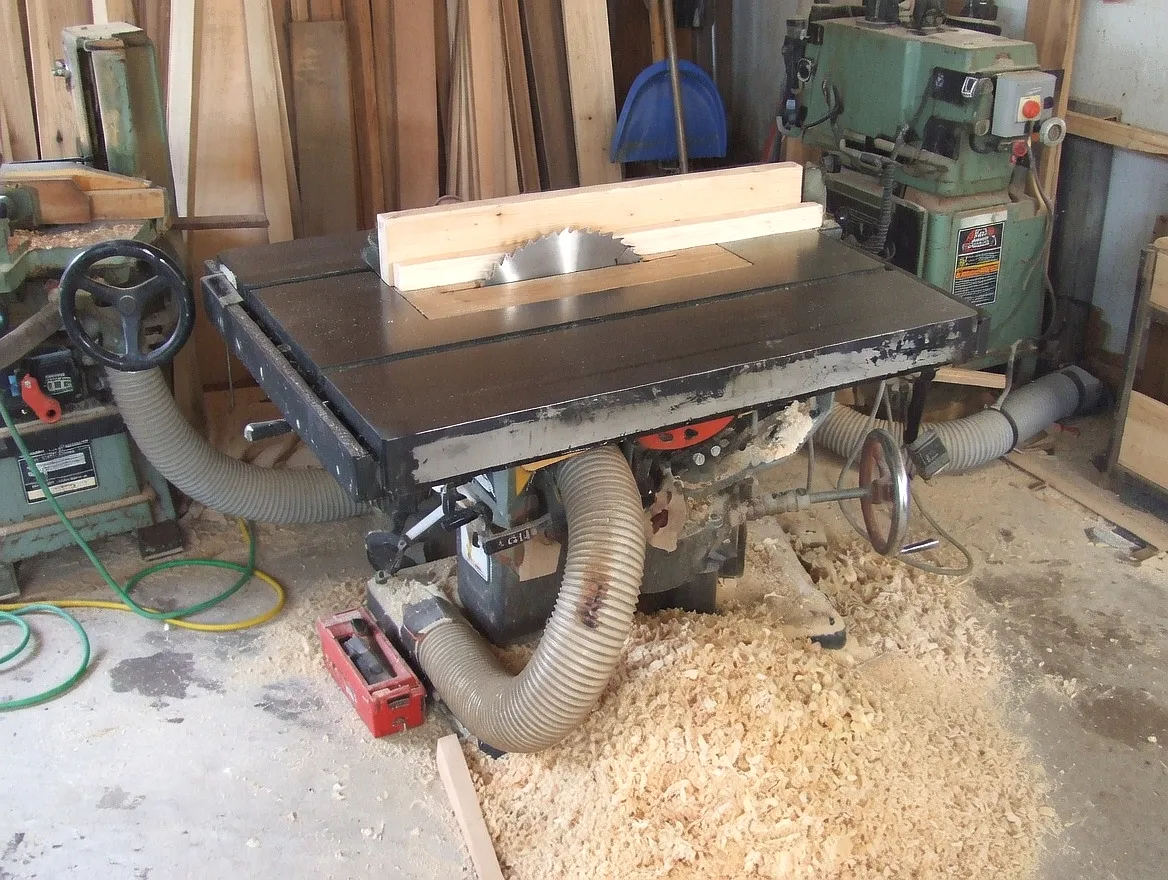
In woodworking saw machine spindles, this engineering matters enormously. A conventional hub-and-set-screw arrangement works tolerably at moderate speeds, but as spindle RPM rises above 2,000, even a small amount of radial runout or hub-to-shaft clearance translates directly into vibration — and vibration in a high-speed saw causes blade deflection, poor surface finish, and rapid bearing wear. QD bushings are manufactured to tolerances that ensure true running concentricity within a few hundredths of a millimetre, a level of accuracy that keeps saw blades tracking cleanly, planer knives cutting true, and spindle bearings reaching their full design life. For UK machinery operators and maintenance engineers who rely on BSEN and ISO standards for component compatibility, the standardised bore range of QD bushings — from 16 mm through 89 mm across the popular JA, SH, SK, SF, E, and F series — ensures seamless retrofit capability across virtually any spindle shaft diameter encountered in British woodworking facilities.
Engineering Insight
The self-locking taper geometry of a QD bushing means the harder a machine works, the more firmly the bushing grips. The greater the torque load, the greater the resulting clamping force. This characteristic is particularly valuable when a saw blade encounters a hardwood knot or embedded metal object, generating impact torques many times higher than the steady-state cutting load.
Technical Specifications: QD Bushing Series for Woodworking Spindle Applications
The table below details the key QD bushing series most commonly specified for woodworking saw machine spindle applications in the UK, covering typical bore ranges, maximum keyway torque ratings, operating speed guidance, and relevant machine types within the British timber processing and furniture manufacturing sectors.
Torque values represent maximum rated capacity with standard parallel keyway. Custom bore tolerances (H7, H6) and non-catalogue bore sizes available. Contact [email protected] for bespoke specifications.
Why QD Bushings Outperform Conventional Shaft Couplings in Saw Machine Spindle Drives
 The traditional approach to securing a belt pulley onto a saw spindle — press fit, hub-and-set-screw, or a simple interference fit with a key — has well-known practical limitations in the demanding woodworking environment. Press fits require precise machining and a hydraulic press for removal, making field maintenance impractical and time-consuming. Even with a hydraulic puller, removing a seized pulley from a 50–65 mm spindle shaft in a busy sawmill can damage the shaft surface to the point where it requires specialist machining to restore. Set-screw hub arrangements tend to fret and loosen under the cyclic vibration loads generated by high-speed cutting, leading to micro-movement between shaft and hub that damages both surfaces over time. In a busy UK sawmill or furniture factory where maintenance windows are short and unscheduled downtime costs hundreds or even thousands of pounds per hour, neither approach offers the combination of grip strength, precision, and rapid serviceability that QD bushings deliver as a matter of course.
The rapid-change capability of QD bushings is arguably their most practical advantage in woodworking. When a blade must be changed — due to wear, breakage, or a profile change for a different timber species or cut profile — the operator simply loosens the socket-head cap screws, moves them to the extraction holes in the flange, and the bushing releases from its taper. The pulley or arbor assembly slides free cleanly. Reinstallation is equally fast, and because the taper geometry ensures the component always returns to exactly the same radial position, there is no need for re-balancing or drive realignment after each tool change. This positional repeatability is critical on machines running at 3,000 RPM or above, where even a fraction of a millimetre of axial or radial displacement can throw a drive belt into misalignment and create vibration throughout the entire drive train — leading to noise, accelerated wear on belts and bearings, and degraded cut quality.
Dust resistance is the second major performance advantage. Unlike mechanical couplings with multiple exposed interfaces and gaps, a properly installed QD bushing creates a near-sealed taper contact between the hub bore and the shaft. The tight taper leaves almost no crevice for sawdust accumulation — a critical benefit in facilities processing resinous softwoods such as Scots pine and Sitka spruce, which are the dominant commercial species in Scottish and Northern English forestry. Resin vapour can condense inside loose-fitting shaft assemblies and, combined with fine wood dust, consolidate into a hard crust that makes pulley removal extremely difficult. QD bushings assembled with anti-seize compound on the taper faces release cleanly even after extended service in these conditions, because the geometry inherently prevents the galling and seizure that plague open-clearance couplings in the same environment.
QD Bushing Applications Across UK Woodworking Machinery
How QD bushings are deployed across the full range of saw and processing machines found in British timber and furniture facilities.
Band Saw Machines
Band saws used in UK timber yards for log breakdown and resawing typically run the main drive wheel at 1,500–2,500 RPM under heavy continuous torque loads from cutting dense hardwoods like oak, ash, and European beech. The QD bushing connecting the drive V-belt pulley to the lower wheel shaft must withstand not only this steady-state torque but also the impact loads generated when the blade encounters knots or irregular grain. SF and E series QD bushings are the most common choice here, covering the 40–75 mm shaft diameters typical of heavy-duty band saw designs. The ability to remove and refit without specialist tooling is a significant maintenance advantage in sites where engineering resource is limited and machines must return to service as quickly as possible.
Circular Saw Machines
Panel-cutting circular saws in UK furniture factories and joinery workshops frequently run spindle speeds of 3,000–5,000 RPM. At these speeds, even microscopic imbalance in the pulley-to-shaft connection creates vibration that propagates through the entire cutting assembly, shortening blade life and degrading surface finish on the cut face. SK and SH series QD bushings are widely used on circular saw arbors, providing the smaller bore range (19–35 mm) and excellent high-speed concentricity that these applications demand. The integrated keyway in the QD bushing design provides a secondary torque path alongside friction clamping, ensuring the drive pulley cannot slip even under maximum cutting load when the saw encounters a hard inclusion or change in timber density.
Planer-Thicknessers & Spindle Moulders
Planer-thicknessers in UK joinery workshops generate copious volumes of fine wood shavings and dust that settle on every exposed surface. The drive pulleys on the cutterblock shaft are a primary dust-contamination point, and a loose-fitting coupling here accumulates debris quickly. QD bushings on these pulleys create a sealed taper-lock interface that resists dust ingress while delivering the positive, non-slip drive connection needed when the cutterblock encounters a sudden load from a knot or grain reversal. Spindle moulders — used extensively in British joinery for window sections, door frames, and decorative mouldings — benefit similarly, with SK series QD bushings covering the 25–50 mm shaft sizes standard on most European-built spindle moulder designs.
Six Key Product Advantages
Why UK woodworking manufacturers specify QD bushings for their saw spindle drive systems
Rapid Tool Change
Three to five bolts fully release a QD bushing, reducing blade or pulley swap time from potentially hours with a press-fit arrangement to under twelve minutes. In three-shift production environments running continuous hardwood cutting operations, that difference adds up to meaningful additional output every single week.
Precision Concentricity
Taper-lock geometry achieves shaft-to-hub concentricity within ±0.02 mm — minimising vibration at high RPM, extending blade life by eliminating micro-oscillations that cause accelerated tooth wear and gullet cracking, and maintaining cut accuracy across long production runs in the furniture component and joinery sectors.
Sawdust Resistance
The tight taper interface leaves minimal clearance for dust ingress. Anti-seize compound applied during assembly ensures clean release after long service periods in dusty environments — especially important in facilities processing the resinous softwoods that dominate UK commercial forestry in Scotland, Wales, and Northern England.
High Torque Capacity
The taper-compression mechanism generates clamping forces far exceeding a keyway-and-set-screw hub at the same shaft diameter. Combined with a standard parallel key, QD bushings handle the full impact torque of a saw blade striking a hardwood knot or embedded nail without slipping — protecting both the shaft surface and the downstream drive components.
Long Service Life
Manufactured from high-tensile grey cast iron or ductile iron and precision-bored to ISO tolerance grades, QD bushings are engineered for decades of service life under proper maintenance regimes. The bushing is replaceable independently of the more expensive pulley hub, significantly reducing long-term maintenance and component replacement costs across an entire saw machine fleet.
ISO Standard Interchangeability
All standard QD bushing series are dimensionally interchangeable across manufacturers, giving UK buyers full sourcing flexibility and eliminating single-source dependency. Machinery built to ISO and BSEN standards retrofits seamlessly with replacement QD bushings from any compliant supplier — important for facilities operating mixed fleets of German, Italian, and UK-built woodworking machines.
Customer Success: Yorkshire Hardwood Processor Cuts Spindle Maintenance Downtime by 41%
Client Profile
Ashworth Timber Products Ltd.
Wakefield, West Yorkshire, England
| Industry | Hardwood sawmilling and kiln drying — primarily oak, ash, and sycamore |
| Machines | 3× band saws, 2× circular saws, 1× 4-sided planer line |
| Challenge | Press-fit pulley removal causing repeated shaft surface damage and extended maintenance downtime |
| Solution | Full retrofit of all spindle drive pulleys with SF and E series QD bushings |
Ashworth Timber Products Ltd., a third-generation hardwood processing business in Wakefield, was losing an average of 14 hours per month to spindle drive maintenance across its band saw and circular saw lines. The root problem was its legacy press-fit pulley arrangement: removing pulleys from 55 mm and 65 mm spindle shafts required a hydraulic puller, and the operation frequently damaged the shaft surface. Restoring a scored shaft meant specialist machining and, in two cases over a 12-month period, complete shaft replacement. The accumulated cost — machine downtime, machining fees, and shaft replacement parts — was running to several thousand pounds annually, on top of the lost production output during extended repair windows.
Following a recommendation from their machinery supplier, the engineering team at Ashworth specified E series QD bushings (65 mm bore) for the heavy band saw drives and SF series units (50 mm bore) for the circular saw lines. The retrofit was completed across a single planned weekend shutdown. From the first maintenance cycle following installation, blade change times fell from an average of 95 minutes — including press setup, puller operation, and shaft inspection — to under 12 minutes with the QD bushing system. Over the following 12 months, total measured spindle maintenance downtime fell by 41%, and there were zero instances of shaft surface damage attributable to the pulley mounting system.
What UK Woodworking Professionals Say
Real feedback from operators and maintenance engineers across Britain’s timber and furniture sectors
“We run three band saws continuously on oak and ash. Before switching to QD bushings, a blade change could tie up the machine for nearly two hours once you factor in getting the press in position. Now we are back cutting inside fifteen minutes, every time. The annual saving in lost production is genuinely significant for an operation our size.”
“We manufacture bespoke kitchen furniture components and change circular saw profiles several times per shift. The QD bushings on our spindle arbors have made that process fast and repeatable. The concentricity you get from a proper taper-lock fit means our cut quality is exactly the same every time — no vibration, no chatter on the cut face.”
“We process a lot of Scots pine from local forestry and the resin is brutal on drive components. Set-screw hubs were seizing up regularly and we were damaging shafts getting them off. Switching to QD bushings with anti-seize on assembly solved that completely. Two years in and every one still releases cleanly — no drama.”
Manufacturing & Custom Engineering
Precision-Engineered to Your Exact Specification
Standard series QD bushings cover the vast majority of woodworking spindle shaft diameters found in UK machinery. But modern timber processing increasingly involves CNC machining centres, high-frequency spindles, and bespoke tooling systems that demand components machined to non-standard dimensions or from specialist materials. Our manufacturing facility maintains full CNC turning and grinding capability, allowing us to produce QD bushings in metric or imperial bore sizes not available in standard catalogues, to bore tolerances as tight as H6, and in materials including 316 stainless steel for facilities requiring corrosion resistance in damp or outdoor processing environments. This level of customisation means that whatever your saw machine spindle requires — unusual shaft diameter, double keyway, extended flange geometry, or a non-standard OD to match a legacy hub design — our engineering team can produce it to drawing.
For OEM customers and machinery builders supplying the UK and European market, we offer full drawing review, material certification, and batch traceability documentation as standard. Minimum order quantities for custom QD bushings are flexible, and our engineering team provides free technical consultation at the specification stage to ensure the first production batch is dimensionally correct before any significant volume is committed. Private labelling and OEM packaging are available for distributors and machinery builders who require own-brand component supply.
⚙️
Bore Range: 10–120 mm (Custom)
Metric and imperial bore sizes, H7 or H6 tolerance, single or double keyway
🔬
Materials: Cast Iron, Ductile Iron, Steel, SS316
Material test certificates and RoHS documentation available on request
📦
OEM Batch Supply & Private Labelling
Machinery builders and distributors supplying UK and European markets welcome
🚢
Fast Dispatch to All UK Addresses
Standard series typically held in stock; custom orders quoted with confirmed lead time at point of order
Serving the UK Woodworking Industry from Sawmill to Joinery Workshop
Britain has a rich and structurally diverse timber processing sector. The large commercial sawmills operated by forestry companies in Scotland, Wales, Cumbria, and the North of England process millions of cubic metres of UK-grown softwood annually. Specialist hardwood processors in the English Midlands — particularly in Staffordshire, Worcestershire, and Northamptonshire — supply the furniture, flooring, and joinery trades with home-grown and imported hardwood. And a substantial network of joinery workshops, cabinet-making businesses, and timber frame building companies operates across every county in the country, from the industrial estates of the M1 corridor to the rural workshops of rural Devon and the Scottish Borders. The machinery across this sector varies enormously in age, origin, and specification — a legacy of decades of investment in German, Italian, and domestically built woodworking equipment.
QD bushings are one of the few shaft coupling systems that genuinely bridge the metric-imperial gap common in UK timber processing facilities. Available in both metric and imperial bore sizes, with OD dimensions standardised across the JA, SH, SK, SF, E, and F series, they provide a common mounting solution for pulleys and sprockets across virtually any combination of shaft diameter and hub specification. For maintenance engineers responsible for keeping machines from multiple decades and multiple countries running without interruption, this standardisation simplifies the spare parts holding process, reduces inventory, and makes it possible to specify the right QD bushing from a catalogue rather than resorting to bespoke machining every time a legacy machine needs attention.
Whether your facility is a high-volume softwood sawmill in Aberdeenshire processing Sitka spruce, a bespoke hardwood joinery in Bristol producing oak staircases and window frames, or a furniture component factory in the East Midlands running high-speed panel-cutting lines, the correct series and bore size of QD bushing is available to suit your specific saw machine spindle application. Our technical team is available to help with selection, installation guidance, and any questions about retrofitting to existing machinery.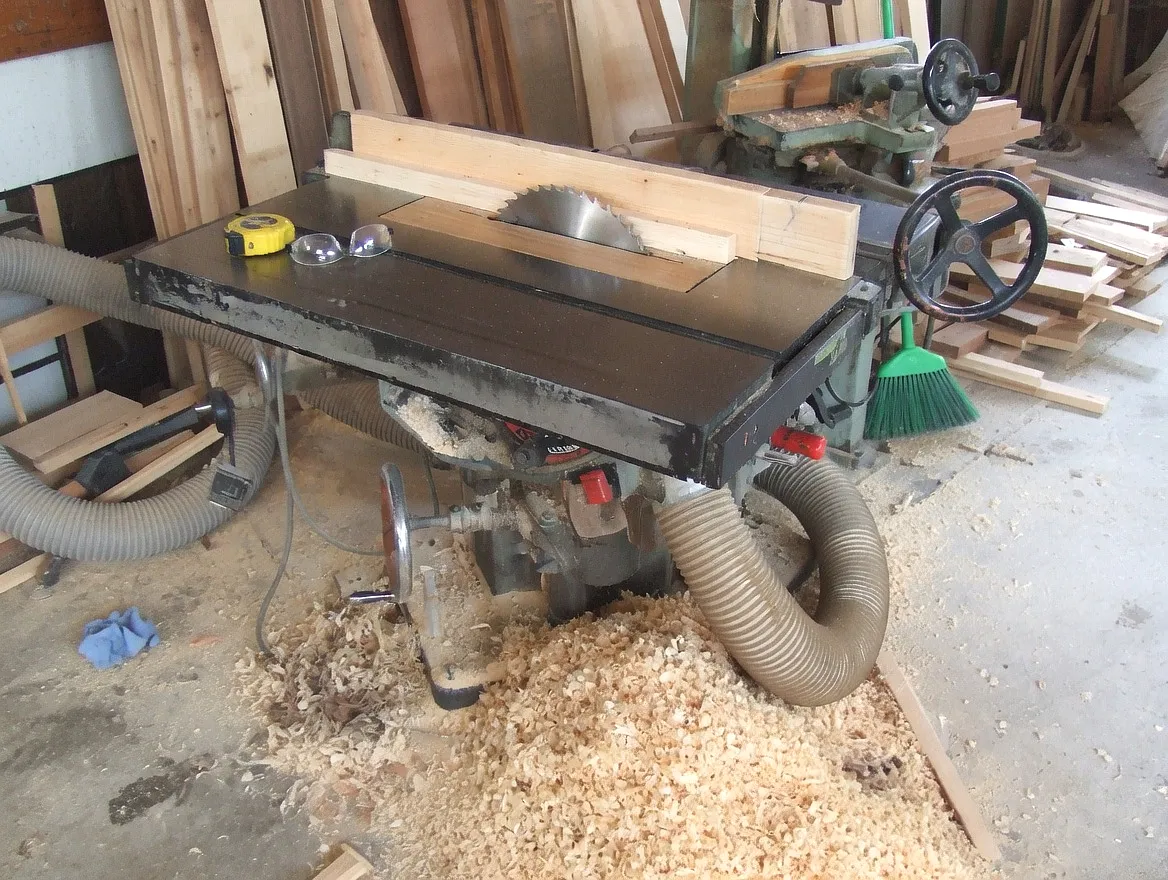
Frequently Asked Questions
Common questions from UK woodworking and timber processing professionals about QD bushings for saw machine spindle applications
What size QD bushings do I need for a typical UK band saw spindle shaft running at 1,800 RPM on an oak cutting line?
Shaft diameters on mid-range to heavy band saws commonly fall between 45 mm and 75 mm, which places you in the SF or E series range. The correct series also depends on the drive motor power rating and the maximum torque load from the cutting application — dense hardwoods like oak generate higher torque than softwoods. Always confirm the shaft diameter, keyway dimensions, and motor output from the machine nameplate before ordering. Contact [email protected] for a free sizing consultation specific to your band saw specification.
How quickly can QD bushings be delivered to a timber processing facility in Scotland or the North of England when a machine is down?
Standard series QD bushings in commonly stocked bore sizes are typically dispatched within one to two business days to addresses throughout the United Kingdom, including Scotland, Northern England, Wales, and Northern Ireland. Express courier options are available for urgent breakdown situations in remote sawmill locations. For non-standard bore sizes or custom specifications, we confirm lead time at the point of order. Email [email protected] for current stock availability and urgent order options.
Can QD bushings really handle the heavy sawdust and pine resin conditions inside a UK softwood sawmill without seizing after months of use?
Yes — this is one of the environments where QD bushings perform particularly well relative to alternative coupling methods. The tight taper contact interface creates very little open clearance for dust or resin vapour to penetrate and solidify. The key step for ensuring clean release in resinous environments is applying a thin coat of anti-seize compound to the bushing taper and bore faces at assembly. This prevents the pine resin — which can act as an adhesive at the temperatures generated inside a running saw machine — from bonding the bushing to the hub. With correct assembly procedure, QD bushings release cleanly even after 12 to 18 months of continuous service in heavy sawdust conditions, as confirmed by operators running Scots pine lines in Scotland and Northern England.
What is the price of QD bushings for a circular saw spindle in a UK furniture factory, and are there volume discounts available for bulk orders?
Unit cost varies by series, bore size, and material specification. Standard cast iron SK or SH series units suitable for most circular saw spindle applications represent strong value relative to the downtime savings they deliver within the first few months of service. Volume pricing is available for orders of 10 units and above, with further tiered discounts at 50+ and 100+ units. OEM machinery builders and maintenance contractor accounts also qualify for trade pricing arrangements. For an accurate quote specific to your circular saw spindle bore size and quantity, email [email protected].
Which QD bushing series is best for a planer-thicknesser cutterblock shaft in a joinery workshop in England running at 4,500 RPM?
For a planer-thicknesser cutterblock shaft at 4,500 RPM, the SK series is the typical choice for shaft diameters in the 25–40 mm range, which covers most workshop-grade machines. For heavier production machines with shaft diameters above 40 mm, the SF series provides greater torque capacity while maintaining the concentricity accuracy that is critical at planer speeds. Confirm the shaft diameter and keyway size from the machine’s nameplate or manufacturer documentation, as these vary between European and UK-built machines. Our engineering team can advise on the exact series and tightening torque for your specific joinery machine.
Where can I find a reliable supplier of QD bushings for woodworking machinery in the UK with fast delivery and technical support?
Our team at [email protected] supplies standard and custom QD bushings directly to buyers across England, Scotland, Wales, and Northern Ireland. We work with sawmills, furniture factories, joinery workshops, and OEM machinery builders. Standard series items are stocked in both metric and imperial bore sizes covering the full range of machinery in UK service, and our technical team is available to assist with specification, installation guidance, and troubleshooting for any saw machine spindle application.
How do I correctly install a QD bushing on a saw machine spindle shaft to ensure it does not vibrate or work loose during high-speed cutting?
Clean the shaft and bushing bore thoroughly — any oil, burr, or debris on these surfaces will compromise the clamping force. Slide the bushing into the pulley hub, align the keyways, and fit the key. Thread the socket-head cap screws finger-tight in an alternating cross pattern, then torque them progressively in the same alternating sequence to the manufacturer-specified value (typically 20–100 Nm depending on series). Do not use impact tools or exceed the specified torque. Apply anti-seize to the taper faces if operating in dusty or resinous environments. After the first 4 hours of operation, shut down and recheck each bolt to the specified torque, as the taper will have bedded in slightly. For on-site installation support across UK locations, our engineering team can provide guidance remotely.
Ready to Upgrade Your Saw Spindle Drive System?
Get expert technical advice and a competitive quote for standard or custom QD bushings, delivered to any address in the United Kingdom.
Get a Quote: [email protected]
Standard series · Custom bores · OEM supply · UK nationwide delivery · Free technical support
edit by gzl