
QD Bushings for Beverage Filling Lines: Sanitary Power Transmission Built for UK Food and Drink Manufacturing
Engineered locking hubs that keep your bottling carousels, conveyor sprockets, and CIP pumps turning — cleanly, quietly, and within the strict hygiene envelopes of British and European food safety law.
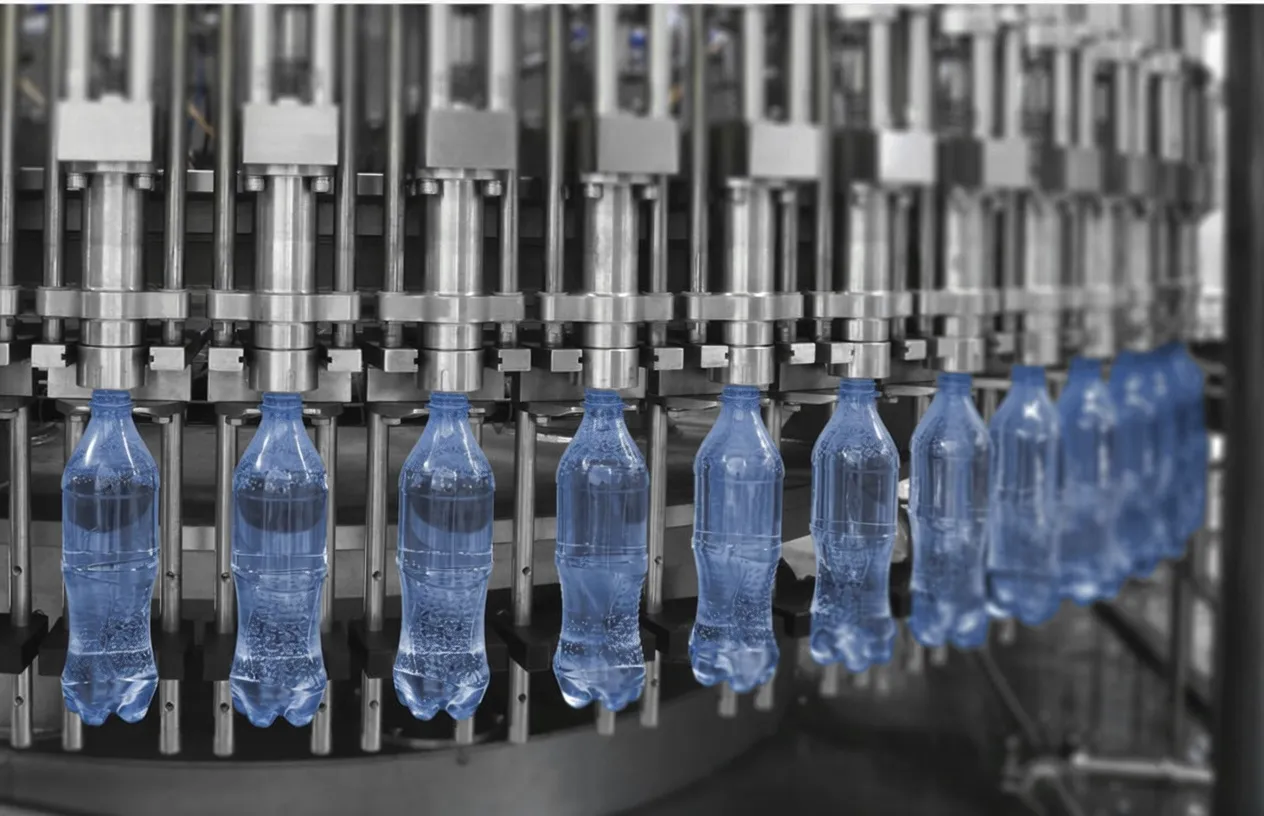 Modern beverage filling halls run at an unrelenting pace. A mid-tier British soft drink plant may fill, cap, label, and palletise 36,000 bottles an hour, and a dairy carousel running at 72,000 yoghurt pots a shift has no tolerance for unplanned stoppages. The power transmission parts connecting motors to chains, screw conveyors, and rotary filling heads must cope with continuous duty, daily caustic wash-downs, temperature swings between chilled storage and hot-fill zones, and the mechanical shock of sudden emergency stops. This is where QD bushings earn their place on the bill of materials. By clamping pulleys, sprockets, and gears onto the shaft through a precise taper, QD bushings remove the keyway slop that typical set-screw hubs suffer after a year of wash-down cycles, and they allow maintenance teams to swap worn sprockets in minutes rather than hours. Across UK food and beverage manufacturers, QD bushings are quietly becoming the default specification for every drive that touches the filling room.
Why Filling-Line Engineers Specify QD Bushings
Across dairies in Devon, breweries in the Midlands, and contract bottlers along the M62 corridor, the same pattern shows up: the drives that survive the longest are built around properly selected QD bushings. The advantages compound month after month on a three-shift line.
Minute-Scale Changeovers
A tapered split bore and a three-bolt clamp mean a worn sprocket can come off, be rotated 60 degrees against the shaft, and be back on torque in under ten minutes. No pullers, no heating, no gouged shafts — exactly what a breakdown at 2 a.m. needs.
True Concentric Running
Our QD bushings hold a total indicated runout below 0.05 mm. Bottle-nesting stars spin without chatter and labeller rollers stop chewing PET sleeves. Line speeds stay stable and filling valves see fewer micro-surges from drive eccentricity.
Wash-Down Survival
Stainless 304 and 316L variants of QD bushings shrug off daily CIP cycles with caustic soda at 75 °C, peracetic acid rinses, and high-pressure spray guns. Food-grade epoxy coatings add a second barrier against chloride pitting in brine and citrus environments.
Shock-Load Grip
When a bottle jams in the infeed screw and the drive slams to a halt, the taper-locked interface of our QD bushings transmits the reactive torque without slipping or fretting the shaft surface — a failure mode that ruins keyed hubs within weeks.
Inventory Consolidation
One QD bushing size fits dozens of hub diameters across carton erectors, tray sealers, and palletisers. UK engineering stores that standardise on our QD bushings range cut their hub SKU count by 40 to 60 percent inside a year.
Audit-Ready Traceability
Each batch of QD bushings leaves our plant with a material certificate referencing mill heat numbers, so BRCGS and SALSA auditors trace any component touching a food-contact zone without paper-chasing.
How QD Bushings Work Inside a Filling Line
Working Principle
A Quick-Detachable bushing sits inside a matching tapered bore machined into the hub. Three cap screws pull the bushing flange axially into the hub, the longitudinal split closes onto the shaft, and the tapered wedge converts bolt preload into uniform radial clamping pressure. The resulting friction grip transmits the full catalogue torque of the drive with no keyway and no interference fit — which is why QD bushings are dimensionally forgiving of slight shaft wear and readily reusable.
Materials We Offer
Sintered carbon steel (1045 equivalent) is zinc- or black-oxide-finished for dry drives inside enclosed gearboxes. For wet process areas, our stainless QD bushings use 304 for splash zones and 316L where chlorides or citric acid are routine. Nickel-PTFE coated variants serve zones where colour coding for food-contact proximity is required, and sanitary-finished hubs meet EHEDG cleanability guidance.
Deployment Zones
Conveyor chain and mat-top sprockets carry empty and filled containers between unscramblers, rinsers, fillers, cappers, labellers, coders, and case packers. Behind every one of those drives is a pulley or sprocket mounted with a locking hub. Rotary carousel drives see particularly demanding loads because the combined mass of glass bottles and product can exceed 300 kg on a 24-station filler.
Hidden Duty Cycles
CIP circulation pumps, sterile-air blowers, and bottle-drying knife blowers all rely on V-belt drives where QD bushings hold the pulley. Vibration here is subtle but cumulative; a well-specified taper clamp prevents the slow shaft wear that turns a three-year pump into an eighteen-month pump.
Technical Specifications at a Glance
Performance envelope our QD bushings routinely meet on filling-line duty. Non-standard dimensions are produced to order in our own workshop.
| Parameter | Standard Range | Food-Grade Option |
|---|---|---|
| Bushing Series | JA · SH · SDS · SD · SK · SF · E · F · J · M · N · P · W | All series in 304 / 316L |
| Bore Range | 12 mm – 125 mm (imperial on request) | 12 mm – 100 mm |
| Transmittable Torque | Up to 9,500 Nm (Series W) | Up to 7,200 Nm |
| Concentricity (TIR) | ≤ 0.05 mm | ≤ 0.04 mm |
| Operating Temperature | -40 °C to +150 °C | -40 °C to +180 °C (CIP compatible) |
| Compliance | ISO 9001, RoHS, REACH | FDA 21 CFR 177, EU 1935/2004, 3-A Sanitary |
| Surface Finish | Black oxide / zinc-plated | Electropolished Ra ≤ 0.8 μm |
| Installation Time | 5 – 10 minutes per hub | 5 – 10 minutes per hub |
Where QD Bushings Earn Their Keep on the Line
From the depalletiser at the front of the hall to the shrink wrapper at the back, almost every rotating element relies on a locking hub. The specification changes subtly with the process zone.
Empty Container Handling
Depalletisers, unscramblers, and air conveyors run dry but dusty. Carbon-steel QD bushings with black-oxide finish suit the low-humidity environment, locking the drive sprockets that feed empty PET, glass, or aluminium containers toward the rinser.
Rinser, Filler, Capper Monobloc
The heart of the line. Carousel drives, star-wheel transfers, and cap-feeder pulleys sit inside a high-moisture zone that is washed daily. 316L stainless QD bushings with electropolished finish are the routine choice for British dairies and CSD bottlers.
Pasteuriser and Tunnel Cooler
Chain-belt drives travel through thermal zones from ambient to 75 °C and back, cycling many times per shift. Thermal-stable QD bushings with matched coefficients of expansion prevent the hub creep that shows up as a rattling sprocket after six months.
Labelling, Coding, End-of-Line Pack
Timing precision matters for wrap-around labellers and ink-jet coders. The low runout of precision QD bushings keeps label placement inside ±1 mm, and case packer flight-bar drives use heavy-duty series for the inertial loads of accelerating filled cases.
Somerset Springs Dairy Co. — 14-Month OEE Lift
The Challenge
Somerset Springs, a Taunton-based fresh milk and yoghurt processor supplying major British retailers, was losing roughly 4.8 hours of filler uptime every week to sprocket replacements on its 12,000-bottles-per-hour HDPE line. The incumbent keyed hubs were picking up pitting from nightly caustic CIP, and the recurrent shaft wear forced engineering to order new shafts every nine to eleven months at considerable expense.
The Ever Power Solution
Our application engineers surveyed the line, scanned each shaft for wear, and replaced 38 legacy keyed hubs with 316L QD bushings in Series SH and SD, electropolished to Ra 0.6 μm. The replacement QD bushings were supplied with colour-coded plastisol inserts for zone identification, and each assembly was bagged with its own installation card and torque value. Delivery from our ISO 9001 plant to Felixstowe took 21 calendar days, with onward courier to Taunton inside 48 hours.
Measured Outcome (14 months)
What British Filling-Line Teams Say
We swapped over thirty keyed hubs on our Manchester CSD line for their stainless units. Eighteen months in, not one has come loose, and the engineers love how fast swap-outs are on a Sunday shift.
Their technical team produced drawings and torque sheets specific to our existing Krones carousel. The material certificates went straight into our BRCGS folder. Very professional for an overseas supplier.
Price point against the German original was around thirty percent better with no compromise on concentricity. Lead time of three weeks to Tilbury is exactly what we need for planned shutdowns.
Serving UK Food and Drink Manufacturers, Region by Region
South West England
Dairy processors across Somerset, Devon, and Wiltshire specify our stainless QD bushings for cream, yoghurt, and fresh-milk lines operating around the clock during peak season.
Midlands & Yorkshire
High-speed CSD and beer bottling in Burton, Tadcaster, and Leeds benefits from our shock-rated QD bushings on rotary fillers running at 60,000 bph and above.
Scotland & Northern Ireland
Whisky bottlers in Speyside and ready-meal factories near Larne receive direct shipments to Grangemouth and Belfast harbour through our two-weekly consolidated container service.
South East & London Basin
Juice, sauce, and condiment co-manufacturers in Kent, Essex, and the M25 corridor receive priced-delivered offers in pounds sterling with UK VAT handled on our end.
Every consignment lands at Felixstowe, Southampton, or Tilbury with UK-formatted documentation, commodity codes pre-declared, and GBP invoicing handled through our British trade account. A dedicated UK account engineer answers enquiries inside the working day on GMT.
Our Factory and Customisation Capability
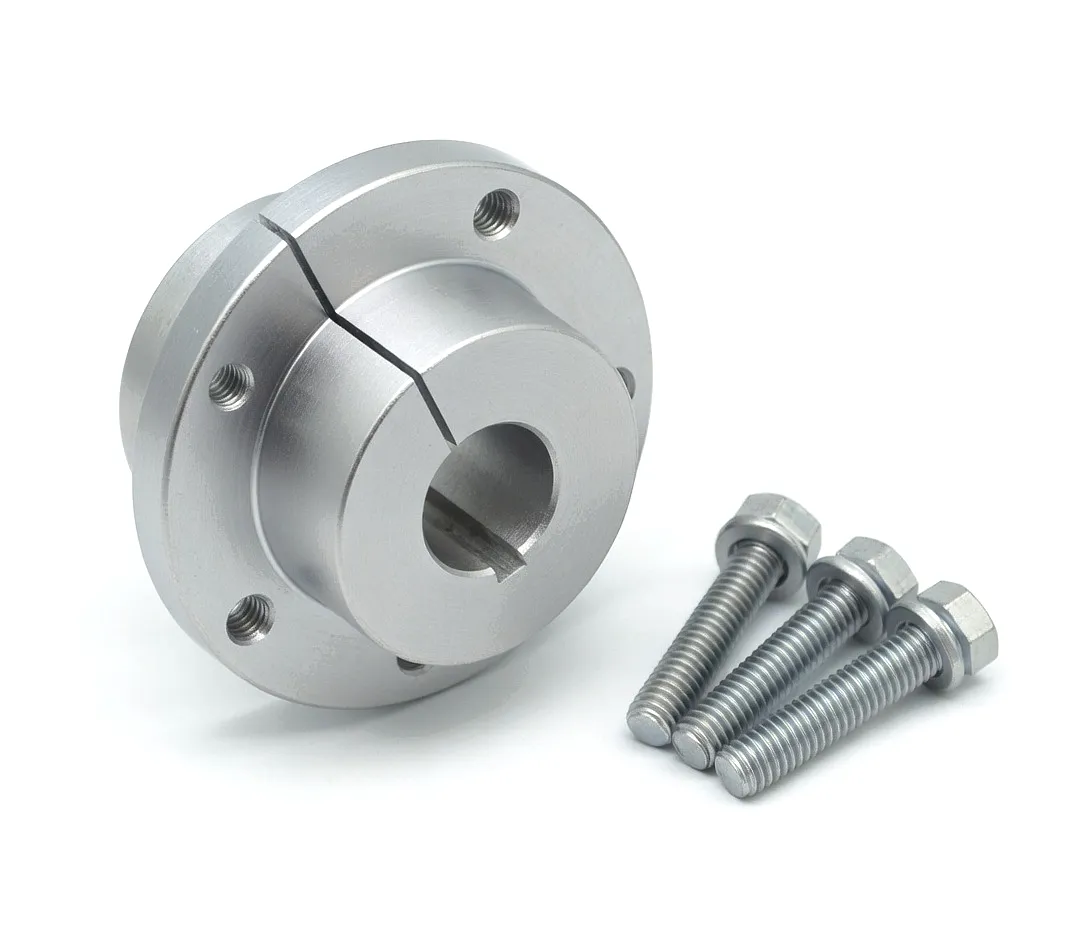 Ever Power operates a 28,000-square-metre CNC workshop dedicated to power transmission components. Forty-two CNC lathes, nine vertical machining centres, four induction-hardening cells, and an electropolishing line all sit under one ISO 9001 umbrella. The integrated flow means a non-standard QD bushings project — for instance a 316L Series J unit with a metric oversize bore and a 12 mm pilot flat for an obscure Italian filler — moves from drawing approval to packed carton in 14 working days, roughly one-third of the lead time typical from European stockists.
We customise on six dimensions: base material (carbon, 304, 316L, duplex on request), surface finish (black oxide, zinc, nickel-PTFE, electropolished, plastisol), bore profile (metric, imperial, keyed, keyless, splined, D-shaft), flange pattern (three-bolt standard or custom PCD), torque rating (our engineers run FEA for any reinforced variant), and full part marking with laser-etched customer PO numbers for traceability. Every custom batch of QD bushings ships with a material certificate referencing the mill heat, a dimensional report at 100 percent inspection for critical features, and a torque specification card. That level of documentation is why contract packers and private-label bottlers consistently pass their annual BRCGS and SALSA audits without supplier-related observations.
Frequently Asked Questions
Voice-search-friendly answers from our UK application engineers.
How much do stainless steel QD bushings cost for a UK dairy filling line in 2026?
List pricing for a 316L stainless QD bushing sits roughly between £42 and £310 per unit in 2026, depending on series and bore. A typical dairy carousel replacement set of thirty to forty bushings lands in the £2,800 – £6,500 bracket delivered DAP to your UK facility. Volume agreements and annual call-off contracts trim this by 12 to 18 percent, and we can return a firm quotation inside one working day.
Which QD bushings supplier offers the shortest lead time to Felixstowe port?
Standard carbon-steel units from our UK-partnered warehouse ship to Felixstowe within 3 working days of order. Stainless 304 and 316L items built to order at our main plant typically arrive at Felixstowe in 21 calendar days door-to-port. Air-freight is available for breakdown emergencies with 5 to 7 day delivery to any UK postcode.
What is the best QD bushing material for CIP-compatible beverage filling machines?
For daily caustic and acid CIP cycles between 65 °C and 85 °C, 316L stainless steel is the right call. Its molybdenum content resists chloride pitting from brines and the citric-acid rinses common in juice lines. For dry or low-humidity zones, carbon-steel units with black-oxide coating remain the most economical choice.
Where can I buy FDA-compliant QD bushings for a Yorkshire bottled water plant?
Contact our UK engineering desk at [email protected] and a technical specialist will confirm material compliance against FDA 21 CFR 177 and EU 1935/2004. A priced RFQ with drawings, certificates of conformity, and delivery to your Yorkshire address in pounds sterling is typically returned inside 24 working hours.
How do I request a quote for custom QD bushings with imperial bore sizes in the UK?
Email the drawing or a hand sketch to [email protected] with the imperial bore size (fractional inches or decimal), the required series, and the quantity. Our application engineers reply with a firm price, a CAD drawing, and a confirmed lead time to any UK port inside one British working day.
Why do British food manufacturers prefer QD bushings over keyed hubs on carousel fillers?
Keyed hubs fret and pick up moisture in CIP zones, and the keyway acts as a bacterial harbour that fails swab tests. The keyless taper grip cleans cleanly and removes without puller damage. Changeover times on UK bottling lines drop from roughly 90 minutes to under 15 minutes, which pays the hardware back inside a calendar quarter.
When should a UK beverage plant replace the QD bushings on its rotary labeller drive?
Check for replacement at every planned shutdown, typically every 4,000 operating hours or annually, whichever comes first. Visual indicators include hairline rust around the flange bolts, label placement variation beyond ±1 mm, or audible chatter from the drive at start-up. A calibrated torque wrench check on the cap screws is the most reliable early-warning signal.
What is the minimum order quantity for stainless QD bushings shipped to the United Kingdom?
There is no strict MOQ on stainless QD bushings shipping to the UK, though consolidated orders above £500 qualify for door-to-door DAP delivery. Single-piece emergency orders ship via courier at around £38 – £75 duty-prepaid. For project tenders, our UK account team handles consolidated monthly call-offs with quarterly invoicing in pounds sterling.
Ready to Quote Your Next Filling-Line Upgrade?
Send us the drawing, the shaft size, and the production context. A firm price, compliant certificates, and a delivered lead time to your UK address return inside one working day.
edit by gzl