
Cement & Building Materials · Rotary Kiln Engineering · Heavy Industrial Drive Systems
QD Bushings for Cement Plant Rotary Kiln Drive Systems
Engineering-grade reliability under extreme heat, continuous heavy torque, and dense dust environments — purpose-built for UK cement manufacturers and industrial operators across England, Scotland, and Wales.
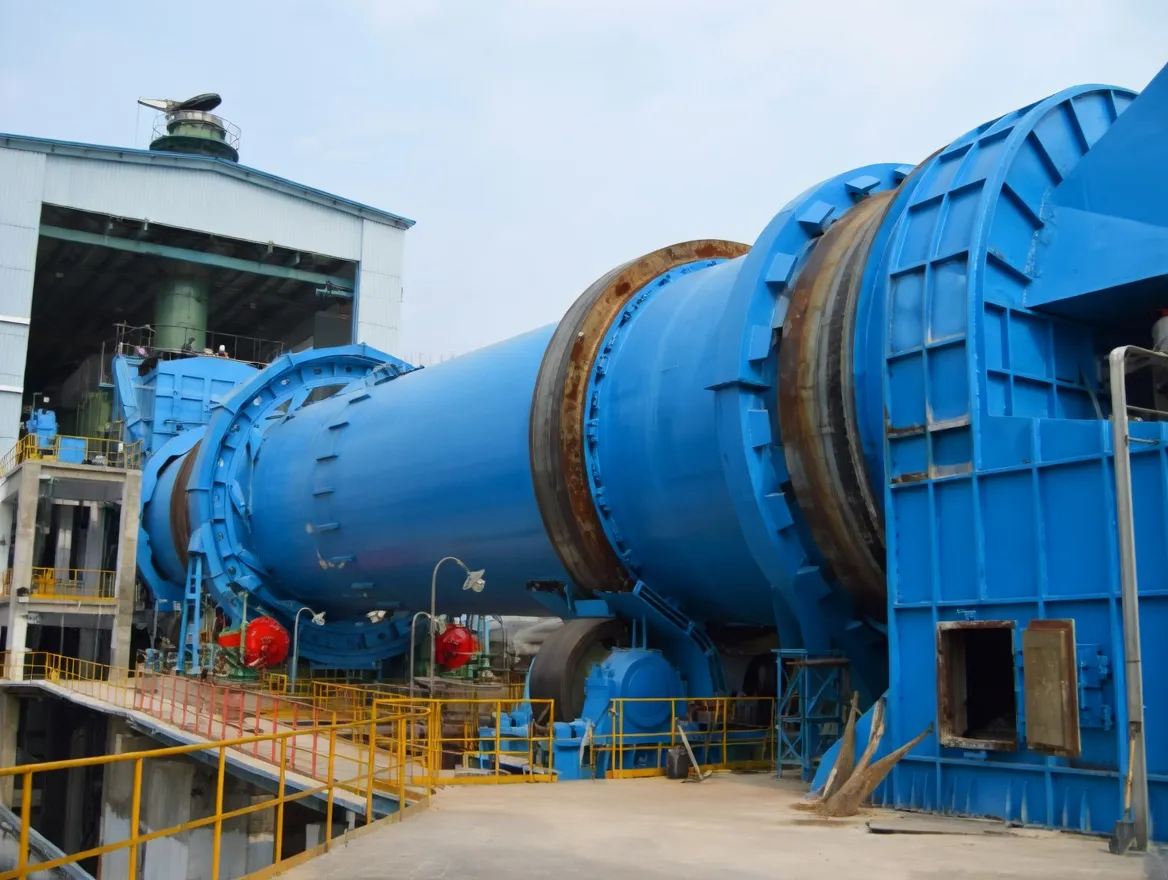 The rotary kiln is the thermal core of every cement manufacturing plant. Nothing else in the process demands the same combination of sustained mechanical power, resistance to extreme heat, and immunity to abrasive dust. A typical kiln found at UK cement sites stretches between 50 and 90 metres in length, carries a shell diameter of 4 to 6 metres, and rotates — slowly, relentlessly — day and night to convert limestone and clay into the clinker that eventually becomes Portland cement. The mechanical forces involved are staggering. The shell alone can weigh several thousand tonnes, and the material being processed inside reaches temperatures approaching 1,450°C.
The drive system transmitting power to this massive rotating structure must be built to endure without compromise. At the critical mechanical interface between the main gearbox output shaft and the large open-gear pinion, you will find QD bushings — compact, precisely engineered tapered sleeve assemblies that lock hub to shaft under high clamping loads, transmit continuous heavy torque, and can be released and repositioned without specialist tooling. In the hostile environment surrounding a cement kiln — where ambient temperatures routinely exceed 60°C, where airborne cement dust infiltrates every unprotected crevice, and where thermal expansion cycles generate axial forces that would damage lesser connections — QD bushings have earned a reputation as the preferred shaft-mounting solution among plant engineers who refuse to accept preventable failures.
This guide covers everything a UK cement plant engineer or procurement manager needs to know about specifying, selecting, and sourcing QD bushings for rotary kiln drive applications: how they work, what materials are appropriate for kiln environments, the technical parameters that matter most, and how custom-manufactured solutions can solve the dimensional challenges that standardised products frequently cannot.
Why the Cement Kiln Drive Environment Demands Purpose-Engineered QD Bushings
 Power flows through a rotary kiln drive system in a chain: electric motor, fluid coupling or direct-drive arrangement, main reduction gearbox, intermediate drive shaft, and finally the pinion gear that engages with the large ring gear bolted to the kiln shell. The junction between the gearbox output shaft and the pinion shaft is where the cumulative mechanical stresses are highest. The torque values involved on a large cement kiln — potentially exceeding 35,000 N·m at the pinion shaft — demand a connection that cannot slip, cannot creep over time under cyclic loading, and cannot introduce stress concentration points that would initiate fatigue cracks.
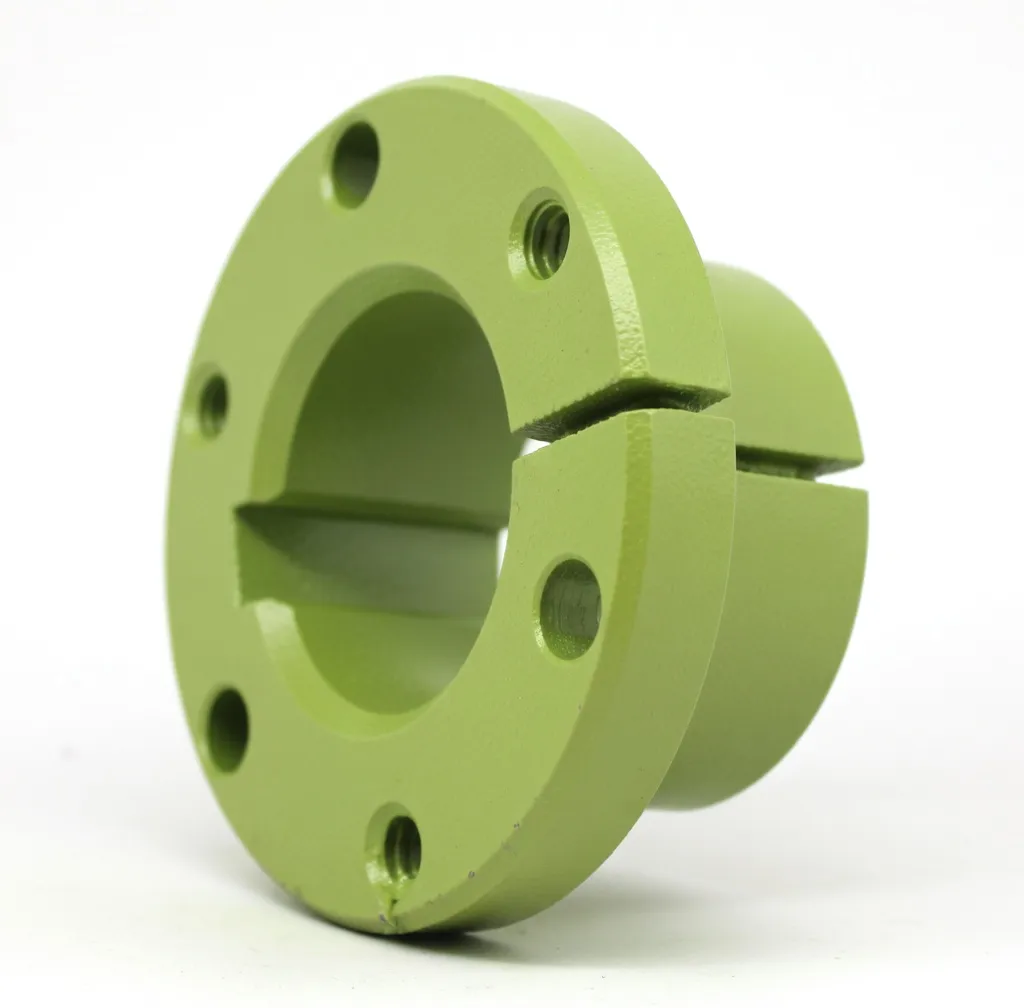
QD bushings address this challenge through a self-reinforcing tapered interference. The bushing, machined to an 8-degree included taper, is drawn into the matching taper bore of the hub by tightening a set of bolts in a controlled sequence. The tapered surfaces wedge together, generating a uniform radial clamping pressure across the full bore length. This pressure creates the frictional interface that transmits torque. The geometry is inherently stable: the greater the applied torque, the more firmly the taper is engaged, up to the design torque limit. Unlike a conventional keyway-and-interference fit, there is no single stress riser around which fatigue damage can concentrate.
Thermal expansion creates a separate but equally important challenge that QD bushings handle with particular elegance. As a cement kiln shell heats from ambient temperature to full production temperature, the structure expands axially. A 70-metre kiln operating at 1,400°C internal temperature will exhibit axial thermal movement of 15 to 30 mm at the drive end, depending on shell material and design. Any rigid shaft connection that prevents this movement transfers the resulting axial force directly into the gearbox thrust bearings — a leading cause of catastrophic gearbox failure in cement plants that have not addressed this issue. Correctly specified QD bushing assemblies, when integrated into a floating hub or axially compliant coupling arrangement, allow the kiln shell to expand freely while the drive torque path remains uninterrupted.
Cement dust compounds every challenge. The fine calcium silicate particles produced during kiln operation are abrasive, penetrating, and corrosive to bare metal surfaces. Components that rely on lubricated clearances — roller bearings, splined couplings, oil-filled gear hubs — require frequent maintenance in this environment because contamination defeats lubrication. QD bushings, by contrast, transmit torque entirely through dry metal-to-metal taper contact. Dust cannot penetrate a prestressed interference fit, and there is no lubricant film to dilute, emulsify, or wash away. This characteristic alone makes QD bushings significantly more maintenance-resilient than many alternative shaft-mounting approaches in cement plant service.
Technical Performance Parameters — Heavy-Duty QD Bushings for Cement Kilns
| Parameter | Standard Range | Heavy-Duty / Custom | Application Notes |
|---|---|---|---|
| Bore Diameter | 12 mm – 150 mm | Up to 350 mm | Metric and inch bore; custom dimensions to drawing |
| Taper Angle | 8° included | 8° included (QD standard) | Self-releasing; removal uses the same bolt set |
| Torque Capacity | 50 N·m – 5,000 N·m | Up to 45,000 N·m | Kiln pinion shafts: typically 18,000–38,000 N·m |
| Operating Temperature | -20°C to +80°C | Up to +150°C | Ductile iron or alloy steel for kiln ambient zone |
| Primary Material | Grey Cast Iron GG25 | Ductile Iron GGG50 / 42CrMo4 | Heat-treated alloy steel for large-bore ultra-high torque |
| Bore Surface Finish | Ra 1.6 µm | Ra 0.8 µm | Precision-ground bore for maximum clamping efficiency |
| Keyway Standard | Single keyway (ISO 773) | Dual keyway or keyless | Keyless preferred for kiln shafts to eliminate fatigue risk |
| Series Available | JA, SH, SD, SK, SF, E, F, J | M, N, P, W, S + custom | All series; non-standard flanges and patterns to drawing |
The Working Principle of QD Bushings: Taper Mechanics Under Extreme Load
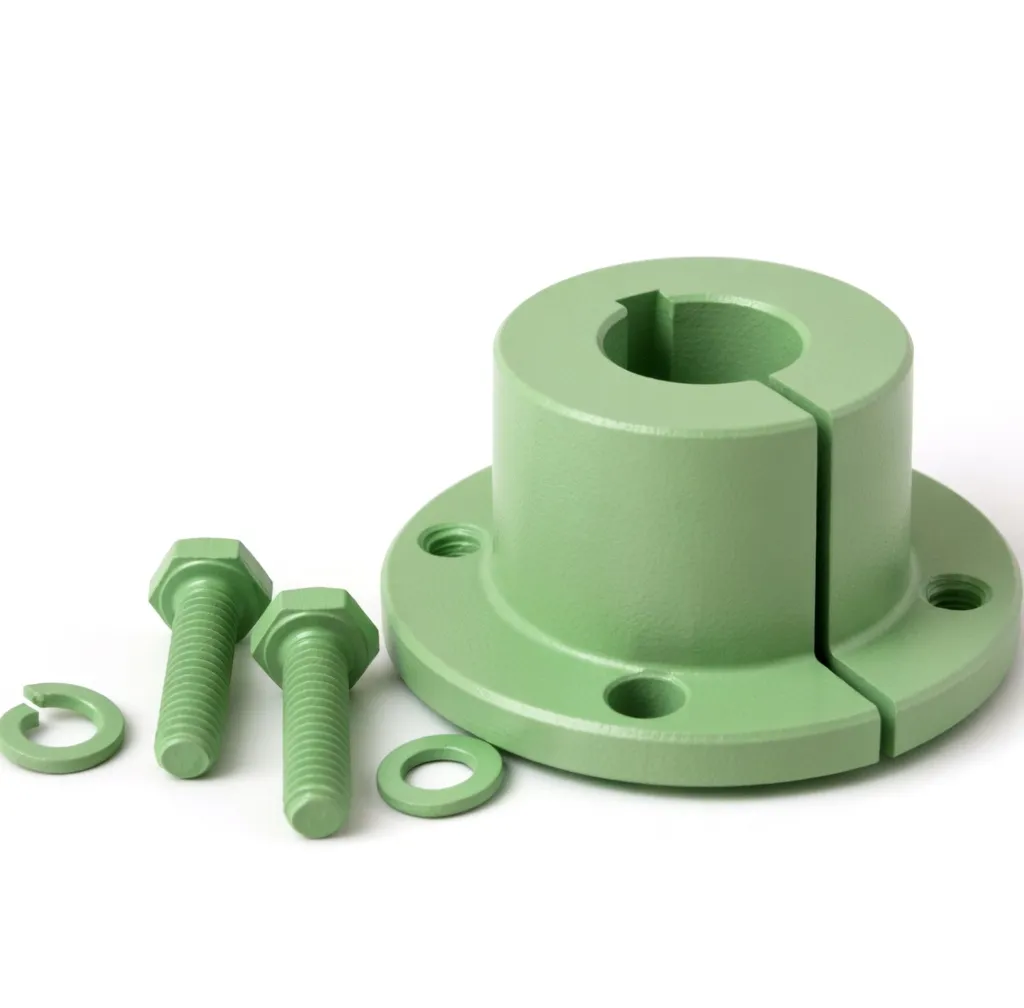
A QD bushing is a precision-machined tapered sleeve, most commonly produced in grey cast iron for standard applications or ductile iron and alloy steel for heavy industrial use. The external profile is conical, machined to a consistent 8-degree included taper that matches the internal taper bore of the hub it is installed into. The flange end of the bushing carries a bolt circle with alternating through-holes and threaded holes — a dual-purpose bolt pattern that serves for both installation and removal using the same set of cap screws.
During installation, the bushing is placed inside the hub taper bore with the bore of the bushing aligned over the shaft. The cap screws are threaded through the through-holes into the threaded holes of the hub flange. As each bolt is tightened in a star pattern to the specified installation torque — applied progressively in three passes to ensure uniform loading — the bushing is drawn axially into the hub. The tapered surfaces compress together, and the radial clamping force generated squeezes the bushing bore down onto the shaft. The result is an interference fit created entirely by bolt torque, controllable with a standard torque wrench, and repeatable to a consistent clamping pressure every time.
The self-releasing removal mechanism is one of the most practically valuable features of QD bushings in cement plant maintenance contexts. Removing a shrink-fit hub from a large kiln pinion shaft typically requires hours of work, heating equipment, heavy pulling forces, and carries a real risk of shaft surface damage. Removing a QD bushing requires only the original cap screws. They are transferred from the through-holes to the threaded jack holes in the flange face and tightened evenly. As they thread in, they bear against the hub face and push the bushing axially back out of the taper, breaking the interference gradually and cleanly. The shaft surface is untouched, and the process takes a competent maintenance technician under thirty minutes even on a large-bore assembly.
This quick-detach capability has material implications for UK cement plant operators managing tight maintenance windows. Planned kiln shutdowns are expensive events, often costing thousands of pounds per hour in lost production. Any operation that can be completed in 30 minutes rather than 4 hours creates tangible commercial value — and that saving compounds across every inspection, every adjustment, and every component replacement over the plant’s operating lifetime.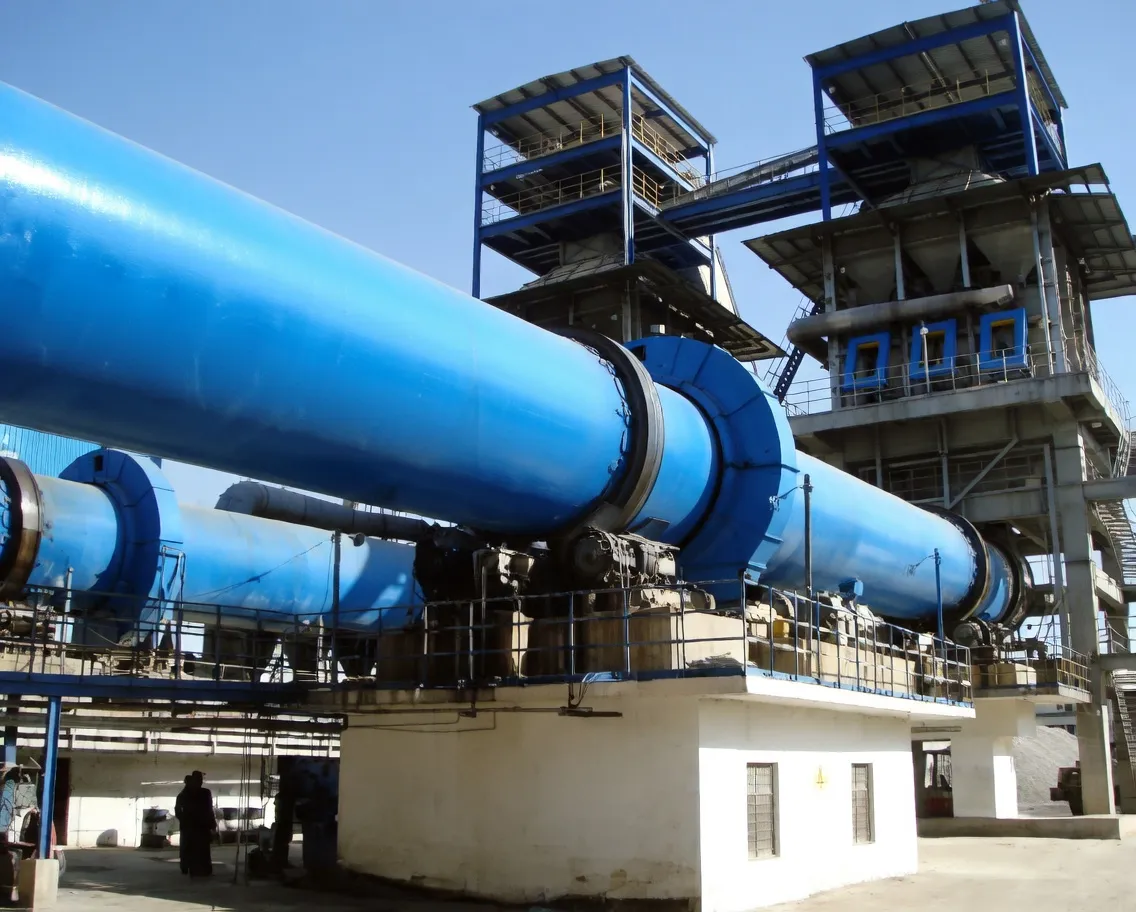
Six Performance Advantages That Define QD Bushings in Cement Kiln Service
🔥
High-Temperature Clamping Integrity
Ductile iron and alloy steel QD bushings maintain full clamping force at continuous ambient temperatures exceeding 80°C. Specialist alloy steel grades retain their mechanical properties up to 150°C — well within the 60°C+ thermal zone typical around a cement kiln drive end during summer production.
⚡
Ultra-High Sustained Torque
Heavy-duty QD bushing assemblies are engineered to transmit torques up to 45,000 N·m on large-bore kiln pinion shafts. The tapered clamping mechanism generates uniform radial load distribution around the shaft circumference, eliminating the stress concentrations that keyway connections introduce under cyclic heavy loading.
🔧
Rapid Maintenance Access
A trained technician can remove and reinstall a QD bushing assembly in under 30 minutes using only the supplied cap screws. For UK cement plants where unplanned kiln downtime costs upwards of £5,000 per hour, the time saved across each maintenance event over the plant’s operating life represents a significant and measurable financial benefit.
🌫
Dust-Immune Clamping Mechanism
Cement dust is among the most challenging industrial contaminants for drive components. QD bushings transmit torque through prestressed metal-to-metal taper contact. There are no lubricated clearances to contaminate, no rolling elements to abrade, and no oil films to dilute. Dust penetration simply cannot defeat a correctly installed tapered interference connection.
📏
Axial Repositioning Without Shaft Machining
When kiln drive alignment corrections require repositioning the pinion hub axially on the shaft, QD bushings allow this without any machining work on the shaft itself. Release, slide, and re-engage — the shaft surface is preserved, the adjustment is made, and the connection is re-established with the same specified torque. This saves significant engineering cost during alignment corrections on ageing UK plants.
♻
Long Service Life Under Fatigue Loading
Correctly installed and periodically inspected QD bushings in cement kiln drive service routinely achieve 5 to 10 years of reliable operation. The uniform radial clamping load distributes fatigue stress more evenly across the shaft contact zone than keyway-dependent connections, significantly reducing the initiation of fretting damage that ultimately drives early component replacement in high-cycle kiln drives.
QD Bushing Application Scenarios Throughout the Cement Manufacturing Process
 The rotary kiln drive is the highest-profile application for QD bushings in cement manufacturing, but it is far from the only one. Modern cement plants are highly mechanised facilities where continuous heavy conveying, grinding, and processing create demanding shaft-mounting requirements throughout the process chain. Understanding where else QD bushings add value helps maintenance engineers standardise their spare parts inventory and extend the benefits of quick-detach maintenance access across the entire site.
In the raw mill section, large ball mills and vertical roller mills process limestone, clay, and corrective materials before they enter the kiln. These mills run continuously under high load and generate significant vibration. QD bushings on the mill main drive shafts provide the same benefits here as on the kiln — reliable torque transmission, resistance to dust, and quick maintenance access during mill relining shutdowns that are already expensive in their own right. The raw feed conveyors crossing the plant site, some stretching over several hundred metres, use QD bushings on head and tail pulley drives where variable-speed motors apply torque that changes with belt loading and elevation.
The clinker cooler section presents its own extreme thermal challenge. Hot clinker exits the kiln at temperatures above 1,000°C and is rapidly cooled by high-volume air flows through grate or reciprocating conveyor cooler systems. The grate drive shafts, cross-bar conveyor drives, and associated pan conveyor drives all operate in an environment where the thermal gradient is severe and shaft dimensions change measurably between cold startup and full operation. QD bushings tolerate this dimensional cycling gracefully because their clamping force is generated at installation and maintained as long as bolt torque is preserved — they do not loosen progressively as a shrink fit does under repeated thermal cycling.
Finish grinding — the final stage of cement production, where clinker is ground with gypsum and additives to produce the finished cement powder — typically uses ball mills or horizontal roller press circuits. These generate heavy cyclic loading on main drive shafts and create fine dust environments with particle sizes below 50 microns that infiltrate components far more aggressively than the coarser kiln zone dust. QD bushings specified for finish mill drives therefore need particular attention to bore surface finish quality and installation torque accuracy. Across all these application points, the ability to maintain any drive connection quickly and reliably contributes directly to cement plant availability — which is the single most important metric for plant profitability across the UK industry.
Material Selection for Cement Plant QD Bushings — Grade Comparison
| Material Grade | Max Cont. Temp. | Torque Rating | Recommended For |
|---|---|---|---|
| Grey Cast Iron GG25 | 80°C | Standard | Ambient-temperature cement mill and conveyor drives |
| Ductile Iron GGG50 | 120°C | High | Kiln drive sections, clinker cooler drives, finish mill main drives |
| Alloy Steel 42CrMo4 | 150°C | Ultra-High | Direct kiln pinion shaft connections, bore above 200 mm, ultra-high torque |
| Stainless Steel 316L | 120°C | Medium | Chemical exposure zones; wet scrubber drives in kiln exhaust systems |
Customer Success Story · United Kingdom
How a Yorkshire Cement Producer Cut Kiln Drive Downtime by 68% in Twelve Months
Greystone Cement Ltd, a mid-size Portland cement manufacturer with two production lines based in North Yorkshire, had been struggling with persistent drive system failures on both operating kilns. Each kiln ran on a planned maintenance cycle of 36 hours every six months, but unplanned drive outages were averaging 11 hours per kiln per quarter — costing the plant roughly £165,000 in lost production per year on those events alone. A comprehensive drive system audit identified two root causes: keyway fretting damage on the pinion shaft hubs and the progressive failure of shrink-fit hub connections that were loosening due to repeated thermal cycling between cold startups and hot operating conditions.
Working directly with our application engineering team, Greystone Cement specified a complete drive overhaul using custom-dimensioned heavy-duty QD bushings in ductile iron GGG50, matched precisely to their existing pinion shaft diameters of 220 mm and 245 mm. The QD bushing assemblies were manufactured with dual keyway engagement as a supplementary safety feature and bore surface finish of Ra 0.8 µm, providing a calculated clamping torque capacity 2.5 times the measured drive torque under worst-case kiln loading conditions. A custom flange bolt pattern was designed to match the original hub geometry exactly, eliminating any need to modify the existing gear hubs and keeping the overall installation scope within the planned maintenance window.
Within the first 12 months following the upgrade, Greystone Cement recorded zero unplanned drive outages on both kilns. Planned inspection time at the drive end dropped from a full working day to under two hours per kiln, as the quick-detach design allowed technicians to release, inspect, and reinstall QD bushing assemblies without any specialist equipment. The 68% reduction in total annual kiln downtime translated to an estimated production recovery of around 24,000 tonnes of clinker per year — a return that covered the entire cost of the drive overhaul within the first four months of operation.
What Drive Engineers Are Saying
“
We have been running these QD bushings on our kiln two drive for three years with zero drive-related outages. The installation documentation was clear and the bore dimensions were spot-on to our drawings. Ambient temperature at the drive end regularly hits 75°C in summer and there has been no sign of clamping relaxation or shaft fretting. Exactly what we needed.
— James H., Mechanical Engineering Manager
Tarmac Cement, Derbyshire, UK
“
The custom bore dimensions came machined perfectly to our shaft drawings — first fit, no rework, correct torque capacity. After 18 months of continuous kiln operation the last shaft inspection showed a perfect surface. No fretting, no corrosion, no micro-movement. The quick-release feature already saved us significant time during our annual planned shutdown.
— Maria K., Plant Maintenance Supervisor
Holcim UK, Rugby, Warwickshire
“
I was initially cautious about moving away from our traditional shrink-fit hub connections, but 24 months of kiln operation data has settled the question. The shaft condition at the last inspection was excellent and we have had no unplanned drive events on that kiln since the upgrade. The QD bushing design has proven itself comprehensively in our specific operating conditions.
— Daniel O., Senior Process Engineer
Cemex UK Operations, South Ferriby, Lincolnshire
Custom QD Bushing Manufacturing — Precision-Engineered to Your Exact Drawing
No two cement plants are dimensionally identical. Shaft diameters, hub geometries, thermal operating conditions, and torque requirements vary considerably between installations — and even between different kilns within the same facility. Standard catalogue QD bushing ranges frequently fail to match the specific dimensional requirements of legacy plant equipment or OEM-specified drives designed to non-standard geometries. This is precisely where our manufacturing capability provides a solution that off-the-shelf suppliers cannot.
Our production facility operates CNC turning centres, multi-axis machining centres, and coordinate measuring machines (CMM) calibrated to ISO 9001:2015 quality standards. We manufacture QD bushings in bore diameters from 12 mm to 350 mm, across all standard series (JA, SH, SD, SK, SF, E, F, J, M, N, P, W, S), and in fully non-standard bore dimensions produced directly to customer drawings. Custom capabilities include non-standard flange bolt patterns, extended flange lengths for deep hub arrangements, modified taper dimensions for special hub geometries, dual keyway configurations for maximum torque backup, and specialised surface treatments for corrosive environment applications.
For UK cement producers working with legacy plant equipment, we offer a reverse-engineering service: provide us with your worn or failed original bushing, or supply dimensional drawings, and our team will produce an exact dimensional replacement in the correct material grade. We also offer the option to upgrade material specification — for example, converting an original GG25 grey iron part to GGG50 ductile iron — at no additional lead time penalty. Every custom batch ships with full dimensional inspection reports, material test certificates (3.1 per EN 10204), and installation torque specifications. Typical lead time for custom-engineered QD bushings for cement plant applications is 3 to 6 weeks from drawing approval, with expedited production available for urgent maintenance requirements.
Supplying QD Bushings to Cement Manufacturers Across the United Kingdom
The United Kingdom has an established cement manufacturing industry with production plants concentrated across the East Midlands (notably Derbyshire and Lincolnshire), Yorkshire, the South East, the South West, and Wales. Plants range from large integrated operations producing over a million tonnes of cement annually to smaller, specialist facilities supplying regional markets. Regardless of scale, all share a common operational pressure: sourcing accurate replacement drive components quickly and without the extended lead times that can derail planned maintenance schedules and turn a controlled shutdown into an extended outage.
We supply QD bushings directly to cement plant maintenance teams, engineering maintenance contractors, and procurement departments operating across England, Scotland, and Wales. Standard stocked items reach UK mainland destinations within 5 to 7 working days. Custom-manufactured items are shipped with complete documentation packages including 3.1 material certificates (per EN 10204), CMM dimensional reports, and installation torque specifications. All products are manufactured in compliance with relevant UK machinery and product safety standards, with full technical datasheets provided for plant records.
Whether you are an engineering manager at a Derbyshire cement works planning a kiln drive overhaul, a maintenance contractor in Yorkshire tendering for a ball mill upgrade, or a procurement specialist in Wales sourcing quality-assured drive components with traceable certification, our application engineering team can respond to your enquiry with technical recommendations and a competitive quotation within 24 business hours. The contact address is [email protected] — include your shaft dimensions, torque requirements, and any OEM references for the fastest possible response.
Frequently Asked Questions
Ready to Upgrade Your Cement Kiln Drive System?
Our application engineering team supports UK cement manufacturers with custom QD bushing specifications, material selection, and rapid sourcing for both planned overhauls and urgent maintenance requirements.
edit by gzl