
Industrial Power Transmission · Mining Applications · United Kingdom
QD Bushings for Mining Conveyor Belt Drive Systems
Engineering Reliability Into the UK’s Most Demanding Mining Operations
Conveyor Drive Systems
UK Industrial Supply
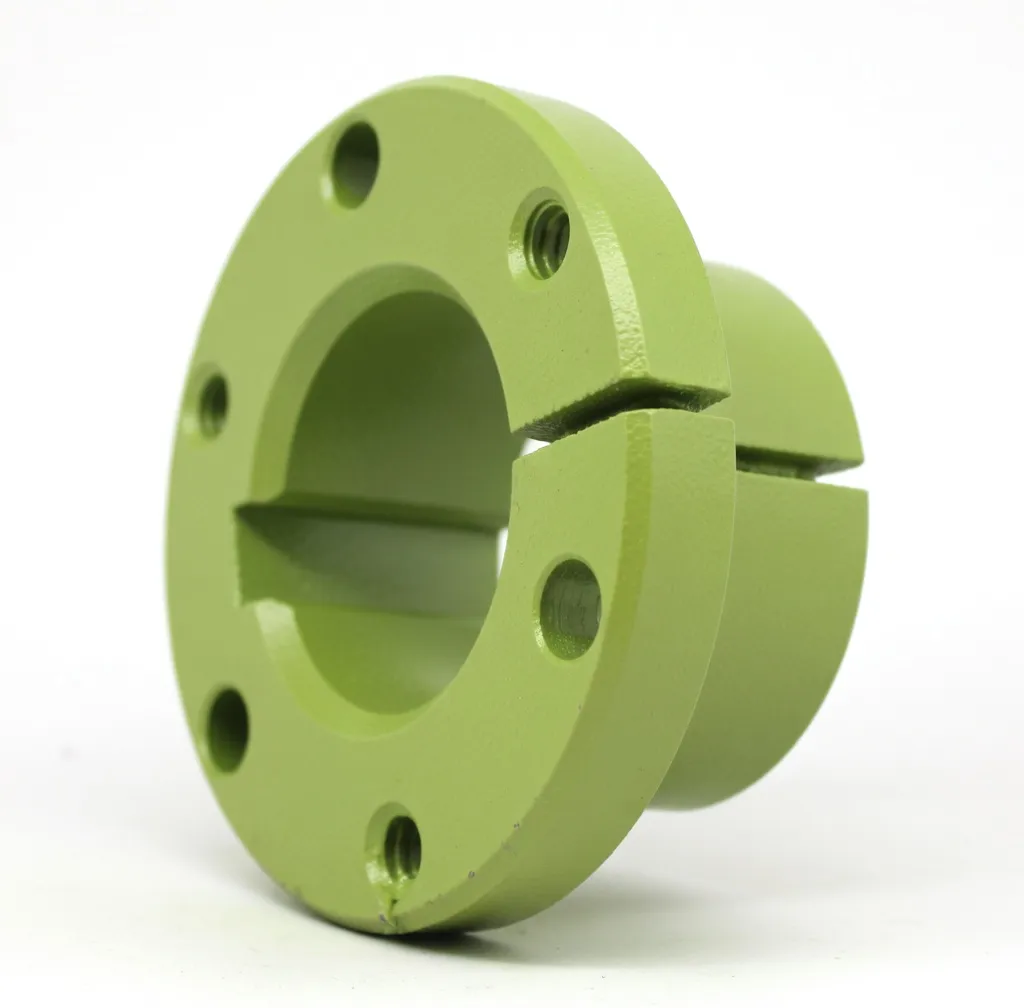 When a conveyor belt stops running in a working mine, the financial impact is immediate and severe. In underground coal operations, open-cast iron ore extraction, and hard-rock quarrying across the UK, unplanned downtime can easily reach several thousand pounds per hour once production losses, workforce displacement, and secondary equipment standing time are totalled. The mechanical components that keep those conveyor belts running continuously face a level of scrutiny that general industrial applications never demand — and among all the parts in a drive pulley assembly, QD bushings carry more responsibility than their size would suggest.
QD bushings — short for Quick Detach bushings — are the standardised tapered shaft-to-hub connection used throughout mining conveyor belt drive systems worldwide. Their operating principle is deceptively simple: a precision-machined split tapered bore clamps down onto the drive shaft as cap screws are torqued to specification. What this delivers in practice is concentricity accuracy, repeatable torque transmission, and rapid disassembly that no press-fit or interference-fit alternative can match within a realistic maintenance window. For mining operations running 20 hours per day, seven days per week, this is not a minor technical advantage — it is the foundation of a viable maintenance strategy.
The performance demands placed on QD bushings in mining conveyor applications are among the most severe in any industrial sector. Belt widths from 600 mm to 2,400 mm, drive powers ranging from 30 kW on secondary transfer conveyors to over 3,000 kW on primary overland haulage systems, and continuous duty cycles in environments saturated with abrasive mineral dust, corrosive mine water, and persistent vibration — these conditions collectively define an engineering challenge that requires genuine field experience to navigate. This guide explains the key selection criteria, material options, installation requirements, and verified performance data that matter most to engineers specifying QD bushings for UK and international mining conveyor drive applications.
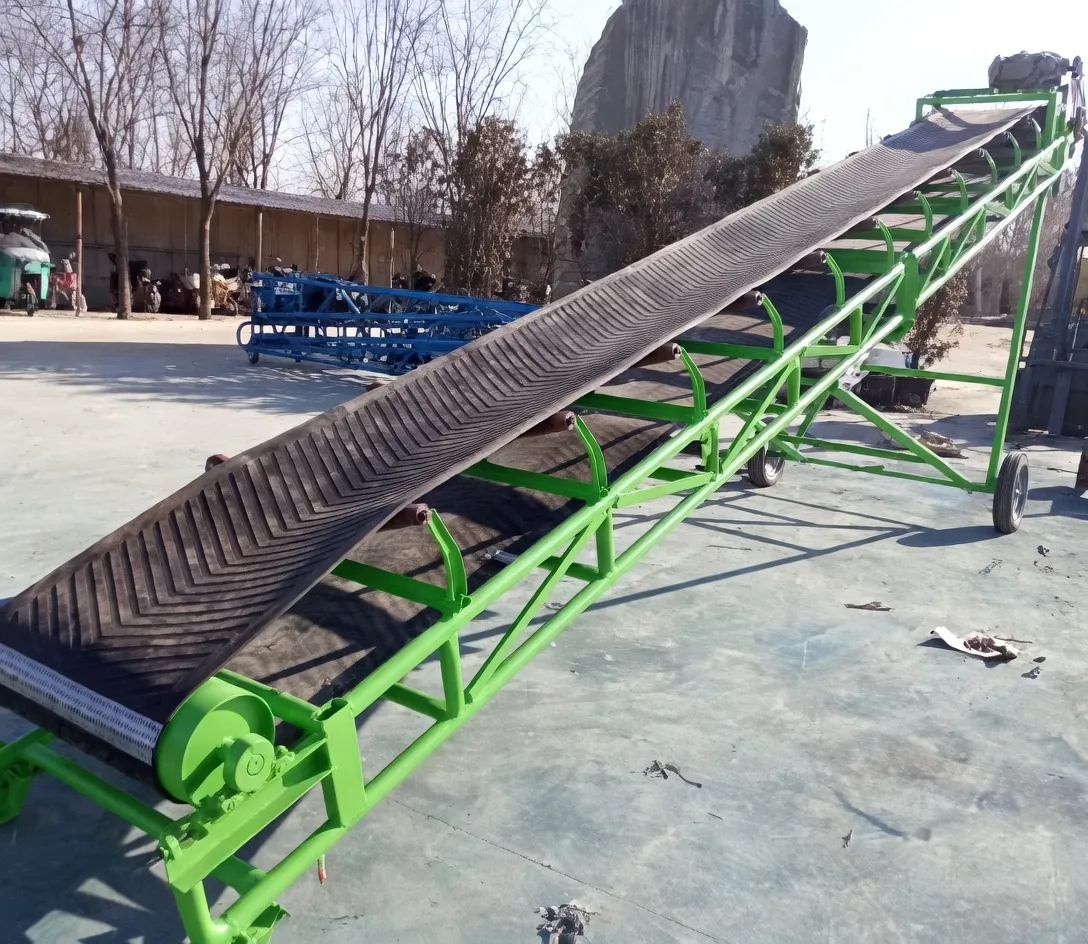
QD bushings installed on a 1,200 mm wide mining conveyor drive pulley assembly — rated for continuous 400 kW operation in abrasive duty service across UK mining sites.
Why QD Bushings Are the Engineering Standard for Mining Conveyor Drive Pulleys
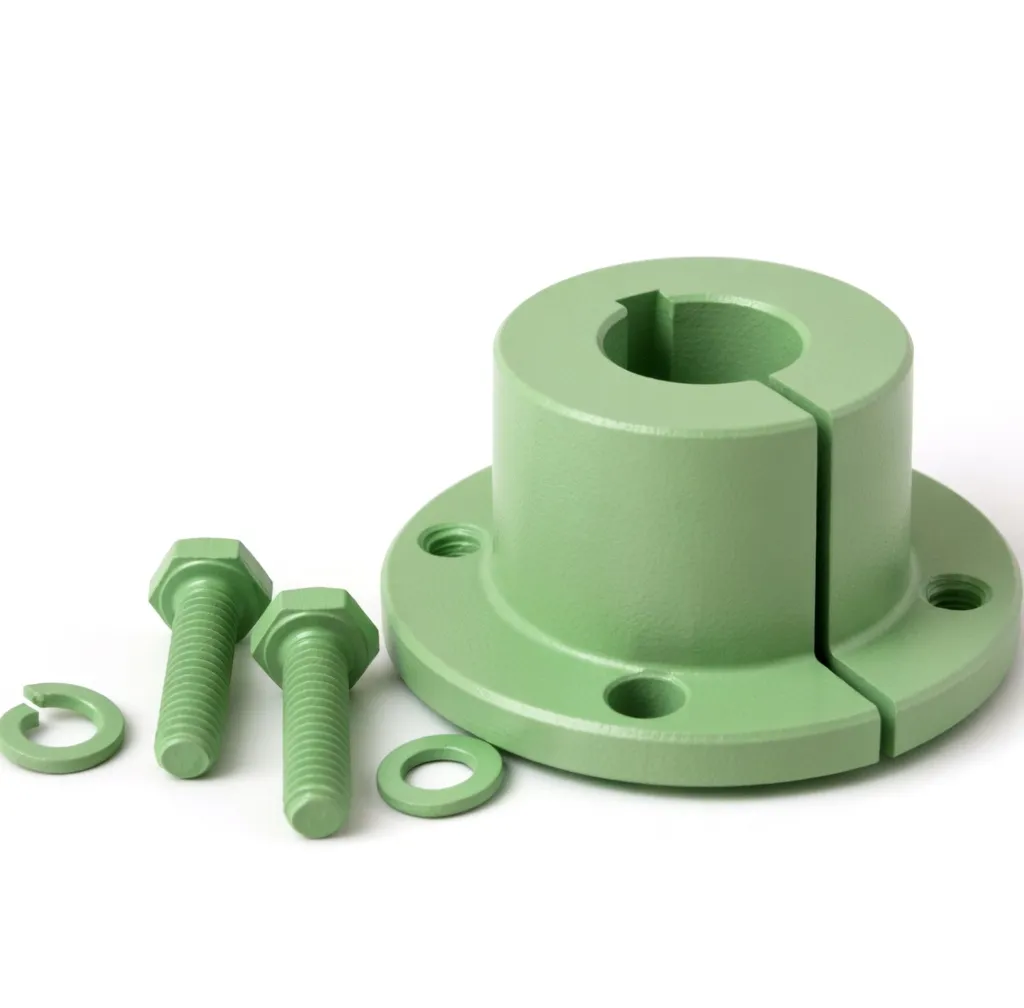 The case for QD bushings on mining conveyor drive pulleys is grounded in operational practicality as much as textbook mechanics. Consider the maintenance scenario that occurs regularly in any active UK mine: a drive pulley bearing fails, the belt stops, and the maintenance team needs to extract the complete drum assembly to access the bearing housing. With a press-fit hub, this operation requires hydraulic extraction tooling, often needs the shaft disconnected at both bearings simultaneously, and risks scoring the shaft journal in the extraction process. Total time: four to eight hours minimum, assuming the specialist tooling is on-site and serviceable. In the meantime, the mine’s production schedule is haemorrhaging cost.
With correctly specified QD bushings, that same operation changes fundamentally. The drive-end cap screws are removed, the extraction screws are engaged — using the same cap screw threads, since QD bushing designs provide dedicated extraction ports in the flange face — and the bushing releases cleanly from the shaft taper. A 200 kg drive pulley can be freed from its shaft connection in under 45 minutes by two technicians using standard hand tools. In underground mining roadways where headroom is limited to around 2.2 metres and working space is severely restricted, this difference between a QD bushing system and a conventional shaft connection is the difference between a two-hour recovery and an all-shift breakdown.
There is also a shaft-preservation argument that becomes economically significant across a mine’s operating life. Because QD bushings use a taper clamping mechanism that distributes clamping force uniformly around the shaft circumference, shaft journal surfaces are not damaged during installation or removal. The shaft can be reused with replacement QD bushings after each maintenance cycle, whereas keyway cuts and press-fit journals accumulate damage progressively. Over a ten-year mine life with twelve or more pulley replacements, the cumulative shaft cost saving achieved through QD bushing installations is substantial — often exceeding the total bushing procurement cost many times over. This is the kind of whole-life cost argument that purchasing departments and maintenance managers in UK mining operations increasingly demand before capital plant decisions are made.
Technical Specifications: QD Bushing Series for Heavy-Duty Mining Applications
The table below presents key parameters for QD bushing series most commonly specified for mining conveyor belt drive systems. Selection should always be verified against actual drive torque, shaft diameter, and environmental conditions with a qualified application engineer. Service factors for mining conveyor duty typically range from 1.5 (smooth-running trunk belts) to 2.5 or higher for crusher discharge applications.
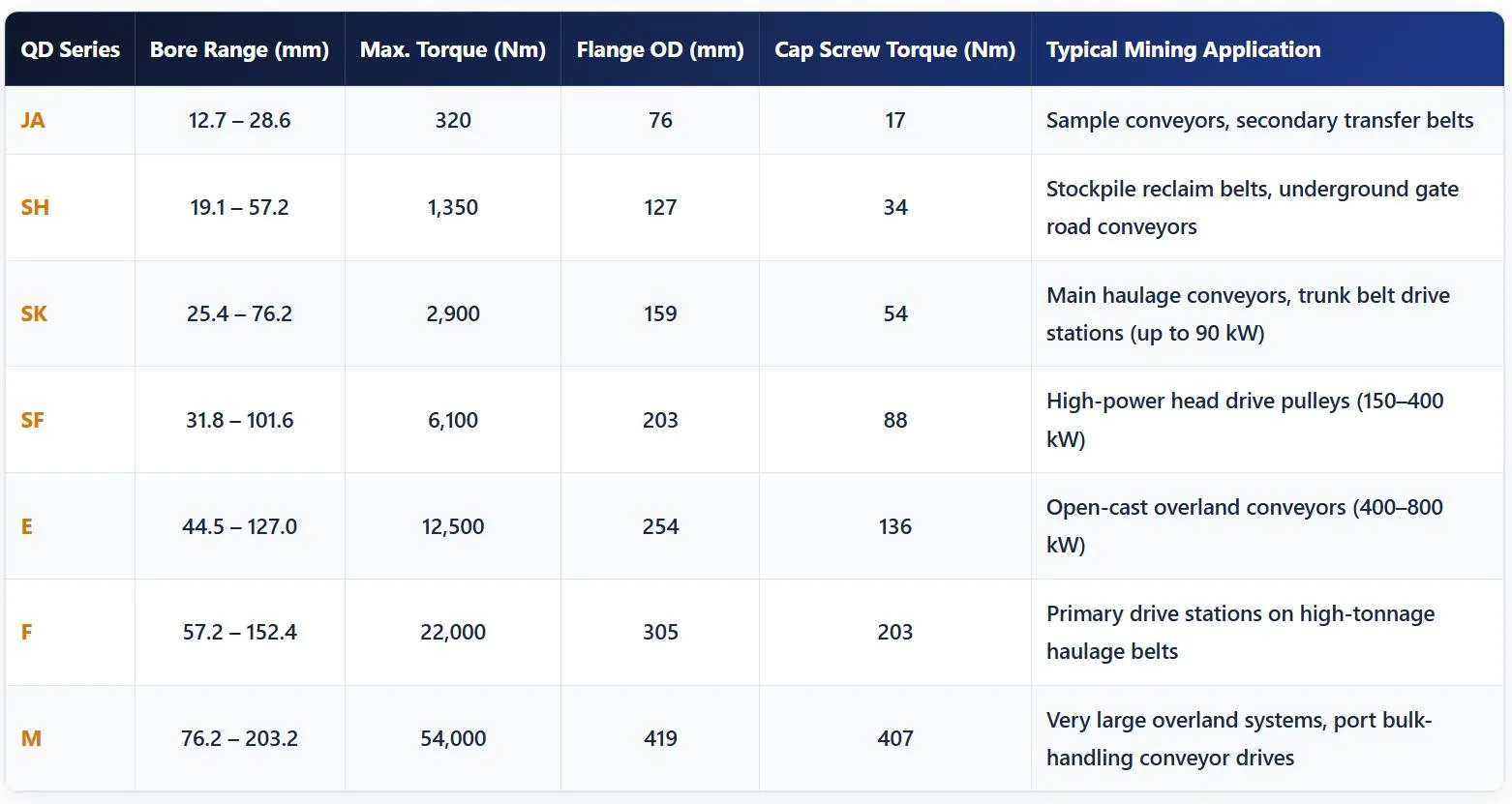 ⚠ Torque ratings apply to clean bores, correctly installed to specified cap screw torque. De-rate by a minimum of 25% for wet or contaminated shaft conditions common in mining environments. Contact our application engineering team for written confirmation on specific drive requirements.
Material Selection and Engineering Principles for Mining-Grade QD Bushings
The material specification for QD bushings in mining applications is one of the single most consequential decisions in the drive system design process. Standard QD bushings produced for general industrial applications are typically manufactured from grey cast iron — ASTM A48 Class 30 or the EN GJL-200 equivalent common in UK industrial supply. Grey iron is entirely adequate for light to medium-duty, low-impact applications in stable environments. It is not adequate for primary mining conveyor drives, and specifying it in those roles is a decision that typically leads to a costly and inconvenient lesson about material brittleness under shock loading.
Standard Grade
Grey Cast Iron
EN GJL-200 / ASTM A48 Cl.30. Acceptable for low-torque secondary conveyors with minimal shock loading. Not recommended for primary mining drives or crusher discharge applications where peak-to-mean torque ratios exceed 1.5:1.
Tensile Strength: 200 MPa · Elongation: ~0%
★ Mining Preferred
Ductile Iron (SG Iron)
ASTM A536 Gr.65-45-12 / EN GJS-450-10. The specification of choice for all primary mining conveyor drive QD bushings. The 12% minimum elongation allows shock load absorption without fracture — the property that grey iron fundamentally lacks.
Tensile Strength: 450 MPa · Elongation: 12% min.
Corrosive Duty
Stainless Steel 316L
For potash mining, coastal UK quarries, salt cavern applications, or aggressive mine water chemistry. 316L stainless QD bushings eliminate the corrosion-seizure failures that damage shaft journals and require costly emergency repairs.
Tensile Strength: 485 MPa · Full corrosion resistance
Understanding the mechanical principle behind QD bushings is essential for making correct installation and service decisions. The tapered interface between bushing OD and hub bore operates at approximately 2 degrees — below the self-locking friction angle under most conditions, meaning the assembly locks under axial and radial loads without depending solely on screw clamping force. When installation cap screws are torqued to the specified value, the resulting interface pressure transmits the full rated torque through friction at the taper alone — there is no key or spline carrying load. This is why the correct installation torque, achieved with a calibrated torque wrench, is non-negotiable in mining applications where the consequences of QD bushing slippage include belt runaway incidents, catastrophic gearbox damage, and the kind of shaft damage that turns a three-hour maintenance job into a three-day plant shutdown.
QD Bushing Applications Across UK Mining Conveyor Systems
Mining operations across Britain encompass an exceptionally diverse range of commodities, extraction methods, and conveyor configurations. The specification of QD bushings for each distinct application type requires a precise understanding of the loading regime, environmental conditions, and access constraints that apply in practice — not just the numbers on a selection chart.
Open-Cast Mining — Overland Conveyors
Open-cast coal, gypsum, and aggregate operations in Yorkshire, South Wales, and the Midlands frequently operate overland conveyors stretching one to five kilometres. Drive powers at primary stations reach 800 kW to 2,000 kW on larger systems. QD bushings at these drive stations carry enormous sustained torque in fully exposed outdoor conditions, requiring sealed designs with heavy-duty corrosion protection applied at manufacture. Series E, F, and M QD bushings with bore sizes from 90 mm to 150 mm are the standard specification for these applications, matching the output shaft dimensions of the large helical bevel gearboxes used at primary drive stations.
Underground Mining — Gate Road Belts
Gate road and maingate conveyors in underground coal mines operate under the UK Mines Regulations 2014 and require HSE-compliant drive components. QD bushings used here must be specified from materials meeting applicable safety requirements, and must allow maintenance within the confined dimensions of a mine roadway. The rapid disassembly characteristic of QD bushings is not merely convenient underground — in specific circumstances it is essential, allowing drive pulley assemblies to be recovered without cutting equipment in roadways where power tools and grinding equipment may be restricted under firedamp regulations.
Crusher Discharge — High-Impact Duty
The conveyor belt immediately downstream of a primary jaw crusher or cone crusher receives some of the most irregular, high-impact loading in mining. Large rock fragments falling from the crusher apron create impulse loads transmitted back through the belt to the drive pulley, with peak-to-mean torque ratios of 3:1 or higher during loaded starts. QD bushings for crusher discharge conveyors must be selected with a service factor of at least 1.75 applied to calculated running torque, and ductile iron material is mandatory — grey iron is subject to fatigue crack initiation at the bushing bore under these repetitive shock conditions.
Coastal Quarries and Port Bulk Terminals
Aggregate quarries along the UK coastline and port coal-handling terminals expose conveyor drive components to salt-laden air, direct weather, and periodic flooding. Standard phosphate-coated ductile iron QD bushings show significant corrosion within 18 to 24 months in these environments, leading to seizure and shaft damage during removal. Stainless steel 316L QD bushings, or hot-dip galvanised ductile iron variants, provide the service life these locations require. Several major UK port conveyor facilities have switched entirely to stainless QD bushings on primary drive pulleys after repeated grey iron and phosphate-coated iron failures.
Performance Advantages That Drive Long-Term Value in Mining Operations
⚙️
Rapid Maintenance Turnaround
QD bushings reduce drive pulley change-out time by 60–75% compared to press-fit alternatives. Every hour recovered from planned maintenance is another hour of production output in a high-value mining operation.
🎯
Precision Concentricity
Taper-bore QD bushings achieve hub-to-shaft concentricity within 0.025 mm TIR, reducing belt edge wear, vibration, and bearing fatigue loads — the three leading causes of unplanned conveyor stoppages in mining operations.
🔧
Shaft Preservation
Uniform clamping leaves shaft journals undamaged through multiple maintenance cycles. Drive shafts in QD bushing installations typically outlast those in keyway or press-fit systems by several years — a significant capital equipment saving over a mine’s operating life.
📐
Axial Adjustability
Drive pulleys can be repositioned axially by 10–25 mm without machining, simplifying belt tracking adjustments and conveyor structure modifications without requiring specialist workshop attendance.
📈
Simplified Spare Parts Inventory
QD bushings are interchangeable between hub manufacturers within the same series. Mines can hold a small stock of QD bushings covering multiple pulley sizes, reducing the capital tied up in spare parts inventory by up to 60%.
Customer Success Case Study
Aggregate Producer, North Yorkshire, UK — 73% Reduction in Conveyor Drive Downtime
The Problem
A medium-sized limestone quarry operator in North Yorkshire had been experiencing chronic conveyor drive downtime across three of its main processing plant belts. The problem centred on the drive pulley-to-shaft connections — pressed-hub designs installed when the plant was constructed in the early 2000s. Each routine pulley change-out required a hydraulic press team to attend from outside, was taking eight to twelve hours per occasion, and was occurring on average every four months on the primary crusher discharge belt alone. The maintenance cost per incident was running at approximately £4,200 in labour, contractor fees, and production loss. The maintenance manager described the situation as “a recurring, entirely predictable emergency with no obvious solution” — until a conversation with our application engineering team.
The Solution and Results
Following a detailed application review, the quarry retrofitted all three primary conveyor drive pulleys with ductile iron SF and E series QD bushings, matched to their existing 90 mm and 110 mm drive shaft dimensions. New drive pulleys were machined with QD-compatible hub bores. The first pulley change-out after conversion was completed in 2 hours 40 minutes by the quarry’s own maintenance crew without any external contractor attendance — their first experience of what a properly specified QD bushing system actually delivers. Annualised maintenance cost for conveyor drive pulley servicing across all three belts dropped from £27,400 to £7,300 in the twelve months following conversion, a saving of £20,100 per year. Total conversion cost including new drive pulleys: £6,800. Return on investment was achieved in under four months.
73%
Downtime reduction
£20,100
Annual saving
<4 months
ROI payback
2h 40m
New change-out time
What UK Mining Engineers Say About Our QD Bushings
“
We’ve been running the ductile iron SF series QD bushings on our limestone crusher discharge belt for 26 months now. Not a single instance of shaft damage on removal, even during an emergency change-out in the middle of a production run. The time saving compared to our old pressed-hub pulleys is genuinely transformative for a site maintenance team our size.
— D. Hargreaves, Maintenance Manager · Aggregate Quarry, Derbyshire, UK
“
Specifying QD bushings for the new overland conveyor extension at our open-cast site was straightforward from a maintenance engineering standpoint. What I didn’t expect was how much simpler it would make spare parts management — we went from stocking 23 different hub variants down to five QD bushing series covering everything. The application support from the team was thorough and practically focused.
— R. Ashworth, Senior Mechanical Engineer · Open-Cast Mining, South Wales, UK
“
We tried several suppliers for the 316L stainless QD bushings we needed for our port conveyor — the coastal environment here destroys standard iron bushings inside two years. The machined taper bore quality was measurably better than previous suppliers we’d used, and we haven’t had a single corrosion seizure in eighteen months of operation. The custom bore sizing service was exactly what we needed for our non-standard shaft dimensions.
— K. Williamson, Plant Engineering Lead · Bulk Materials Port Terminal, Humberside, UK
Manufacturing & Customisation
Custom QD Bushings for Non-Standard Mining Drive Requirements
Standard QD bushing catalogue dimensions cover the vast majority of mining conveyor drive applications, but the UK’s ageing mining and quarrying infrastructure regularly presents non-standard shaft diameters, unusual keyway configurations, and metric-to-imperial conversion requirements that catalogue items simply cannot address without modification. Our manufacturing facility operates CNC taper-boring centres capable of producing custom QD bushings to any bore dimension from 12 mm to 220 mm, with H7 bore tolerances as standard and tighter grades on request.
Custom services available for the mining sector include: non-standard bore diameters and keyway profiles, split-flange QD bushings for drives that cannot be easily disassembled, corrosion protection matched to specific mine water chemistry, material certificates to BS EN 10204:2004 Type 3.1 for HSE-regulated underground applications, and small-batch urgent production for emergency breakdowns — with UK mainland delivery in 3–5 working days on most custom specifications. We understand that when a mine’s production is stopped, an 8-week standard lead time is not a viable answer.
Custom Services Available
✓ Custom bores 12–220 mm
✓ Imperial and non-standard keyways
✓ 316L SS, ductile iron, grey iron
✓ BS EN 10204:2004 Type 3.1 certs
✓ 3–5 day UK delivery on urgent orders
✓ Application engineering support included
Frequently Asked Questions — QD Bushings for Mining Conveyor Systems
Mining conveyor belt drive systems represent one of the most mechanically demanding environments in all of industrial engineering. The components within those drive assemblies — including QD bushings — determine whether a mine runs to its production schedule or loses output through avoidable mechanical failures. The engineering argument for correctly specified, correctly installed QD bushings in UK mining applications is supported by decades of operational data from hard rock quarries, underground coal mines, and surface mineral processing plants across Britain. The data consistently shows the same pattern: operations that invest in proper QD bushing specifications from the outset spend less on maintenance, experience shorter downtimes, and preserve capital equipment for longer than those that specify on price alone.
Whether your application involves a 30 kW underground gate road belt in Yorkshire or a 2,000 kW overland coal haulage system in Nottinghamshire, our application engineering team has the product range, technical knowledge, and manufacturing capability to provide QD bushings that perform to specification across the full service life of the equipment. Custom bores, non-standard materials, urgent deliveries, ATEX-compliant assemblies, and long-term supply agreements for planned maintenance programmes are handled with the engineering rigour that UK mining operations demand and deserve.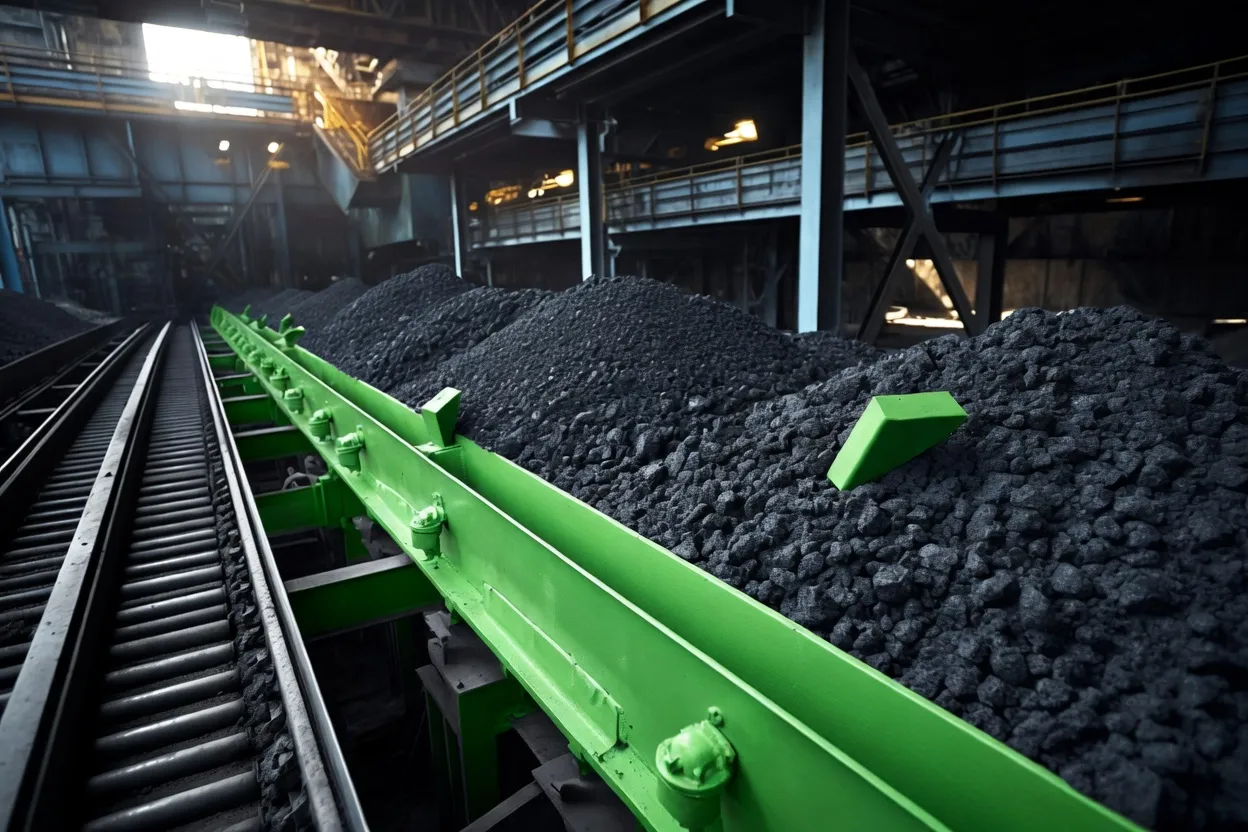
📧 Contact Our Mining Applications Team
[email protected] · Response within 1 business day for UK mining enquiries
⚡ Ever Power · QD Bushings Division · United Kingdom
edit by gzl