
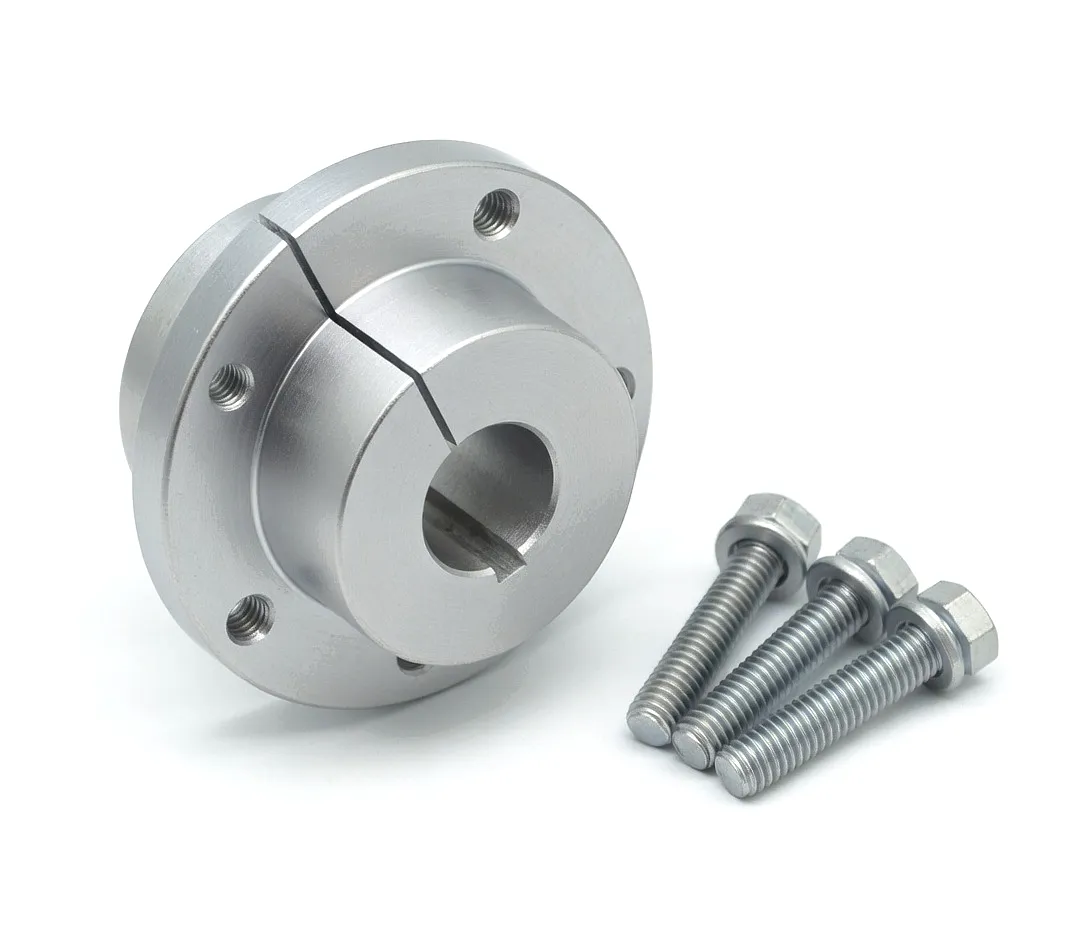
 The heart of every combine harvester beats inside its threshing drum, a massive rotating assembly that separates grain from straw at speeds between 500 and 1,200 RPM during the brief, intense weeks of harvest. QD bushings sit at the crucial interface where the drum shaft meets its pulley, transmitting engine torque with the kind of repeatable precision that determines whether a field yields clean grain or costly downtime. Across British arable operations, from Lincolnshire wheat belts to East Anglian barley ground, agricultural engineers specify QD bushings because they combine the clamping authority of a taper-lock design with genuinely serviceable removal. When harvest crews face a narrow weather window and an aging Claas Lexion or John Deere S-series machine sits in the yard, the ability to change a pulley, re-time a belt, or swap a worn drum without destroying the shaft is not a luxury. It decides whether the field gets finished before rain arrives or whether standing crop flattens overnight. This guide walks through how QD bushings earn their place in modern threshing and cleaning drives.
How QD Bushings Actually Work Inside a Threshing Drum Drive
Inside a threshing drum drive, the pulley must sit perfectly concentric with the shaft. Any wobble amplifies across the 600 mm to 900 mm drum length and translates into uneven threshing, accelerated bearing wear, and audible belt slap that telegraphs failure weeks before it happens. QD bushings solve this through a flanged taper-lock geometry: three cap screws draw the bushing into the pulley bore, compressing a split taper that grips the shaft with radial force proportional to torque demand. Because the bushing clamps externally rather than relying on a keyway alone, it handles the pulsing torque signature of slug feeding, where wet straw momentarily doubles drum load, without fretting or spinning on the shaft. The split design also means a technician with a simple spanner can release the assembly in minutes, slide the pulley clear, and inspect the shaft without a puller, a press, or a trip to the workshop. That serviceability is the reason QD bushings dominate agricultural drive trains from the elevator head down to the chopper shaft.
There is a second, less visible benefit. Because QD bushings clamp the shaft through friction rather than shear, they gracefully absorb misalignment during reinstallation, something no agricultural mechanic working in a muddy field can realistically avoid. A pulley re-seated slightly off-square on a keyed hub will score the shaft within hours. The same pulley fitted with a QD bushing simply grips where it lands and transmits torque cleanly. Over a decade of harvest seasons, that forgiveness is worth thousands of pounds in avoided shaft replacement.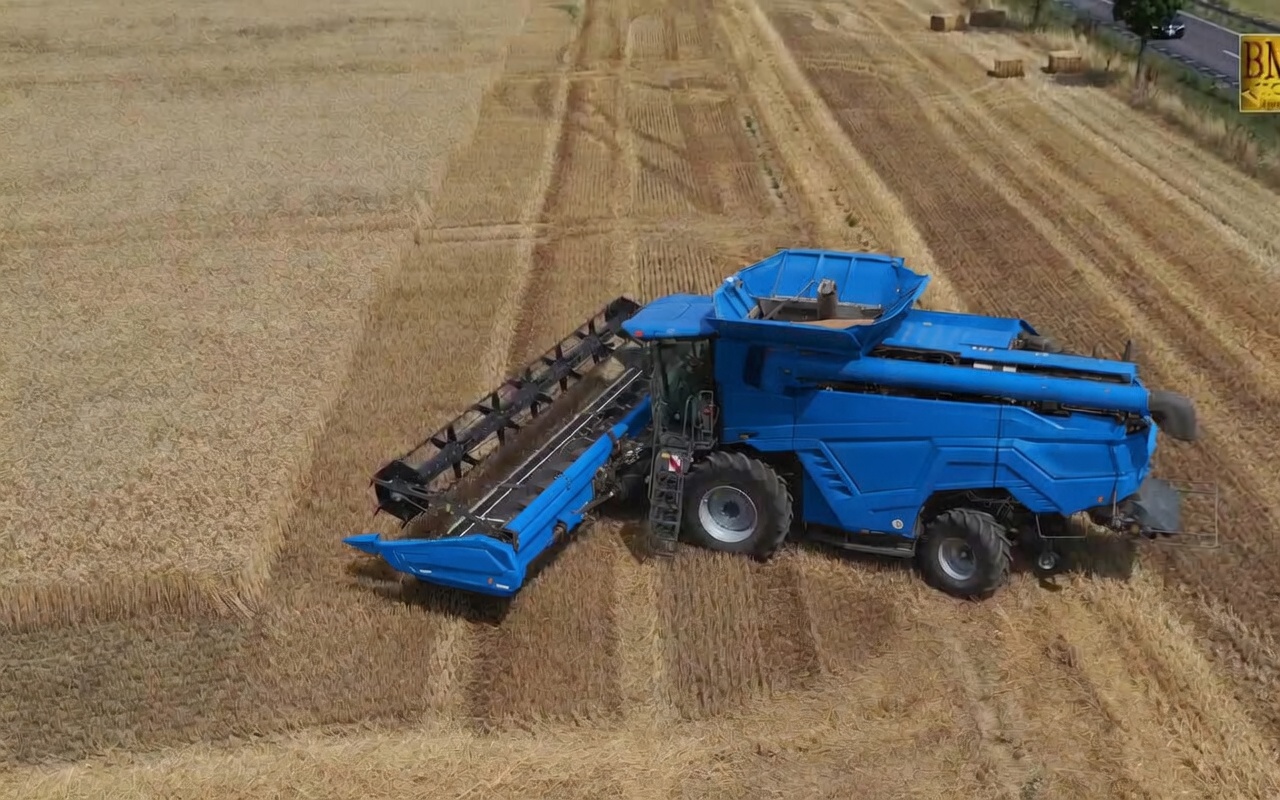
Why Engineers Specify Our QD Bushings
Zero-Keyway Shaft Clamping
The taper-lock grip distributes torque circumferentially, eliminating the point-loaded shear stress that cracks keyways on threshing drums running heavy barley crops.
Five-Minute Field Removal
Reversing the cap screws into tapped jacking holes breaks the taper and releases the pulley without a puller. A roadside repair becomes realistic.
Chaff-Resistant Flange Profile
Flat flange face and recessed cap screws prevent straw and chaff from packing into thread recesses during heavy combine operation.
Hardened Medium-Carbon Core
Forged 1045 steel body, stress-relieved and precision-machined, handles the reversing torque of sieve eccentrics over full harvest seasons.
Bore Concentricity Under 0.05 mm
CNC-ground tapers and bores hold total indicated runout below 0.05 mm so the drum never transmits vibration to the clean-grain pan.
Mixed Metric & Imperial Bores
British farms run European and North American combines side by side. Our QD bushings bridge both standards without adapter sleeves.
Material & Performance Parameters
The forged bodies of our QD bushings are machined from continuous-cast medium-carbon steel billet, then stress-relieved to eliminate residual tension that could relax grip after months of storage between harvest seasons. Where farms operate near coastal salt air, ductile iron and 17-4PH stainless variants are available without lead-time penalty. Every production batch is hardness-tested and recorded against the heat-code on the bushing body, giving traceability that satisfies OEM agricultural audits.
| Parameter | Specification | Harvester Relevance |
|---|---|---|
| Body Material | AISI 1045 steel (std); GGG50 ductile iron; SS 17-4PH (option) | Handles pulsing slug-feed torque |
| Bore Range | 12 mm – 125 mm / 1/2 in – 4-3/4 in | Fits threshing drum to sieve shafts |
| Style Series | JA, SH, SDS, SD, SK, SF, E, F, J, M, N, P, W, S, Y | Full coverage across pulley sizes |
| Max Operating Speed | Up to 3,600 RPM (bore-dependent) | Far above 1,200 RPM drum duty |
| Hardness (taper surface) | 28 – 32 HRC | Long-cycle fatigue resistance |
| Runout Tolerance | ≤ 0.05 mm T.I.R. | Eliminates drum vibration |
| Surface Finish | Phosphate + light oil (anti-corrosion) | Survives damp British storage barns |
| Operating Temp | -30 °C to +150 °C | Frosty mornings to dusty August afternoons |
Where QD Bushings Drive the Combine
A modern combine contains dozens of power-transmission interfaces. QD bushings appear at every location where a pulley, sprocket, or sheave must transmit torque under dust, shock, and seasonal disuse.
🌾 Threshing Drum Pulley
The primary drive interface. QD bushings clamp the main drum pulley to a hardened shaft running at 500–1,200 RPM during active threshing.
⚙️ Cleaning Sieve Eccentric
Reversing inertial loads from the oscillating sieve crankshaft demand a clamp that resists fretting. QD bushings outlast keyed hubs by a wide margin.
🔄 Straw Walker Crankshaft
The four- or six-lobe crank that shakes the straw walkers transmits heavy unbalanced forces. Taper-lock clamping keeps pulleys rigidly indexed.
⬆️ Grain Elevator Head Pulley
The head pulley of the clean grain and tailings elevators runs continuously during discharge. QD bushings allow quick belt tension adjustments mid-season.
✂️ Straw Chopper Drive
High-speed chopper shafts spinning at 3,000+ RPM need balanced, concentric pulleys. The precision bore of our QD bushings keeps vibration negligible.
🌽 Header Feeder House Drum
The crop-intake drum leading into the threshing chamber uses QD bushings for its drive sprocket to simplify blockage clearance in oilseed rape.
Hargrave Agricultural Contractors: Zero Drive Failures Across the 2025 Harvest
Hargrave Agricultural Contractors runs a fleet of six Claas Lexion combines across 4,800 hectares of wheat, oilseed rape, and winter barley in the Lincolnshire Fens. During the 2024 season, the operations manager Edward Hargrave logged three separate threshing-drum pulley incidents on two aging machines. In each case, a worn keyway had let the pulley shift under slug-feed torque, scoring the shaft and costing roughly seven hours of downtime during the narrow dry spell in early August. Rain cost the firm an estimated 38 tonnes of wheat that could not be cut before a storm flattened it.
Ahead of the 2025 season, the Hargrave workshop team specified our QD bushings (SH and SDS series, 45 mm and 55 mm bores) to retrofit all primary threshing and cleaning drives across the fleet. Installation took a single afternoon per machine. Across the full 2025 harvest, the fleet logged zero drive-related failures. Edward also reported that routine pulley inspection at mid-season now takes twelve minutes instead of two hours. The firm estimates the retrofit saved approximately forty hours of cumulative downtime and protected around £22,000 of at-risk standing crop.
What Our UK Customers Say
We fitted these QD bushings to the sieve drive on our New Holland CR and they have not budged through two full harvests. The install manual was genuinely usable, not a Google-translated afterthought.
Placed an urgent order for a non-standard 38 mm bore QD bushing on a Thursday and it landed in Yorkshire on the following Tuesday. That is genuinely hard to match in the UK aftermarket.
As an OEM we needed a specific taper and face geometry for a compact harvester. Their engineering team turned a drawing around in 48 hours and hit tolerance first time. Impressed.
Custom QD Bushings, Built to Your Drawing
Ever Power has manufactured power-transmission components for eighteen years across three continents. The machining cell dedicated to QD bushings runs 24 CNC centres calibrated weekly against laser interferometer traceability. Standard inch and metric bores ship from stock inventory in Felixstowe. Non-standard geometries, such as splined bores, custom flange diameters, stainless alloys for dairy-parlour bulk handlers, or extended hub lengths for twin-pulley drives, are typically quoted within eight working hours and produced in ten to fourteen working days.
Every custom QD bushings order includes a first-article inspection report (FAIR) with bore concentricity, hardness, and chemistry traceable to heat-code. The in-house engineering team speaks fluent agricultural drive-train language: slug feed, threshing speed ratio, variator compatibility, belt wrap angle. British OEMs producing specialist harvesters for brassica, sugar beet, or potato operations have found the collaboration markedly easier than working through a generic power-transmission catalogue distributor.
Serving UK Arable Regions End to End
British agriculture runs on tight windows. A harvester down for 24 hours in late August can cost more than the machine itself. Because our inventory of QD bushings is held in a consolidation warehouse near Felixstowe, same-day dispatch reaches major arable counties, Lincolnshire, Cambridgeshire, Norfolk, Suffolk, Yorkshire, Oxfordshire, and the Scottish Borders, on a next-working-day carrier service. For dealers and contractors in Wales, Cumbria, or the North-East of Scotland, a direct-from-stock dispatch is still typically on-site within 48 hours.
Our UK-facing engineering desk understands the mixed machine populations common on British farms, European-built Claas, Fendt, and New Holland units running alongside imported John Deere and Case IH combines. Specifying QD bushings that drop into either BS or ANSI-compatible pulleys, without adapter sleeves or custom keys, is central to what we do. VAT-inclusive British-pound invoicing, HMRC-compliant commercial documentation, and telephone support during UK business hours mean no transatlantic delays when a harvest-window problem lands on a Monday morning.
Frequently Asked Questions
How much do QD bushings for combine harvesters typically cost for UK farms in 2026?
Where can I find a trusted QD bushings supplier that ships to Lincolnshire grain operations?
What size QD bushing should I order for a John Deere S-Series threshing drum pulley?
Which material is best for QD bushings running in dusty harvest conditions across eastern England?
When is the right time to replace worn QD bushings on a combine harvester drive?
How do I get a quote for custom QD bushings for UK agricultural machinery manufacturers?
Ready to Spec Your Threshing Drive?
Share your pulley bore, shaft diameter, and machine model. Our UK engineering desk will return a drop-in replacement or custom proposal on the same working day.
edit by gzl