
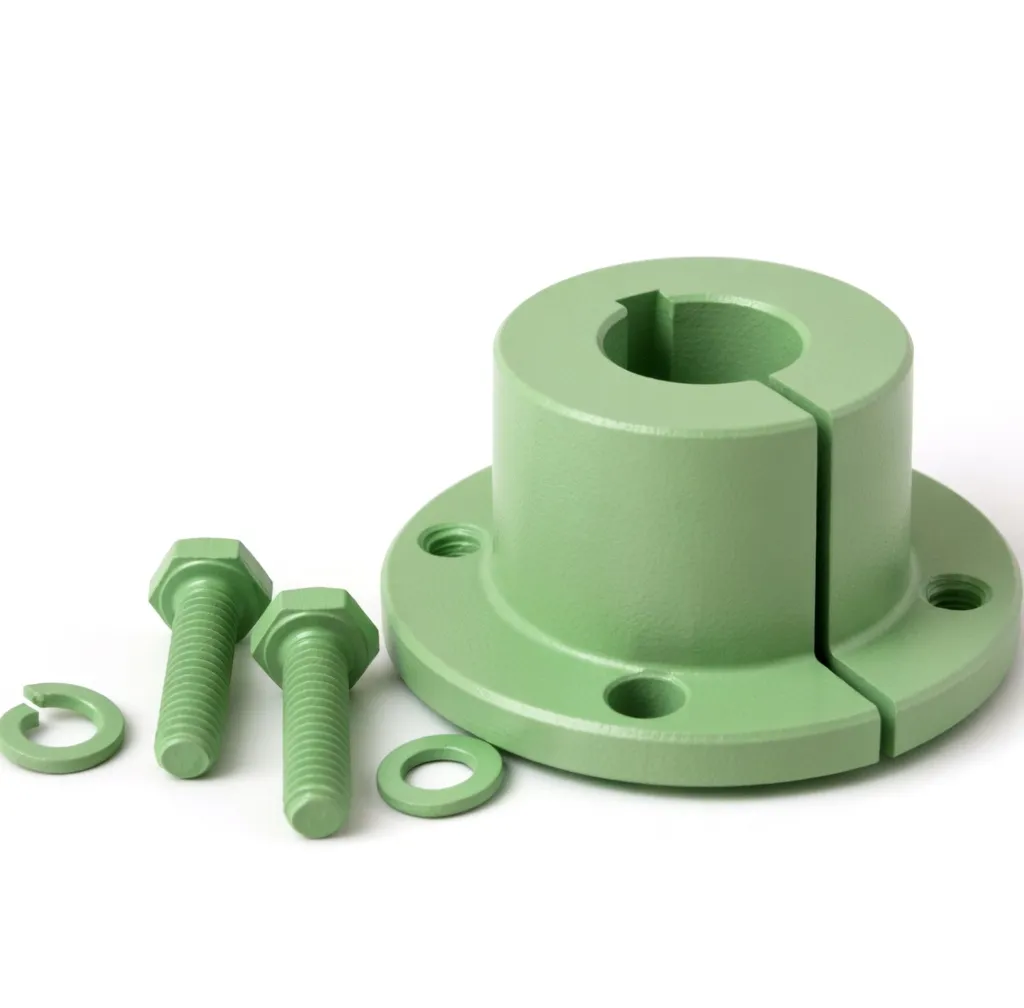
 Every summer, the British harvest race begins — combines working dawn to dusk across the wheat belts of Yorkshire, the barley estates of Aberdeenshire, and the oilseed rape paddocks of Cambridgeshire. At the mechanical heart of each machine is the threshing drum, a high-speed rotating cylinder that strips grain from straw with enormous force and extraordinary precision. The reliability of that drum depends in no small part on the quality of the drive connection between the drum shaft and its drive sheave. That is exactly where QD bushings become the engineer’s component of choice. Quick-detachable, taper-lock in principle, and dimensionally standardised across every major combine brand, QD bushings deliver the zero-slip clamping, shock-load resistance, and effortless seasonal serviceability that high-intensity agricultural machinery demands. For OEM procurement teams, agricultural machinery dealers, and workshop engineers across the UK, specifying the right QD bushings for combine harvester threshing applications is not a secondary concern — it is a fundamental one that directly affects harvest uptime and whole-season profitability.
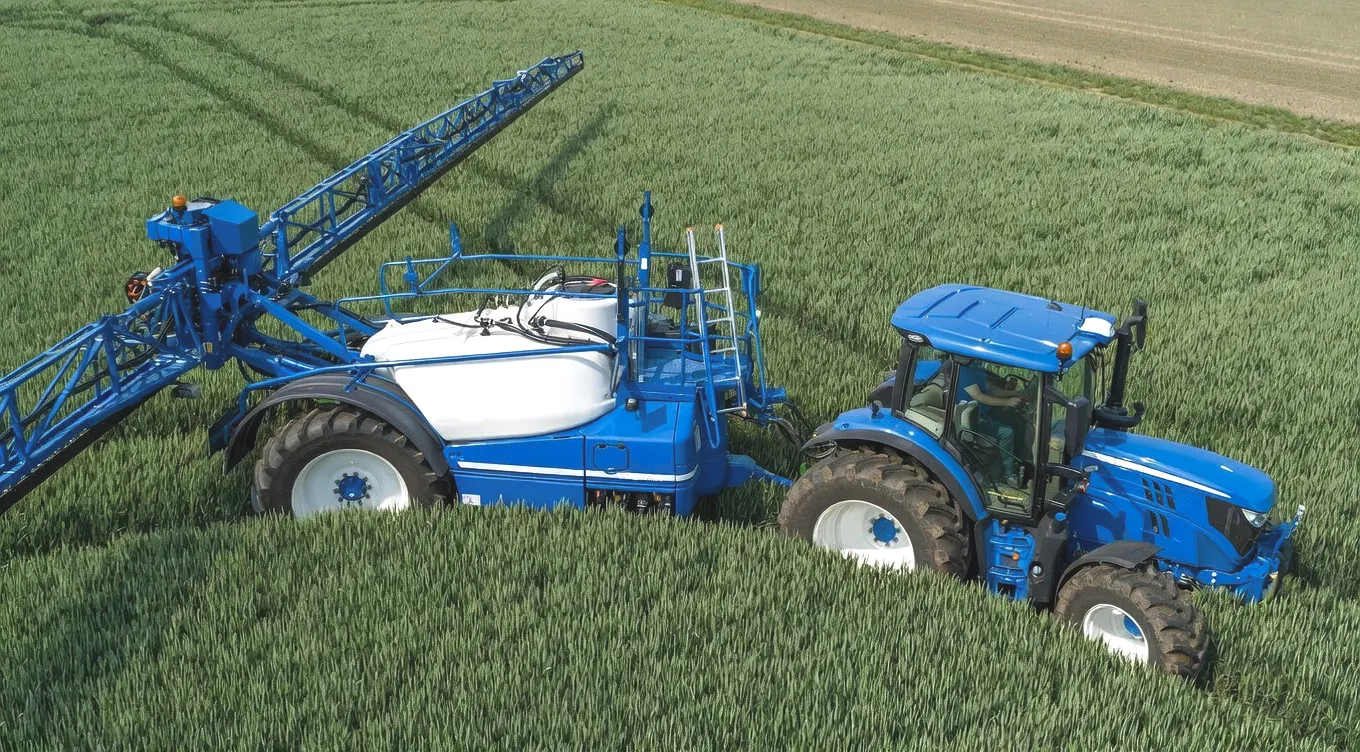
QD bushings at the threshing drum drive sheave — installed on a commercial combine harvester operating in UK arable conditions
🌾 Request a Quote — Agricultural QD Bushings
Custom sizes available · UK stock · Fast response · OEM quantities welcome
Why Combine Harvester Threshing Systems Demand Specialist Drive Components
 The threshing drum in a modern combine harvester is one of the most mechanically demanding rotating assemblies in all of agricultural machinery. Operating at shaft speeds typically ranging from 500 RPM for wet or tangled crops to 1,200 RPM for dry, clean cereal, the drum must sustain those conditions across 10-to-14-hour operating days during the UK harvest window — a period that may span as few as four or five weeks of suitable weather. Any weakness in the shaft-to-hub connection at the drive sheave translates directly into the worst possible outcome: a machine down in a standing field with grain over-ripe and weather closing in.
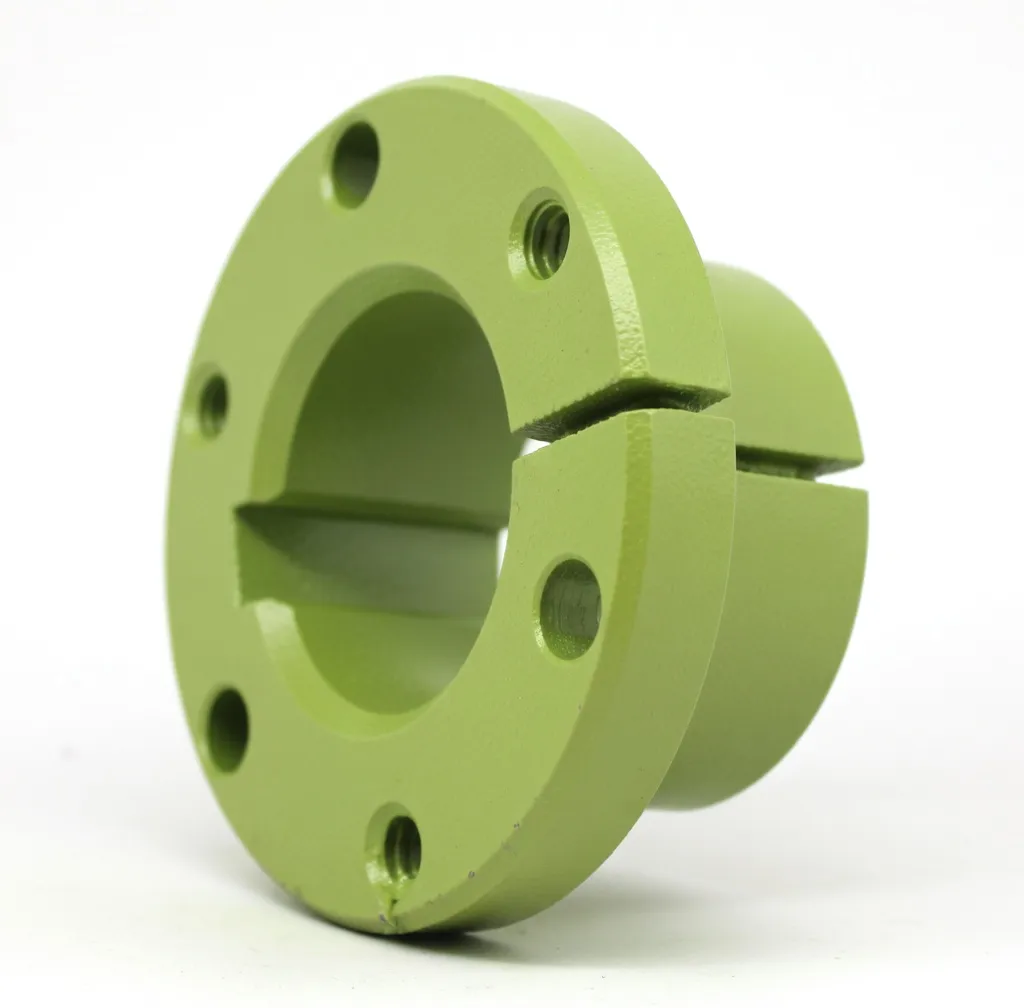
Conventional keyway-and-set-screw arrangements struggle in this environment because the oscillating load character of a threshing drum — with beater bars repeatedly impacting dense crop mats — creates micro-movement between shaft and hub that progressively fretts both surfaces. QD bushings address this through a fundamentally different mechanical principle: the 1:8 self-releasing taper generates radial clamping pressure across the full bore diameter when the cap screws are torqued to specification. The harder the drum works, the tighter the contact interface becomes, because increasing torque loads drive the taper into deeper engagement. This self-reinforcing characteristic makes QD bushings uniquely suited to the variable-load, vibration-rich environment of combine harvester threshing.
The seasonal maintenance dimension adds a second layer of engineering logic. British harvest is concentrated into a narrow weather window, and combines spend many months in storage between seasons. When the QD bushings are correctly specified and installed, end-of-season disassembly takes minutes rather than hours — the threaded extraction holes allow systematic, tool-assisted removal without heat or impact hammers, protecting precision shaft and sheave bore surfaces year after year. For agricultural engineering workshops in Lincolnshire, East Anglia, or the Scottish Borders managing fleets of several combines, that maintenance simplicity compounds into genuine, measurable time savings every spring and autumn.
Technical Specifications: QD Bushing Series for Combine Harvester Applications
The table below covers the most commonly specified QD bushing series for threshing drum drives, cleaning sieve eccentric drives, and straw walker crankshaft assemblies. All figures reflect typical requirements for UK and northern European agricultural machinery operating conditions, including seasonal storage in damp environments.
| Parameter | JA Series | SH Series | SK Series | SF Series |
|---|---|---|---|---|
| Bore Range (Imperial) | 1/2″ – 1-3/8″ | 5/8″ – 2-7/16″ | 7/8″ – 3-1/2″ | 1-1/8″ – 5″ |
| Bore Range (Metric) | 12 – 35 mm | 16 – 62 mm | 22 – 90 mm | 28 – 125 mm |
| Max Operating RPM | 3,600 | 3,200 | 2,800 | 2,200 |
| Taper Ratio | 1:8 | 1:8 | 1:8 | 1:8 |
| Torque Capacity (max) | Up to 85 Nm | Up to 320 Nm | Up to 1,100 Nm | Up to 3,800 Nm |
| Material | Cast / Ductile Iron | Cast / Ductile Iron | Cast / Ductile Iron | Cast / Ductile Iron |
| Taper Interface Finish | Ra ≤ 1.6 µm | Ra ≤ 1.6 µm | Ra ≤ 1.6 µm | Ra ≤ 1.6 µm |
| Cap Screw Grade | 8.8 metric / SAE 5 | 8.8 metric / SAE 5 | 8.8 metric / SAE 5 | 8.8 metric / SAE 5 |
| Extraction Holes | 2 × threaded | 2 × threaded | 3 × threaded | 3 × threaded |
| Surface Treatment | Black oxide / Phosphate | Black oxide / Phosphate | Phosphate / E-coat | E-coat / Zinc plate |
| Primary Combine Application | Sieve / Auger drives | Sieve eccentric / Straw walkers | Threshing drum (mid-range) | Threshing drum (heavy-duty) |
* Custom bore sizes and non-standard surface treatments available on request. Contact [email protected] for OEM-specific dimensional requirements.
Six Engineering Advantages of Agricultural-Grade QD Bushings
Full-Bore Clamping Force
When cap screws are torqued to specification on a QD bushing, the taper geometry converts that axial screw force into radial compression distributed across the entire shaft bore circumference. This eliminates the point-loading failures associated with conventional keyed bushings, which are particularly destructive when a threshing drum accelerates under a heavy crop load from standstill to operating RPM. The uniform contact pressure the taper interface generates means there is no stress concentration point to initiate fretting — just continuous, consistent grip that holds the drive relationship precisely during every crop impact.
Quick Seasonal Removal
The threaded extraction holes machined into every QD bushing body are more than a convenience feature — in agricultural service, they are a genuine engineering solution to a real problem. At season end, a UK workshop technician simply reinserts the cap screws into the extraction holes and turns them progressively, applying even axial force that breaks the taper interface cleanly and disengages the bushing from the sheave bore in under five minutes. No heating, no impact, no bore damage. For a team managing five or more combines across multiple harvest seasons, the time saved on this single operation alone more than justifies the component specification investment, while keeping expensive sheave bores in serviceable condition indefinitely.
Shock Load & Vibration Resistance
Threshing drums operate under continuous load variation — each rasp bar impact as it strikes a new swathe of straw and grain creates a load pulse that travels back into the driveshaft. Over a full harvest season, this repeated shock loading accumulates as micro-movement and fretting wear at the shaft-hub interface when lesser drive connections are used. QD bushings, through their taper-lock interference fit, prevent any relative movement between shaft and bore even under these oscillating load conditions. The result, validated across multiple UK agricultural service fleets, is a dramatic reduction in shaft surface scoring, driveline vibration signature, and the associated bearing side-load damage that premature fretting causes.
Precise Axial Positioning
Belt alignment is a frequently overlooked factor in threshing drum driveline reliability. Even a 2 mm axial misalignment of the main drive sheave can generate uneven belt wear, increased bearing side loading, and vibration harmonics that propagate throughout the driveline structure. Because QD bushings allow the sheave to be freely positioned along the shaft before the taper-lock engagement is committed, the technician can achieve exact belt centreline alignment and only then apply final torque. In multi-pulley combine threshing drive configurations where positional accuracy compounds across several sheaves, this freedom of positioning over fixed-key arrangements translates into measurably improved belt service life and reduced driveline noise.
Cross-Brand Interchangeability
Agricultural machinery fleets operating across UK farms rarely consist of a single manufacturer’s machines. A typical contract harvesting operation might run a John Deere S790 alongside a New Holland CR9.90, with an older Claas Lexion maintained as backup capacity. The QD bushing standard — covering JA, SH, SK, SF, and SD series with consistent taper, flange, and fastener geometry regardless of sheave brand — means that a properly maintained workshop stock of QD bushings can service the entire mixed fleet without brand-specific parts proliferation. For procurement managers, this standardisation reduces stockholding complexity, lowers inventory value, and eliminates the risk of specification errors during a time-critical harvest breakdown.
Agricultural Environment Resilience
The combine harvester environment is among the most contamination-intensive in mechanical engineering. Combine threshing generates dense clouds of chaff, fine grain dust, straw particles, and — in the wet seasons frequently experienced in northern England and Scotland — significant moisture ingress into accessible component areas. Our agricultural-specification QD bushings are produced with phosphate or e-coat surface treatments, taper interface finishes held to tighter dimensional tolerances than general industrial grades, and corrosion-inhibitor treatment on the bore contact surfaces, providing reliable performance and corrosion-free storage across the typically eight-to-nine months of seasonal standby common in UK arable operations.
Material Selection and Operating Principles of QD Bushings
Understanding why QD bushings deliver their performance characteristics in combine harvester threshing applications requires a clear picture of the underlying engineering. The standard material for agricultural-grade QD bushings is grey or ductile cast iron — a material selection that balances machinability, tensile strength, vibration damping capacity, and cost in a combination that no polymer or lightweight alloy alternative has replicated for this application. Ductile iron in particular offers tensile strength in the range of 400 to 500 MPa alongside an elongation-at-break of 6 to 18%, meaning the bushing body can accommodate minor shaft diameter deviation without brittle fracture. This tolerance for dimensional imperfection is practically valuable when working with field-repaired or previously scored shafts that may be fractionally below nominal diameter.
The operational mechanism centres on the properties of the 1:8 self-releasing taper — a taper angle (approximately 3.58 degrees half-included) that falls precisely in the “self-releasing” zone of taper mechanics. This angle is steep enough to disengage cleanly with tool assistance via the extraction holes, yet shallow enough to generate substantial radial clamping force when the taper is driven axially by the cap screws. When three or four cap screws are torqued to specification — typically in the range of 45 to 110 Nm depending on the series — the resulting axial force translates via the taper geometry into a radial compression on the shaft that can reach 15 to 25 kN for a medium SK series QD bushing. This contact pressure creates friction torque capacity that significantly exceeds the theoretical key shear capacity alone, which is why QD bushings reliably hold through the peak torque events that occur when a combine threshing drum encounters a dense swathe of damp winter wheat.
Surface finish at the taper interface is produced to a roughness specification of Ra 1.6 µm or better, ensuring consistent friction coefficient and predictable engagement behaviour across the bore range. The cap screws supplied are typically Grade 8.8 metric or SAE Grade 5 imperial, providing the tensile load necessary for full taper engagement at the specified torque values. For QD bushings destined for combine harvester threshing drum applications in the UK’s characteristically damp agricultural climate, external surfaces receive black oxide or phosphate conversion coating as standard, suppressing rust formation during the long off-season storage periods that are a fundamental feature of British arable farming operations.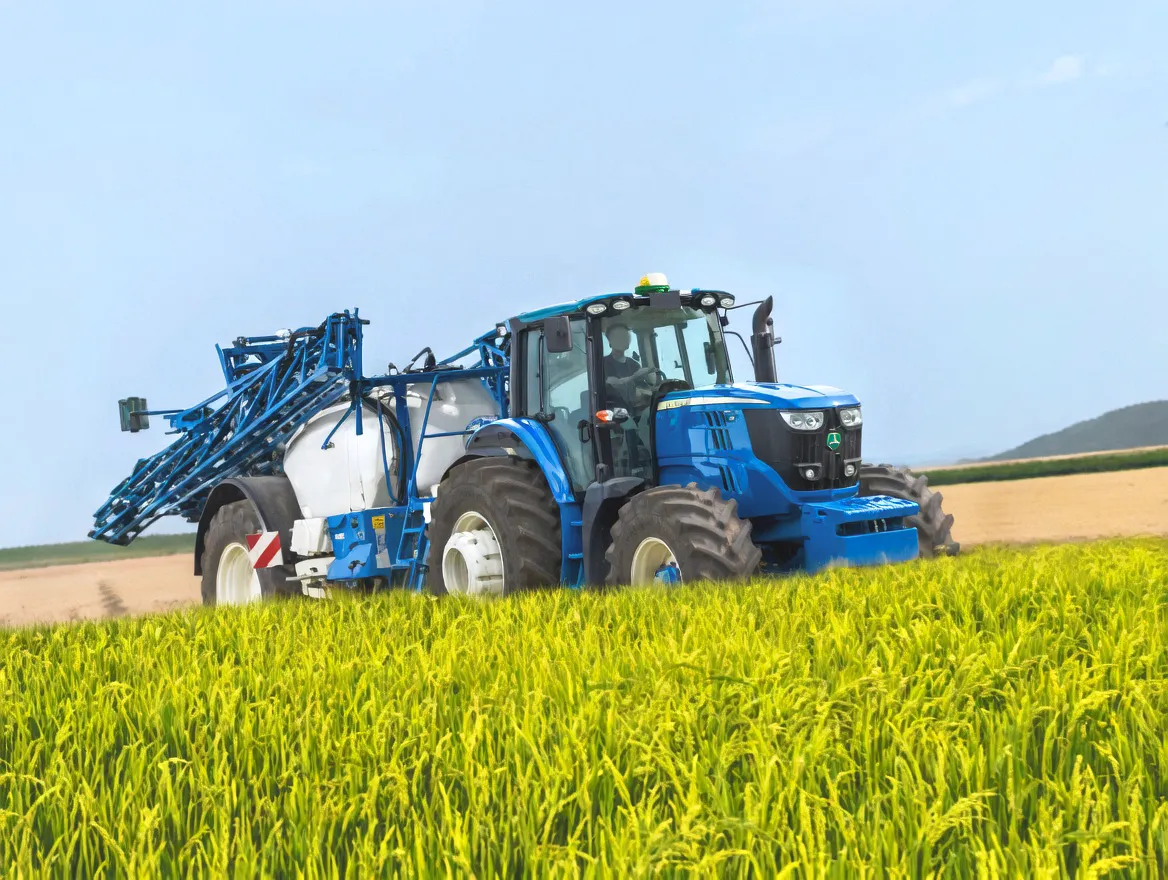
Where QD Bushings Operate Inside a Combine Harvester
A modern combine harvester contains multiple QD bushing installation points across its driveline architecture. Each position has distinct torque, RPM, and service access characteristics. Understanding these zones helps procurement engineers, OEM design teams, and workshop managers specify the correct series and surface treatment for every position in the machine.
Harrow Arable Services Ltd — Lincolnshire, England
The Challenge
Harrow Arable Services operates contract harvesting across approximately 8,500 acres of Lincolnshire arable land, covering winter wheat, spring barley, and oilseed rape. The fleet of five combines — three John Deere S680s and two New Holland CR9.90s — must complete all harvesting within the narrow weather windows typical of the East Midlands summer. In the 2018 season, before any engagement with our supply team, workshop manager James Caldwell documented recurring threshing drum pulley shaft scoring caused by bushing micro-slip during peak-load harvesting of dense, slightly damp winter wheat. Two machines required shaft remachining within a single season — an unplanned cost exceeding £6,400 and a four-day delay during critical harvest conditions when contractor deadlines were missed.
The Solution
Following a technical consultation with our agricultural applications engineering team, Harrow Arable standardised on our SK series QD bushings for all threshing drum pulley positions across the fleet, with SH series QD bushings specified for the cleaning sieve eccentric drives on all five machines. We supplied a complete winter maintenance kit per machine, including all bushing sets, Grade 8.8 cap screws, shaft surface preparation guidelines, and torque specification sheets tailored to each drive position. The kits were dimensioned for both John Deere and New Holland shaft specifications to eliminate any cross-fleet fitting errors. Our team also delivered an on-site installation demonstration to Caldwell’s three-person workshop crew, covering surface cleaning protocol, taper engagement procedure, the alternating torque sequence, and the extraction procedure for end-of-season disassembly.
Results — Five Harvest Seasons On
What UK Agricultural Engineers Say
“We had a mid-harvest threshing drum pulley failure on a John Deere in 2017 that cost us two full days and an emergency engineer callout at peak-season rates. Since switching the whole fleet to these QD bushings, we have not had a single pulley-related driveline issue in five seasons. The threaded extraction feature alone — the way it cleanly pulls the bushing without any hammer work — has made our spring pre-season checks noticeably faster. I would not go back to anything else for this application.”
“As an OEM parts buyer for a Scottish agricultural equipment manufacturer, I evaluate QD bushing suppliers on dimensional consistency, surface finish quality, and delivery reliability. This team has delivered on all three across six consecutive order cycles. Their SK series for our threshing drum assemblies arrives correctly dimensioned to our engineering drawings every time — zero rework on the line. When we needed a modified bore size for a new platform, the response time from technical query to physical sample was 12 working days. That is a genuinely competitive lead time for a custom part.”
“I manage servicing for twelve combines across East Anglia — John Deere, Claas, and Case IH all in the same fleet. The cross-brand compatibility of these QD bushings means I stock one consolidated spare set rather than brand-specific kits for each machine. That alone has reduced our spares inventory value by roughly 35% while actually improving mid-harvest response capability. Quality is consistent order to order — I trust these components without individually inspecting every batch, which says something about the manufacturing consistency.”
Frequently Asked Questions — QD Bushings for Agricultural Machinery in the UK
We have compiled the most common questions received from UK combine harvester engineers, OEM procurement managers, agricultural machinery dealers, and workshop technicians regarding QD bushing selection, installation, pricing, and supply for threshing applications.
Ready to Specify QD Bushings for Your Agricultural Machinery?
Whether you are replacing a failed threshing drum pulley bushing this week, planning pre-season maintenance kits for a fleet of UK combines, or specifying QD bushings for a new agricultural machinery platform, our applications engineering team is ready to assist with selection, sizing, custom bore engineering, and seasonal supply planning.
📧 Contact Our Agricultural Engineering Team
[email protected] | Custom QD Bushings | UK & European Agricultural Machinery Supply | edit by gzl