
 Walk the quayside at Grimsby, Immingham, Teesport, or Port Talbot on a wet autumn morning and you will understand immediately why mechanical components here must be a cut above the ordinary. The air carries salt, the ground vibrates under the footsteps of machines that weigh hundreds of tonnes, and the clock never stops. Bucket wheel reclaimers — those towering rotating-wheel machines that claw coal, iron ore, grain, and potash out of vast open stockpiles and feed them onto conveyors — are perhaps the most uncompromising mechanical environments in the entire UK logistics chain. A single machine may handle upwards of 4,000 tonnes per hour. Stop the reclaimer, and you stop the terminal. Stop the terminal, and ships queue at anchor burning fuel and time. The pressure to maintain reliable operation is immense.
Within a reclaimer’s drive train, the mechanical interface that connects the output flange of the slewing or hoist gearbox to the driven sprocket, sheave, or coupling hub is one of the most load-critical junctions in the entire machine. It must transmit enormous torque — sometimes exceeding 200,000 Nm on large machines — while accommodating the shock loads that occur every time a bucket tooth bites into compacted, waterlogged ore or frozen coal. It must do all of this while resisting the salt-laden atmosphere, coal dust that infiltrates every surface, and the thermal cycling that comes with British coastal weather. QD bushings — precision taper-bore shaft connectors that have become the de facto standard for heavy industrial drive systems worldwide — are ideally suited to every one of these demands. This article explains how and why.

What Are QD Bushings — and Why Are They the Right Choice for Reclaimer Drive Shafts?
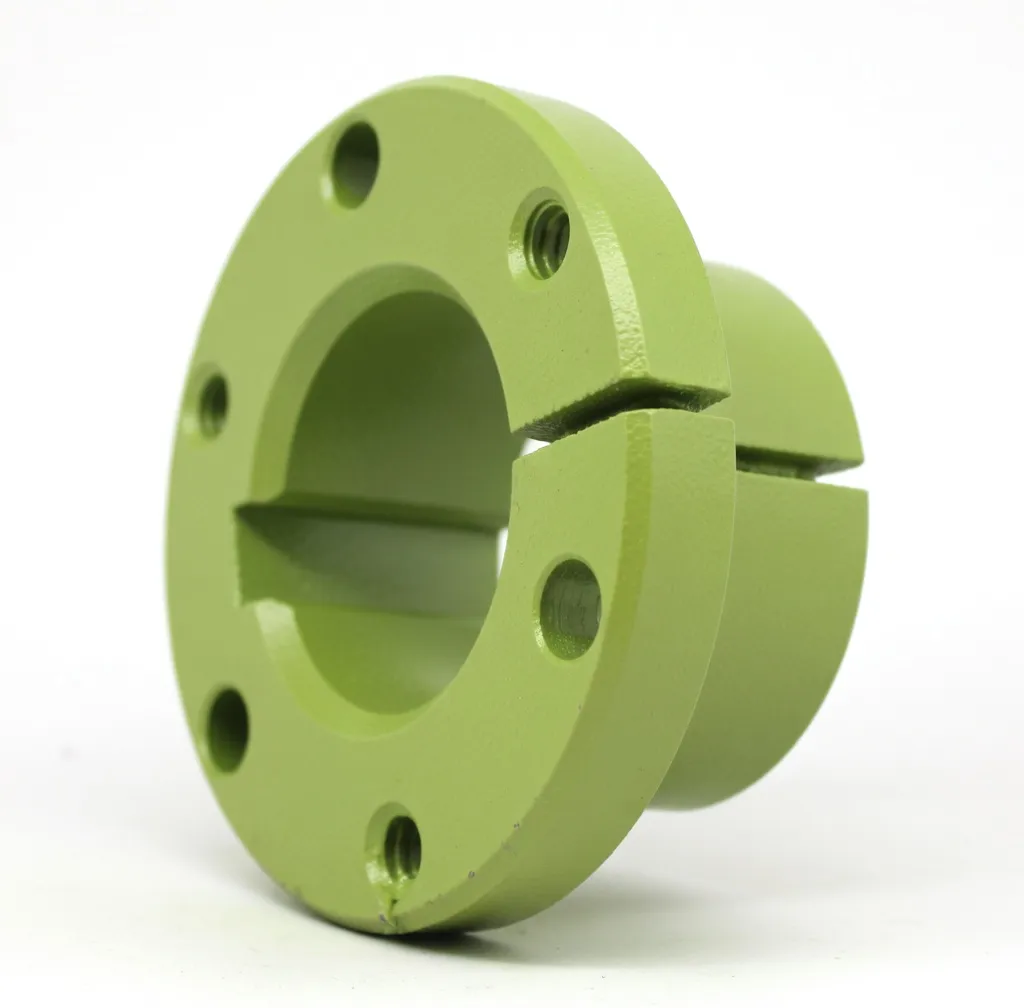
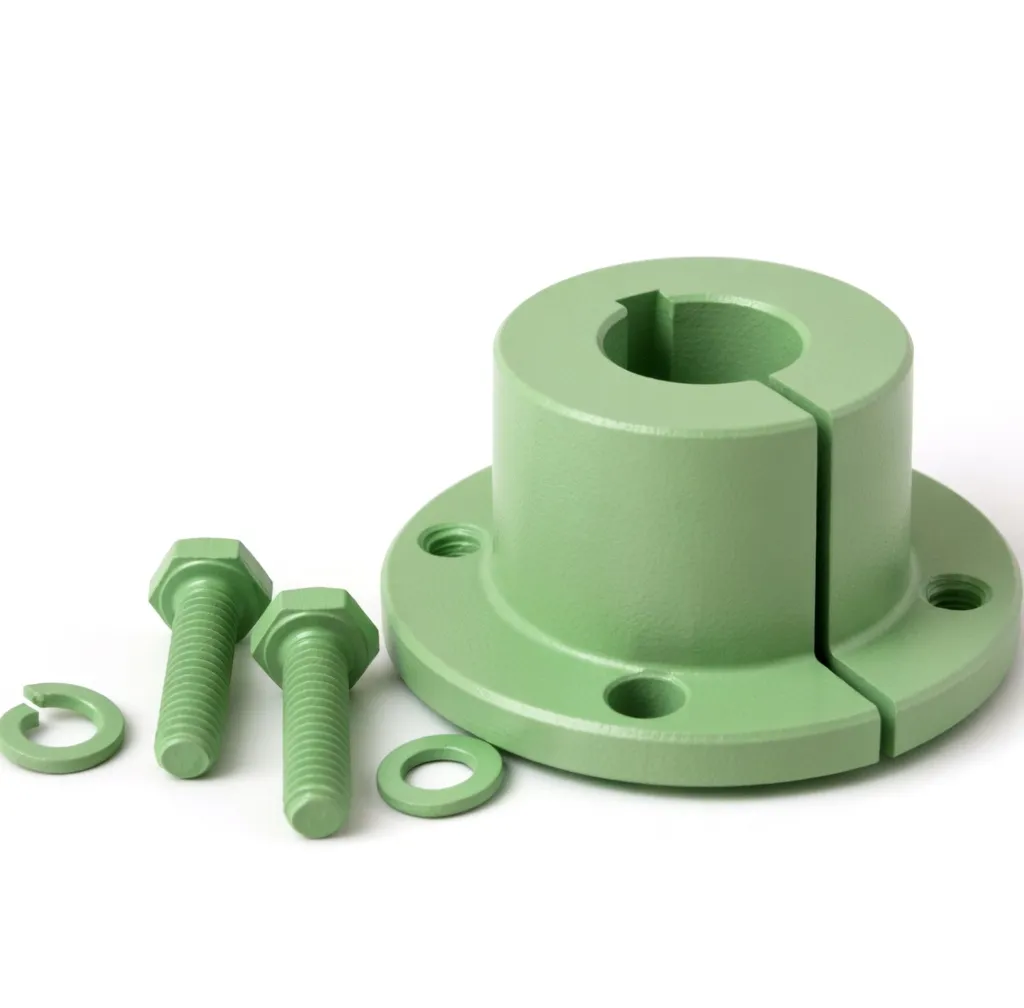 A QD bushing (Quick Disconnect bushing) is a split, tapered sleeve machined to precise tolerances that fits inside the bore of a sprocket, sheave, belt pulley, or coupling flange. When the mounting screws are tightened to the specified torque value, the tapered geometry generates a powerful radial compressive force on the shaft, creating an interference fit that is self-centering, slip-resistant, and capable of transmitting substantial torque without relying solely on a key. The 1:8 taper ratio is inherently self-locking under load, meaning that the connection actually tightens as drive torque increases — a property that is extremely valuable in reclaimer applications where torque is rarely steady and shock spikes are the norm rather than the exception.
One of the most practical attributes of a QD bushing in a port maintenance setting is rapid disassembly. Unlike a pressed-on hub that requires a hydraulic puller and potentially a full shift to extract, a QD bushing can be fully released and removed in fifteen to twenty minutes using nothing more than a standard hex wrench and the three or four jackscrews already threaded into the flange face. For a terminal where a maintenance crew might have a four-hour window before the next ship is due, that speed difference is the difference between a routine replacement and an emergency shutdown.
The standardised dimensional family — covering bore diameters from roughly 15 mm up to 180 mm in the heavy series, with rated torques from a few hundred Nm to over 320,000 Nm — means that a single parts cabinet can stock every bore size a terminal’s reclaimers, stackers, and associated conveyor drives will ever require. Reorder lead times are short, interchangeability is high, and the engineering complexity involved in specifying a replacement part is minimal. For UK port operators managing complex fleets of material-handling equipment, that standardisation is worth a great deal in itself.
Technical Performance Parameters
The table below outlines the core performance parameters for the heavy-duty QD bushing series recommended for bucket wheel reclaimer applications. Custom bore tolerances (H7/h6, H8/f7), DIN or ANSI keyways, dual-keyway configurations, and marine-grade surface treatments are available as factory options.
| Parameter | J Series | M Series | N Series | P Series | W Series |
|---|---|---|---|---|---|
| Max Bore (mm) | 70 | 90 | 110 | 135 | 180 |
| Rated Torque (Nm) | 18,000 | 48,000 | 100,000 | 190,000 | 320,000 |
| Taper Ratio | 1:8 (standard QD taper, self-locking under load) | ||||
| Material Options | Ductile Iron GGG50 | Carbon Steel C45 | Alloy Steel 42CrMo4 | Stainless Steel 316L (port grade) | ||||
| Operating Temp (°C) | -30 to +120 (standard grade) | -40 to +150 (special alloy grade) | ||||
| Surface Treatment | Phosphating | Hot-Dip Galvanising | Dacromet Coating | Ceramic-Loaded Epoxy (marine grade) | ||||
| Keyway Standard | DIN 6885 / ISO 2491 | ANSI B17.1 available on request | Dual keyway available | ||||
| Salt-Spray Resistance | Standard: 96 h (ASTM B117) | Marine Grade 316L + Dacromet: 720 h+ | ||||
| Certification | ISO 9001:2015 | CE Marking | Full Material Traceability Certificates on Request | ||||
The Taper-Lock Principle: Why It Handles Reclaimer Shock Loads Better Than Any Alternative
The operating principle of a QD bushing is elegant in its simplicity. The outer profile of the bushing is a truncated cone machined to a 1:8 taper angle. The mating bore in the hub (sprocket, sheave, or coupling flange) is machined to the same taper. When the mounting cap screws are tightened, the bushing is drawn axially into the hub bore, and the wedge geometry converts the axial screw force into a radially distributed compressive force on the shaft. The result is a contact pressure across the full cylindrical shaft surface, not just at a key edge or setscrew point. On a bucket wheel reclaimer main shaft with a bore diameter of 130 mm, even modest screw torque produces shaft-to-bushing contact pressures exceeding 80 MPa — more than sufficient to transmit 190,000 Nm without the shaft surface showing any fretting wear at the end of a full maintenance interval.
The shock load behaviour is what really distinguishes the taper-lock QD bushing from a conventional keyed hub for reclaimer service. When a bucket tooth strikes a lump of frozen ore, the shock travels through the wheel structure and into the main shaft as a torsional impulse — a brief but extremely high peak torque that can be three to four times the steady-state drive torque. A keyed hub in this situation relies on the key itself to carry that impulse; the key bends slightly, then the setscrews begin to micro-shift, and within weeks the keyway walls are battered and the bore is egg-shaped. The self-locking taper of a QD bushing, by contrast, responds to a torque spike by momentarily increasing the contact pressure (the wedge effect intensifies as relative slip is attempted), so the connection actually stiffens under load rather than relaxing. This is why high-cycle reclaimer operators across the British bulk handling sector have largely standardised on taper-lock QD bushing connections for every high-torque shaft junction in the machine.
It is also worth understanding the role of the split cut through the bushing wall. The axial split allows the sleeve to compress radially when drawn into the hub, closing onto the shaft with controlled, even clamping force. That same split is the mechanism that makes removal possible: the jack screws are repositioned into the extraction holes, and as they are tightened they push the bushing axially out of the hub bore, releasing the interference and allowing the assembly to be disassembled without heat, hydraulic pressure, or impact tools. For a reclaimer operating at a remote area of a bulk terminal, this tool-independence is a genuine operational advantage.
Beating the Salt-Mist Challenge: Material Grades for UK Port Environments
The material specification of a QD bushing for inland factory use and for British port service are very different propositions. At a coastal bulk terminal such as those on the Humber, in South Wales, or along the River Tees, every external component is continuously exposed to salt-laden marine air, periodic drenching with rain or wave splash, and layers of hygroscopic coal or ore dust that hold moisture against metal surfaces for extended periods. Standard grey cast iron bushings, which perform perfectly well in dry factory environments, will show visible corrosion within a single operating season under these conditions. Deep pitting accelerates fretting at the taper interface, and the eventual result is a bushing that can no longer be removed without cutting — turning a twenty-minute routine task into a multi-day engineering project.
For bucket wheel reclaimers in UK port service, we recommend a tiered material strategy. The base option — suitable for sheltered indoor conveyor drives and gearbox output flanges that are regularly greased — is ductile iron GGG50 with a heavy phosphate conversion coating and an applied wax-penetrant treatment. One step up is carbon steel C45 with hot-dip galvanising: the thick zinc layer (typically 85 µm) provides sacrificial cathodic protection and extends service life by a factor of three to four versus bare iron. For the most exposed shaft junctions — the main bucket wheel axle assembly, the luffing winch chain drives, and the slewing pinion connection — we specify our 316L austenitic stainless steel QD bushing series. Grade 316L contains 2–3% molybdenum, which dramatically improves pitting resistance in chloride environments. Combined with electropolishing of the bore surface to reduce micro-roughness and minimise fretting initiation sites, this material grade delivers salt-spray resistance exceeding 720 hours in ASTM B117 testing. In real-world port service at terminals along the Humber Estuary, operators using our 316L QD bushings have reported maintenance intervals extending from the typical six months to over two years with no degradation of clamping performance.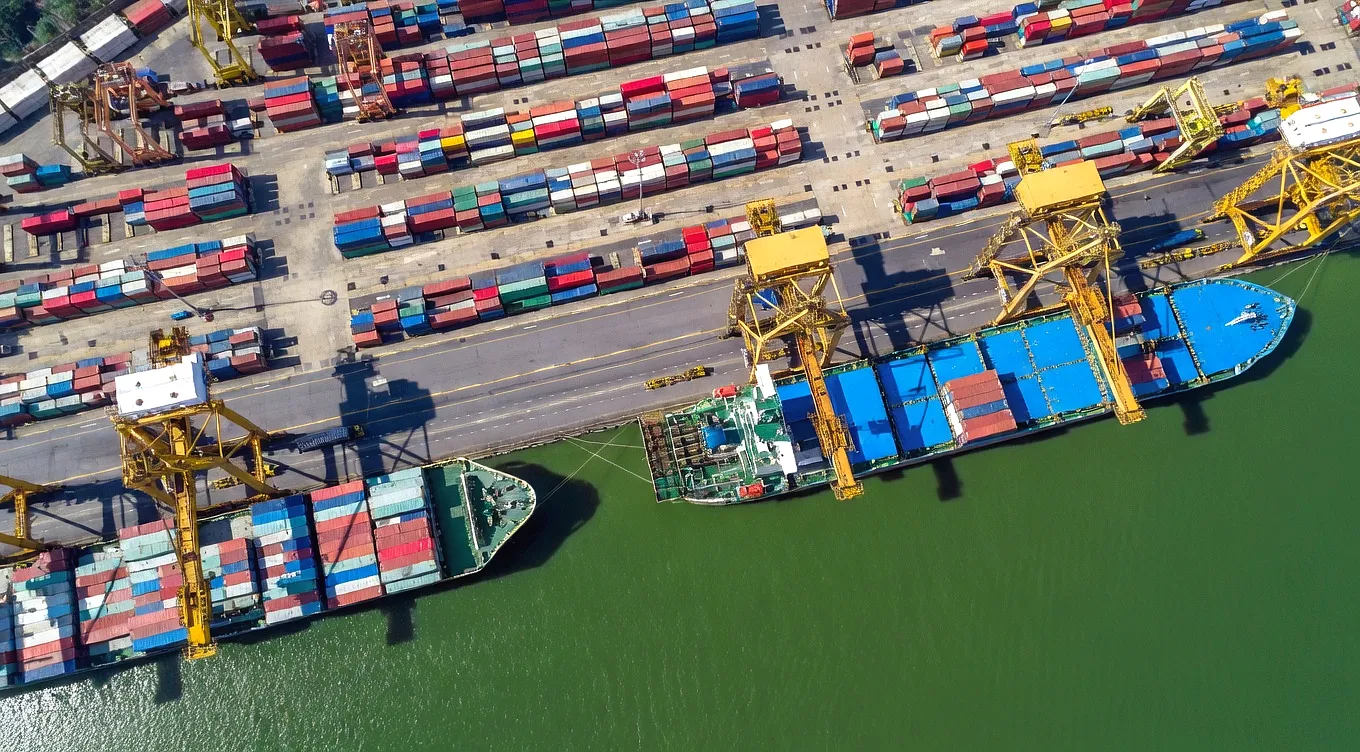
Where QD Bushings Are Used on a Bucket Wheel Reclaimer
A modern reclaimer contains multiple critical shaft-hub interfaces. Here are the five primary application points where QD bushings deliver the greatest performance advantage.
1. Bucket Wheel Main Axle
The primary drive connection between the planetary gearbox output flange and the bucket wheel shaft. Torques regularly exceed 150,000 Nm. W-series stainless QD bushings with dual keyway are specified here for maximum security and corrosion resistance. The 1:8 self-locking taper ensures the connection actually tightens when shock-load torque spikes occur during bucket impact on hard ore.
2. Slewing Ring Drive Pinion
The rotational axis of the entire reclaimer superstructure is powered by a slewing gearbox whose output pinion must be locked firmly to the drive shaft. QD bushings here must resist torsional reversal loads as the machine decelerates and reverses sweep direction, making the bidirectional clamp capability of the tapered sleeve especially valuable. P or N series carbon steel with Dacromet treatment are common here.
3. Luffing (Pitching) Winch Chain Drive
The luffing mechanism raises and lowers the boom assembly, which can weigh 50–200 tonnes. Chain sprockets on the winch drum shaft are mounted via QD bushings, allowing the entire sprocket-and-chain assembly to be changed during routine maintenance without disturbing the drum bearing arrangement. The ability to remove and refit in under twenty minutes is the defining advantage in this application.
4. Boom Conveyor Head Pulley
The conveyor belt running along the reclaimer boom transfers reclaimed material from the bucket wheel to the main terminal conveyor. The head drive pulley is typically mounted via QD bushings on a keyed shaft to allow routine lagging replacement without shaft disassembly. In coastal port service, the M or J series galvanised bushings here see very high maintenance frequency, making rapid-change capability a direct cost saving.
5. Travel Drive Wheel Assembly
Large reclaimers travel on rail-mounted bogies along the stockpile face. Each bogie drive consists of a gearmotor connected to a drive wheel via a flanged sprocket assembly using QD bushings. Salt-mist exposure is continuous at rail level, and the combination of Dacromet-coated C45 steel bushings with sealed hub caps has proved highly effective in extending service intervals at exposed North Sea port locations including Teesport and Immingham.
Six Reasons UK Port Engineers Specify Our QD Bushings
After eighteen years working with bulk handling drive systems across the UK and Europe, these are the advantages that recur in every successful installation.
Extreme Torque Density
Our W-series QD bushing transmits up to 320,000 Nm through a 180 mm bore — far exceeding what a conventional keyed assembly of the same dimensions could reliably sustain. This allows the designer to keep shaft diameters compact while meeting the most demanding reclaimer torque specifications.
Sub-20-Minute Changeout
A single technician with a hex wrench can install or remove a QD bushing in under twenty minutes. At a terminal where unplanned downtime costs thousands of pounds per hour, that speed advantage translates directly into bottom-line savings during every unplanned event.
Proven Salt-Mist Resistance
316L stainless steel with electropolished bore achieves 720+ hours in ASTM B117 salt-spray testing. In real-world UK coastal port service, this material grade has demonstrated maintenance intervals exceeding 24 months with no loss of clamping performance, versus 6 months for standard cast iron.
Factory Customisation
Non-standard bore diameters, custom keyway dimensions (including dual keyways for asymmetric torque), special bore tolerances, and unique flange hole patterns are manufactured to order with full material traceability certificates. No minimum order quantity for re-specification projects.
Shock-Load Self-Tightening
The 1:8 self-locking taper means the QD bushing connection stiffens under shock impulse rather than loosening. This is the single most important mechanical property for reclaimer service, where bucket impact on frozen or compacted ore generates transient torque spikes two to four times the steady-state drive torque.
Fast UK Delivery & Support
Standard QD bushing sizes ship to UK mainland addresses within 3–5 working days. Custom-specification orders carry a typical lead time of 4–6 weeks. Technical support from application engineers with specific bulk handling experience is included with every order — not an optional extra.
QD Bushings Across the UK Bulk Handling Sector: A Challenging Operating Environment
The United Kingdom’s bulk cargo handling sector is served by a network of major port terminals, each with its own material mix and its own set of environmental challenges. Grimsby and Immingham on the Humber Estuary form the country’s largest port complex by tonnage, with substantial coal import and export flows alongside iron ore shipments destined for steelworks in Scunthorpe. Port Talbot in South Wales receives iron ore for the Tata Steel blast furnaces in volumes that make it one of the deepest-draft bulk terminals in Europe. Teesport handles potash, coal, and agricultural products, while the Port of Tyne and Blyth Harbour in the North East both see significant coal and biomass flows. Each of these terminals operates reclaimers in a climate that is, to put it charitably, challenging for mechanical components: persistent North Sea damp at Humber, regular Atlantic squalls at Port Talbot, and the combination of coal dust and salt at every location.
Procurement teams at these terminals have, over the past decade, become increasingly sophisticated in specifying drive components. The shift from reactive to predictive maintenance regimes — driven partly by the cost of unplanned downtime and partly by the practical reality of digital maintenance management systems — has created strong demand for components with quantifiable, consistent service lives. A QD bushing with documented salt-spray resistance figures and a known bore-tolerance specification fits naturally into this framework: the maintenance planner can set a calendar-based or condition-based replacement interval and order stock accordingly, confident that the component will perform as specified until that interval is reached.
There is also the matter of the UK’s commitment to energy transition. Several British terminals are in the process of converting coal import infrastructure for biomass pellet handling to support power generation under low-carbon contracts. Biomass creates its own set of material challenges — fine dust that is highly hygroscopic, and a tendency to pack and bridge that generates unusual load patterns in the reclaimer bucket wheel drive. Our QD bushing applications engineering team has direct experience in this conversion process, having supported drive-train re-specification projects at terminals transitioning to biomass supply chains.
Humber Bulk Terminals Ltd — Immingham, UK
Iron Ore Import Terminal · 3 × Bucket Wheel Reclaimers · Annual Throughput: 4.2 million tonnes
⚠ The Challenge
Humber Bulk Terminals operated three bucket wheel reclaimers, each fitted with standard cast iron QD bushings across all five major shaft junctions. The Immingham location, exposed to continuous North Sea salt air and regular rain from the east, was causing severe surface corrosion on the bushings within four to five months of installation. By the six-month inspection point, pitting on the bore surfaces was measurably compromising the tapered clamp, and in two incidents the main wheel shaft bushing had begun to micro-slip — detectable as fretting marks on the shaft journal. Emergency replacement of a corroded, seized bushing on the main axle assembly had once required fourteen hours of unplanned downtime and the use of a cutting torch, costing the terminal an estimated £68,000 in lost throughput and contractor fees.
🔧 The Solution
Working with the terminal’s mechanical engineering team, we conducted a full drive-train survey across all three reclaimers and produced a tiered material specification. The main bucket wheel axle connections were upgraded to our W-series 316L stainless steel QD bushings with electropolished bores and Dacromet-coated cap screws. The slewing drive pinion and luffing winch chain sprockets were upgraded to galvanised C45 steel N and P series bushings. The boom conveyor head pulleys retained the standard cast iron bushings but with an applied ceramic-loaded epoxy overcoat. We also supplied a bespoke bore dimension — 128h6 — to match the existing shafts without remachining. Full material traceability documentation and installation torque procedures were included with the delivery.
✅ The Results
At the 12-month inspection following the upgrade, all three reclaimers showed zero measurable fretting on the main axle shaft journals. The 316L stainless bushings on the bucket wheel main axle showed only superficial surface discolouration — no pitting, no reduction in bore hardness. The terminal moved to 24-month planned replacement intervals for the stainless-grade bushings and 12-month intervals for the galvanised steel units. Total annual cost of QD bushing maintenance (materials plus labour) dropped by 61% compared with the previous three-year average. There has been zero unplanned downtime attributable to bushing failure in the 26 months since the upgrade, representing a quantified saving in excess of £140,000 against the baseline.
maintenance cost
since upgrade
baseline (26 months)
316L stainless bushings
What Our Customers Say
We had a standing problem with main axle bushing seizure at our iron ore terminal — something that was costing us a fortune in emergency callouts and cutting gear. The 316L stainless QD bushings from Ever Power genuinely solved it. Fourteen months in and I have not had a single fretting issue on any of the three reclaimers. The documentation and bore specification support were excellent — exactly what you need when you’re presenting a maintenance change to a safety team.
Price was competitive but what really sold us was the custom bore. We needed a 112h6 bore in the N-series to match our existing shafts without remachining them, and Ever Power turned that around in three weeks with full certs. The installation went without a hitch, and the Dacromet-coated cap screws that came with the kit are still pristine after one full year at Port Talbot. These are QD bushings that genuinely understand what a coastal port environment demands.
We were converting a coal reclaimer to biomass service and the drive team needed to re-evaluate the whole shaft bushing specification because the load profile changed significantly. Ever Power’s application engineers spent an afternoon working through the torque data with us and came back with a properly justified W-series recommendation for the main wheel and M-series for the conveyor pulleys. That level of technical input is rare. The QD bushings have been in service through two full biomass seasons without any issues whatsoever.
Manufacturing & Customisation
We Build the QD Bushing Your Application Actually Needs
Off-the-shelf is not always the answer in heavy port machinery. A reclaimer built in Germany to DIN standards and a machine assembled in the UK to an ANSI specification will have different shaft sizes, different keyway profiles, and different hub bore tolerances. When your machine falls outside standard catalogue dimensions, you need a manufacturer that can machine to your drawing rather than asking you to modify your shaft.
Our manufacturing facility holds tolerances to IT5 class on all bore diameters, with surface roughness to Ra 0.8 µm on taper and bore faces. We routinely produce single-piece or small-batch custom QD bushings in non-standard bore dimensions, modified flange bolt patterns, bespoke taper lengths, dual keyway configurations, and special material combinations such as a 316L stainless body with a hardened steel set-screw insert. Every batch is accompanied by a dimensional inspection report and, where required, a material test certificate traceable to the original mill certificate.
For UK port operators undertaking reclaimer refurbishment, OEM machine upgrades, or fleet-wide drive-train standardisation projects, we can work directly with your in-house engineers or contracted maintenance firm to produce a full bill-of-materials specification covering every QD bushing size across all machines — with pricing, lead times, and stock-holding recommendations included.
Custom Options We Offer
Frequently Asked Questions
Questions from engineers and procurement teams at UK bulk handling terminals.