
QD Bushings for Food and Beverage Filling Production Lines: Hygienic, High-Speed Drive Reliability for UK Plants
Engineered for 60,000 bottles-per-hour throughput, aggressive CIP cycles, and zero-tolerance food-contact compliance — the tapered bushing standard trusted by British bottling halls.
EU 1935/2004
CIP / SIP Ready
AISI 304 / 316L
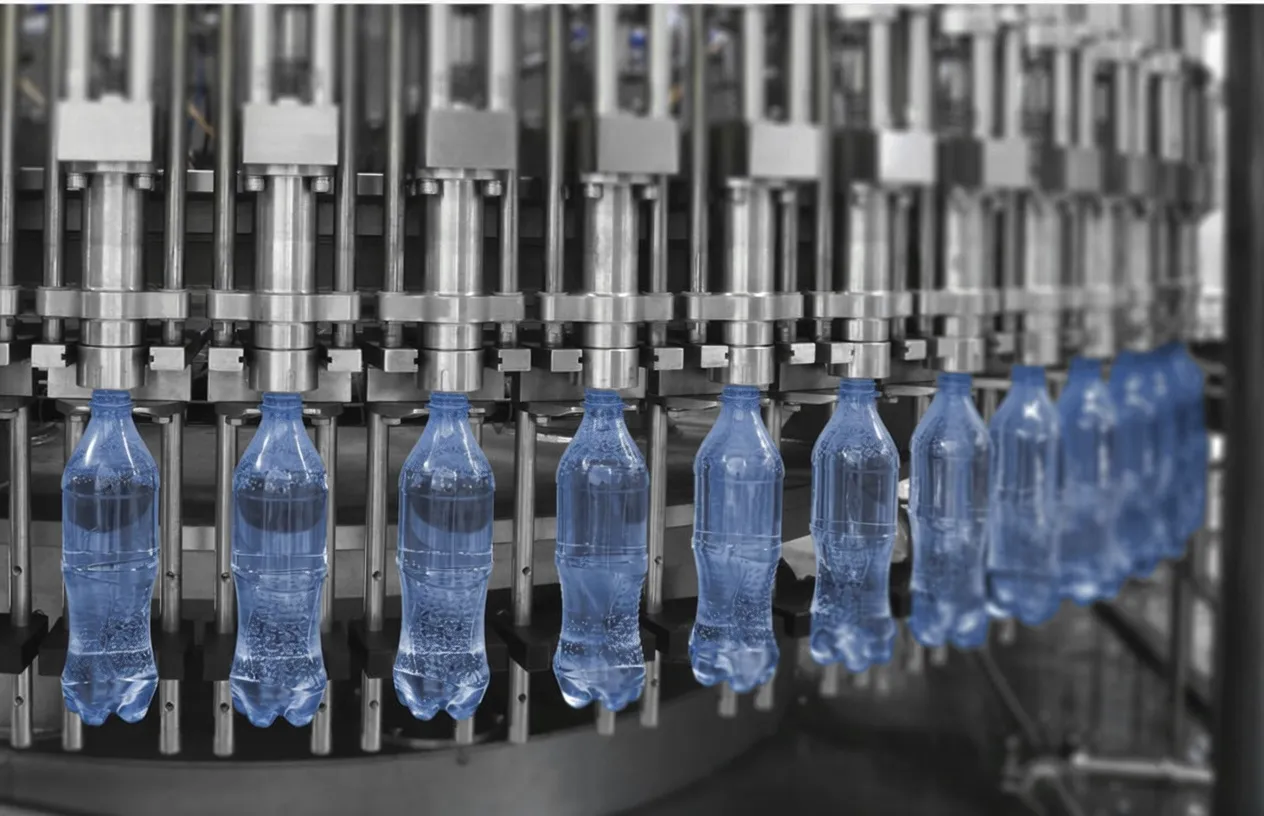
Walk into any modern dairy plant in Yorkshire or a carbonated soft-drink line in the Midlands and you notice the same picture — rotary filling turrets spinning at eye-watering speeds, conveyor chains slick with wash-down residue, and gearbox outputs that simply never stop. Behind every reliably capped bottle and every perfectly filled yoghurt pot sits a quiet hero: the tapered hub-to-shaft connection. QD bushings have become the default choice for OEMs and in-house engineering teams because they solve three pain points at once — rapid SKU changeover, mechanical repeatability under caustic CIP chemistry, and safe removal without damaging the drive shaft. This technical brief explores how QD bushings are specified for high-speed filling service, which material grades survive sanitising cycles, and why plant engineers across the United Kingdom — from Scottish whisky bottling halls to Kent fruit-juice facilities — are standardising on QD bushings as the reference component for their critical drive connections.
Six Advantages That Keep British Filling Lines Running
10-Minute Line Changeover
The quick-disconnect geometry of QD bushings lets a single technician swap a sprocket during a planned SKU change — no shaft galling, no specialist hydraulic puller, and no second pair of hands required.
Wash-Down Proof Surfaces
Stainless grade QD bushings in 304 or 316L resist caustic soda, peracetic acid, and hot water sanitising cycles at 85°C without surface etching, pitting, or chloride stress cracking over multi-year service.
Concentric Repeatability
Radial run-out under 0.05 mm keeps rotary filling turrets and capping heads in perfect phase, eliminating the micro-vibration that otherwise causes label skew and foaming of carbonated product.
Proven Torque Transfer
The cap-screw clamp design of QD bushings delivers torque capacities from 200 Nm to over 35,000 Nm, matched to everything from pony-size conveyor gears to the main drive of a 120-head rotary filler.
Smooth Hygienic Profile
Minimal crevices and domed cap-screws in the food-grade QD bushings range cut bacterial harbour points, satisfying EHEDG-style visual audits and BRCGS hygiene inspections carried out across UK factories.
Re-Usable Investment
Unlike welded hubs, each bushing survives 20+ mount-and-remove cycles, so maintenance teams keep only a handful of spare sprockets and swap them between shafts as batch recipes rotate.
How the Tapered Clamp Actually Works
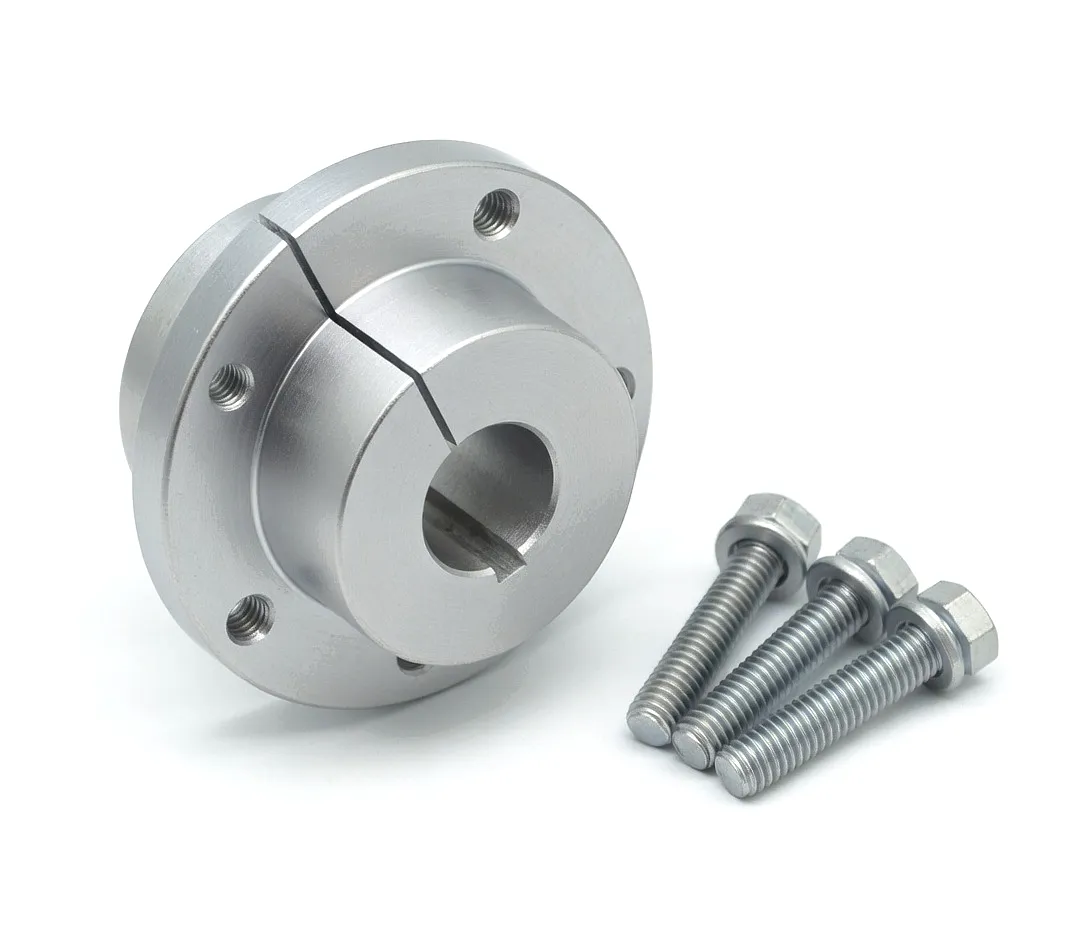 The mechanical principle behind QD bushings is deceptively simple — a split tapered sleeve is drawn into a matching taper inside a sprocket, pulley, or gear hub by three to six cap-screws. As the sleeve contracts, it locks onto the shaft with a uniform interference fit. That single design decision delivers true concentricity, eliminates keyway slop, and allows the hub to be released cleanly by transferring the same cap-screws into jacking threads. For food-and-beverage service, every surface is finished to a Ra under 0.8 μm so that residue rinses away, and the material is matched to the corrosion load: carbon steel 1045 with electroless nickel for low-humidity enclosed drives, AISI 304 for dairy and brewing contact zones, and 316L for chloride-heavy environments such as brine injection on cured-meat lines. Engineered correctly, the QD bushings sit well inside their fatigue limit at the filler’s rated RPM, giving a service life that routinely exceeds the plant’s own capital-depreciation window.
| Specification | Carbon Steel Grade | AISI 304 | AISI 316L |
|---|---|---|---|
| Bore Range | 12 mm – 178 mm | 14 mm – 125 mm | 14 mm – 125 mm |
| Max Torque | 35,000 Nm | 18,000 Nm | 18,000 Nm |
| Surface Finish | Ra ≤ 1.6 μm | Ra ≤ 0.8 μm | Ra ≤ 0.8 μm (electropolish) |
| Temperature Range | −20 to +120 °C | −40 to +300 °C | −70 to +425 °C |
| Compliance | ISO 9001 | FDA 21 CFR 177, EU 1935/2004 | FDA 21 CFR 177, EU 1935/2004, NSF-listed |
| Typical Use | Dry goods, powder handling | Dairy, brewing, soft drinks | Brine, acid juice, marine climate |
Where QD Bushings Earn Their Place on the Line
🍾 Rotary Bottle Filling Turrets
The main drive of a 32- to 120-head rotary filler runs 24/7 at speeds up to 850 RPM. QD bushings anchor the turret sprocket to the hollow shaft, holding angular position while the machine indexes filling nozzles to bottle necks with millimetre precision.
🥛 Dairy Conveyor Chain Drives
From curd pumps to yoghurt-pot infeed chains, 316L QD bushings keep pace with daily alkaline wash-downs. Replacing welded hubs with removable tapered connections slashes sprocket-replacement time from 90 minutes to under 15.
🧴 CIP Pump Belt Drives
Self-tensioning QD bushings mount the drive pulley of every CIP circulation pump, holding alignment under thermal cycling from 4 °C cold rinse to 85 °C hot caustic flush without belt slip.
🧴 Capping & Labelling Stations
Screw-cap torquing heads and pressure-sensitive labelers demand concentric sprocket indexing. The taper interface keeps the drive pulley square to the shaft, preventing the label mis-registration that plagues worn keyway designs.
🍺 Brewery Pasteuriser Tunnels
Slow-speed tunnel conveyors carrying hot cans through 65 °C pasteurisation sprays require rust-proof drive connections. Passivated stainless QD bushings tolerate the saturated humidity environment for 7+ years without retorque.
🍯 Sauce & Condiment Fillers
Viscous product lines — ketchup, mayonnaise, honey — use positive-displacement pumps whose servo drives rely on tight backlash control. A properly specified tapered bushing preserves encoder feedback accuracy over millions of fill cycles.
Case Study: Cumbrian Spring-Water Bottler
Industry: Bottled Spring Water
Line Speed: 48,000 bph
The Challenge — A mid-sized bottler drawing from a Lake District aquifer was losing 6 to 8 production hours a month to repeated sprocket slip on the main 32-head rotary filler conveyor. The existing competitor taper-lock bushings suffered fretting corrosion inside the humid enclosure, leading to torque loss and label misalignment that forced full-line stoppages during peak summer demand.
The Specification — Our application engineering team surveyed four drive positions on the filler and recommended 316L electropolished QD bushings with metric bore conversion. Delivery lead time was critical — the bottler’s summer shutdown window was only 72 hours — so we air-freighted the complete kit from our manufacturing facility to the site near Kendal with full material traceability certificates.
The Result — After 18 months of continuous running, the maintenance manager reported zero slip events and zero re-torque interventions on the replaced positions. Unplanned downtime attributable to the drive train dropped to essentially zero, saving an estimated £22,400 per year in lost production and scrapped labels. The bottler has now standardised QD bushings across its secondary carton-erector and tray-packer lines.
What UK Engineers Say
We pulled eight original hubs during our last planned stoppage and the replacement stainless bushings went in inside a coffee break. Eighteen months later the torque readings are still within tolerance — exactly what we needed from the drive train.
The technical drawings arrived the same afternoon I sent the shaft specs. Custom bore machining was completed in under a fortnight and delivered DAP to our Glasgow site — that responsiveness is what keeps our craft distillery on schedule.
Material certificates for 316L were supplied by return email, which made the audit paperwork painless. Our BRC assessor specifically remarked on how clean the upgraded drive area looked compared to the previous keyed arrangement.
Built to Your Shaft, Shipped to Your Door in Britain
Our 42,000-m² engineering facility holds live stock of every standard QD series — JA, SH, SDS, SD, SK, SF, E, F, J, M, N, P, W and S — across metric and imperial bores. When the off-the-shelf inventory does not match your shaft, our in-house CNC cells machine bespoke QD bushings from customer-supplied drawings inside five working days. Every batch ships with mill test certificates, dimensional inspection reports, and optional PMI verification for stainless grades destined for British food and beverage plants.
Delivery is routed through our European distribution partners at Felixstowe and Heathrow, with DDP terms available to any postcode in England, Scotland, Wales, and Northern Ireland. Engineering support is handled in English by a dedicated UK account manager who understands BS 21 threads, metric shafts, and the practicalities of a scheduled wash-down slot.
Custom Capabilities
✓ Inch + metric hybrid keyways
✓ Food-grade electropolish finish
✓ PTFE-lined anti-galling option
✓ Private-label stamping for OEMs
✓ Traceable batch certification
✓ 5-day rush service to UK ports
Frequently Asked Questions
Q1. What is the best QD bushings supplier for food-grade filling lines across the United Kingdom?
Q2. How much does a stainless-steel QD bushing typically cost for a dairy conveyor drive in England?
Q3. Which QD bushings are recommended for high-speed beverage filling turrets exposed to CIP wash-down cycles?
Q4. Where can UK food manufacturers source FDA-compliant QD bushings with fast delivery and custom bore sizes?
Q5. When should a UK bottling plant replace QD bushings on its filler drive gearbox to avoid unplanned downtime?
Q6. How do I choose the right QD bushing for my cider filling line in Herefordshire or Somerset?
Q7. What price range should I expect for bulk QD bushings orders from a British craft brewery supplier?
Ready to Upgrade Your Filling Line?
Send us your shaft drawings today — a formal technical quote with UK-delivered pricing lands in your inbox inside one working day.
edit by gzl