
QD Bushings for Woodworking Saw Machine Spindles: The Complete Engineering Guide for UK Timber & Furniture Manufacturers
From band saws running at 3,500 RPM to industrial spindle moulders dealing with continuous shock loads — discover how QD bushings deliver the rapid blade changes, dust resistance, and precision spindle alignment that UK timber and furniture manufacturers need to stay productive.
◆ Tool-Free Blade Changes
◆ Dust-Resistant Clamping
◆ UK Supply Available
◆ Custom Bore Sizes
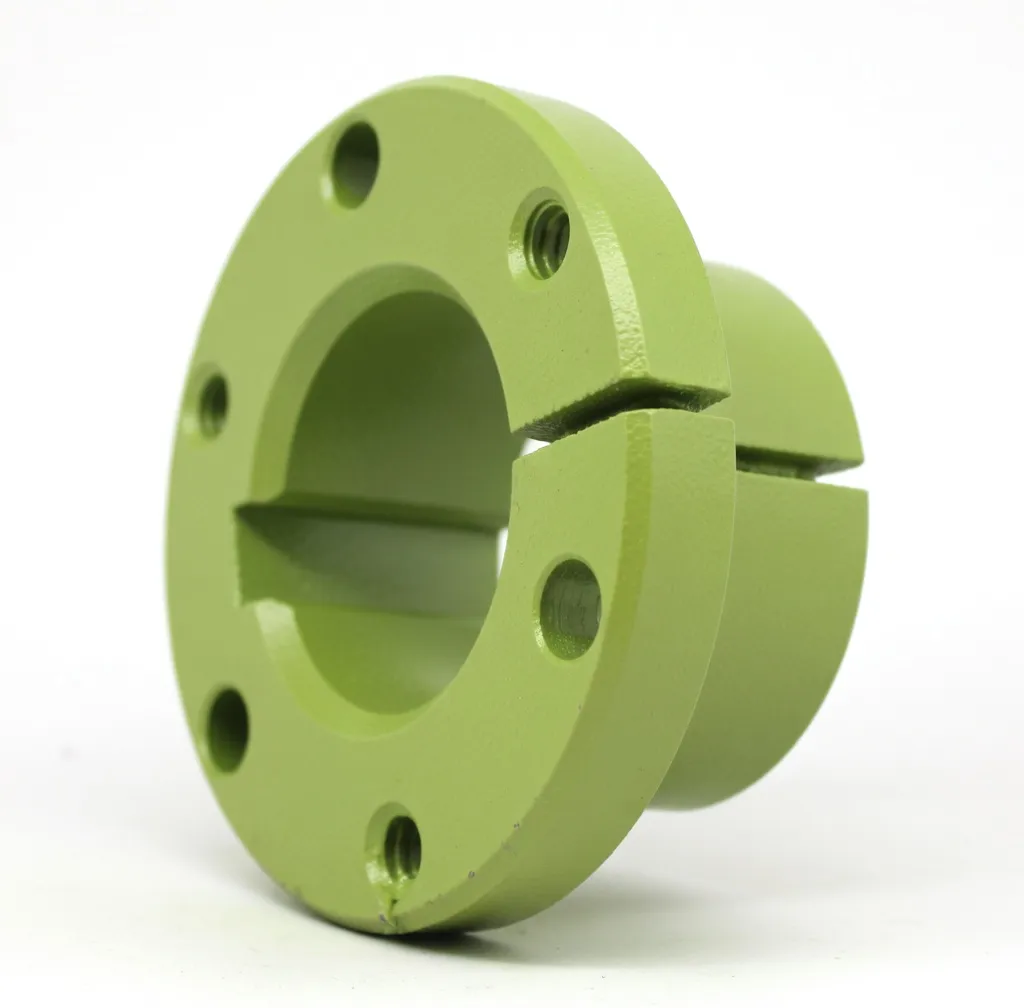 Walk into any timber yard or furniture production facility across England, Scotland, or Wales and you will find the same scene playing out: heavy machinery running flat out, maintenance staff working to schedules measured in minutes rather than hours, and a fine, pervasive layer of wood dust settling over every surface. Band saws, circular rip saws, spindle moulders, thicknessers, drum sanders — all of them depend on robust, repeatable power transmission between the drive motor and the cutting spindle. The component that sits at the centre of this transmission has to cope with a particularly demanding combination of conditions. Spindle speeds between 1,500 RPM and 5,000 RPM are standard across the machine range. Shock loads from knots, figure grain, and sudden changes in material density create torque spikes that can briefly triple the nominal shaft load. And the relentless generation of sawdust, fine shavings, and wood flour means that any looseness or micro-clearance in the drivetrain will eventually be packed tight with abrasive contamination, gradually destroying the contact surfaces and the integrity of the shaft connection itself.
QD bushings — quick-detach, tapered-bore fastening components — have become the established solution for this challenge in professional woodworking machinery throughout the UK. Whether you run a sawmill in Yorkshire looking to cut blade-change downtime, manage a furniture production line in the West Midlands specifying new equipment, or oversee a maintenance programme for a Scottish timber processing plant, understanding how QD bushings perform in saw spindle and cutter drive applications gives you a real practical advantage. This guide covers the engineering principles, material specifications, technical performance data, and real-world application examples that UK woodworking and furniture manufacturing professionals need to make confident, well-informed sourcing decisions. From the operating mechanics of the taper-lock system right through to installation torque values and UK-specific supply considerations, every section has been written from direct application experience in the industry.
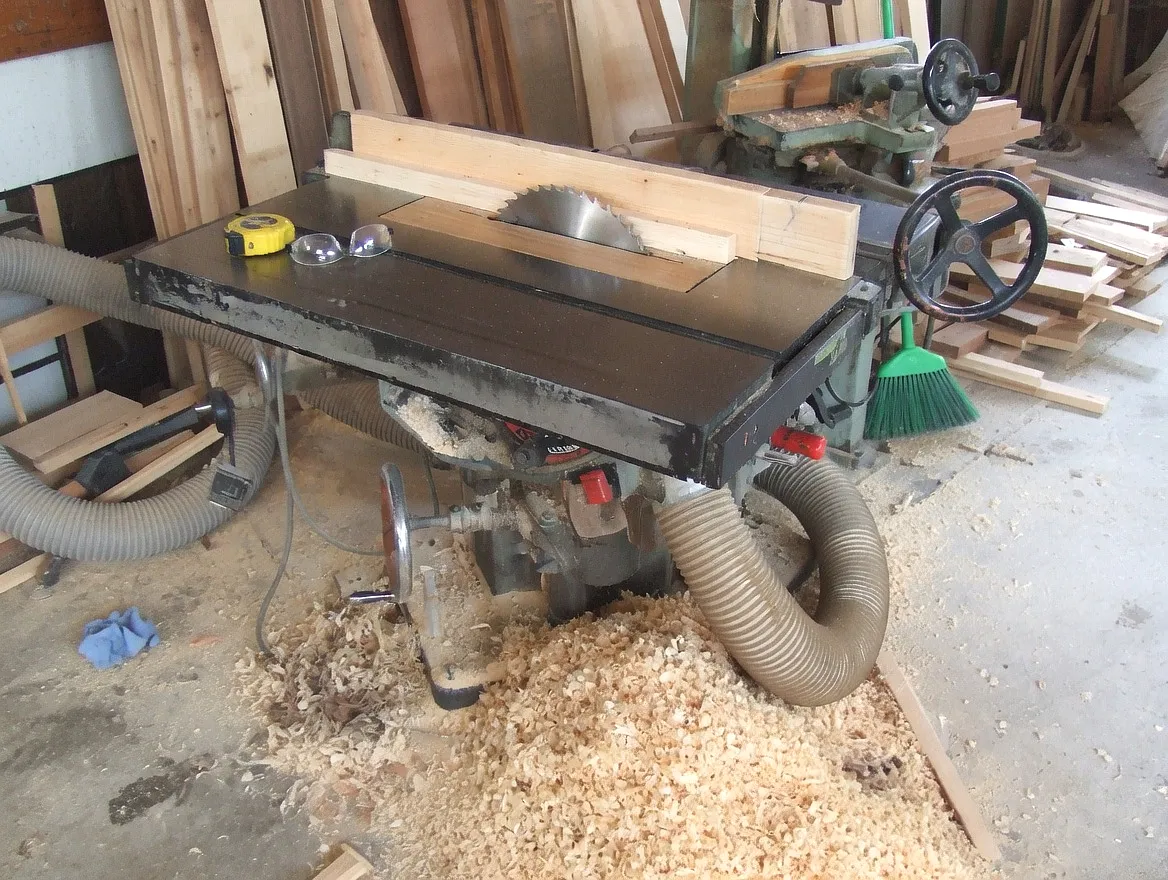
Response within 24 hours · UK stock available · Custom bore sizes on request
The Saw Spindle Challenge: Why Woodworking Demands a Better Shaft Connection
The woodworking saw spindle sits at the intersection of several distinct engineering challenges that, taken individually, are each manageable — but combined, they create an environment where ordinary shaft-mounting solutions consistently fail to deliver over the long term. Rotational speed is the starting point. Production circular saws for furniture-grade hardwood typically operate between 2,800 RPM and 4,200 RPM. Band saws used for primary log breakdown run more slowly — often 1,500 to 2,500 RPM — but with significantly greater blade mass and tension loads on the drive shaft. Spindle moulders and high-speed routing heads at the upper end of the production range can exceed 5,000 RPM on smaller-diameter spindles. Across all of these machine types, even small amounts of runout or radial imbalance in the pulley-to-shaft connection generate vibration that propagates to the spindle bearings, shortens bearing service life, degrades cut quality on the workpiece, and increases workplace noise levels — all of which have direct commercial consequences and relevant compliance implications under UK Health and Safety at Work regulations.
Shock loading is the second critical factor. Timber is not a homogeneous material and a production saw encounters this heterogeneity constantly. A board running through a rip saw will hit cross-grain sections, resin pockets, and knots that create sudden step changes in cutting resistance. In hardwoods such as oak, ash, walnut, or cherry — all heavily processed by UK furniture makers, joinery companies, and flooring manufacturers — these impulse loads can be severe enough to cause transient torque spikes of two to three times the nominal running value. Any backlash, fretting, or micro-movement in the shaft-to-hub joint amplifies the effect of these shocks, driving progressive wear into the pulley bore seat and the shaft surface simultaneously. The third factor — dust — is perhaps the most underestimated. Wood flour from MDF and chipboard processing is extremely fine, often below 50 microns, and it penetrates conventional shaft connections with ease, then acts as a grinding compound under vibration. QD bushings address all three of these interacting challenges through the fundamental geometry of the tapered-clamping system.
High-Speed Operation
1,500–5,000 RPM demands precision balancing and zero-clearance shaft-hub engagement to prevent vibration escalation and bearing fatigue.
Impulse Shock Loads
Knots, hard grain, and material transitions create torque spikes up to 3x nominal — requiring a shaft connection with genuine shock-absorbing clamping integrity.
Dust & Contamination
Wood flour, MDF dust, and resin particles infiltrate loose shaft joints, acting as abrasive paste that progressively destroys interference-fit surfaces.
How QD Bushings Work: Engineering Principles of the Taper-Lock Clamping System
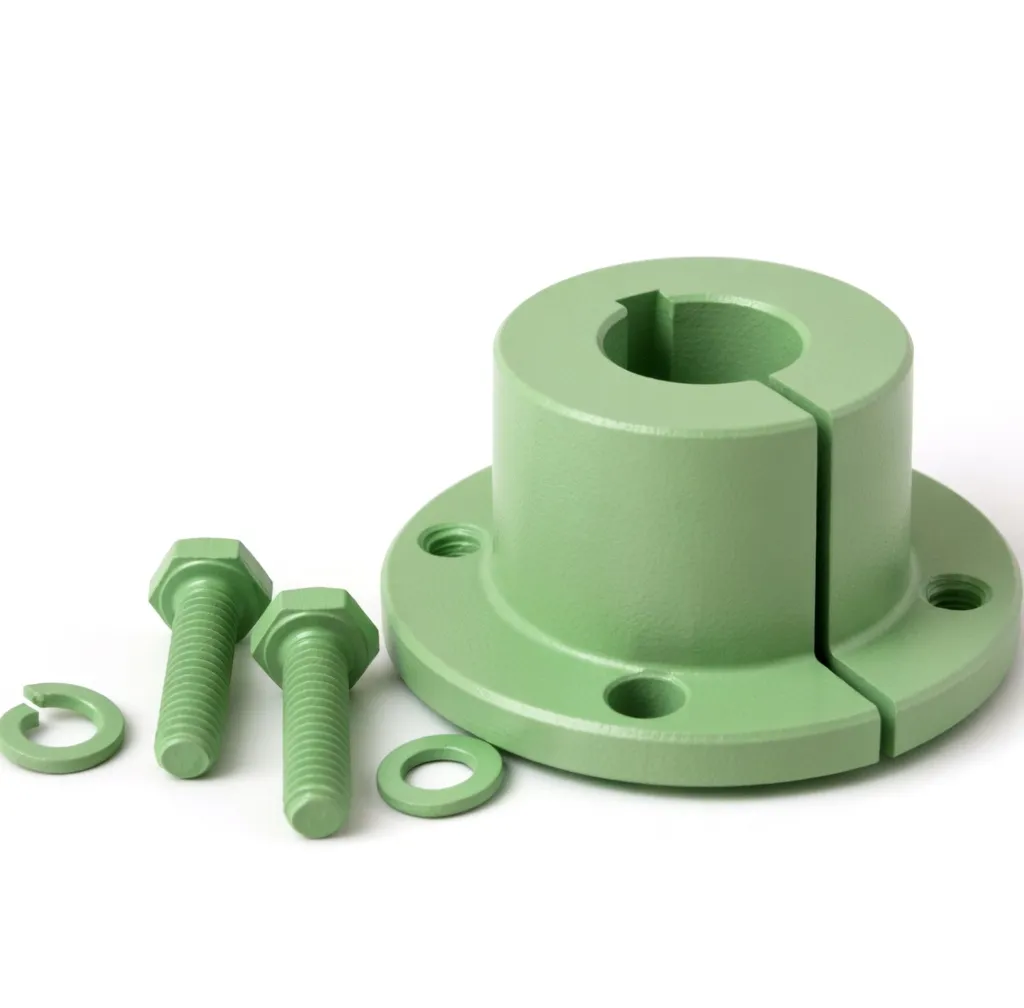 The operating principle of a QD bushing has remained essentially unchanged since it was first standardised in the mid-twentieth century — a testimony to how thoroughly the core concept performs under industrial conditions. A split, tapered bushing body is placed inside the matching tapered bore machined into the centre of the drive pulley or sprocket hub. The longitudinal split in the bushing barrel runs the full length of the taper, allowing the barrel to compress evenly inward as the clamping screws are driven home. Those screws — typically three or four socket-head cap screws arranged symmetrically on the bushing flange — thread into holes in either the bushing flange or the pulley hub, depending on whether the unit is being installed or removed. As the installation screws are tightened in a progressive star pattern, they draw the bushing body deeper into the matching taper: the barrel compresses onto the shaft while the outer taper simultaneously pushes the pulley hub outward. The result is a fully constrained, zero-clearance joint with high compressive pressure uniformly distributed around the full 360-degree circumference of the shaft — a fundamentally more secure and consistent grip than a keyway-and-setscrew arrangement of equivalent size.
For a saw spindle running at 3,500 RPM with a 37 kW drive motor — a configuration found across many UK hardwood processing facilities — this clamping mechanism generates shaft gripping pressures comfortably within the rated torque capacity of a correctly sized QD bushing, with the keyway serving as a secondary torque element rather than carrying the primary load. When blade replacement or maintenance requires the pulley to come off, the process is reversed: the installation screws are backed out and transferred to the removal-thread holes machined into the bushing flange. Tightening these jack screws evenly breaks the taper engagement and the bushing slides free from the bore cleanly in under sixty seconds, with no hammering, no shaft damage, and no requirement for specialised extraction tooling. That clean, repeatable release is the defining practical advantage of QD bushings in high-frequency blade-change woodworking environments — and it is the reason the format has remained dominant in professional machinery for decades.
1 Installation Procedure
Slide the bushing into the tapered hub bore with the shaft key seated. Hand-tighten the clamping screws in a diagonal star sequence, then torque to the specified value (see table below) using a calibrated torque wrench. The taper seats fully and the joint is complete — no additional lockwiring or retaining hardware is required.
2 Removal Procedure
Back out the installation screws fully. Transfer each screw to the corresponding removal-thread holes in the bushing flange. Tighten these jack screws evenly in rotation. The jack-screw action breaks the taper engagement and the bushing exits cleanly in under a minute — no specialist pullers, no heat, no risk to the shaft surface.
Materials, Construction & Surface Finishing for Woodworking Environments
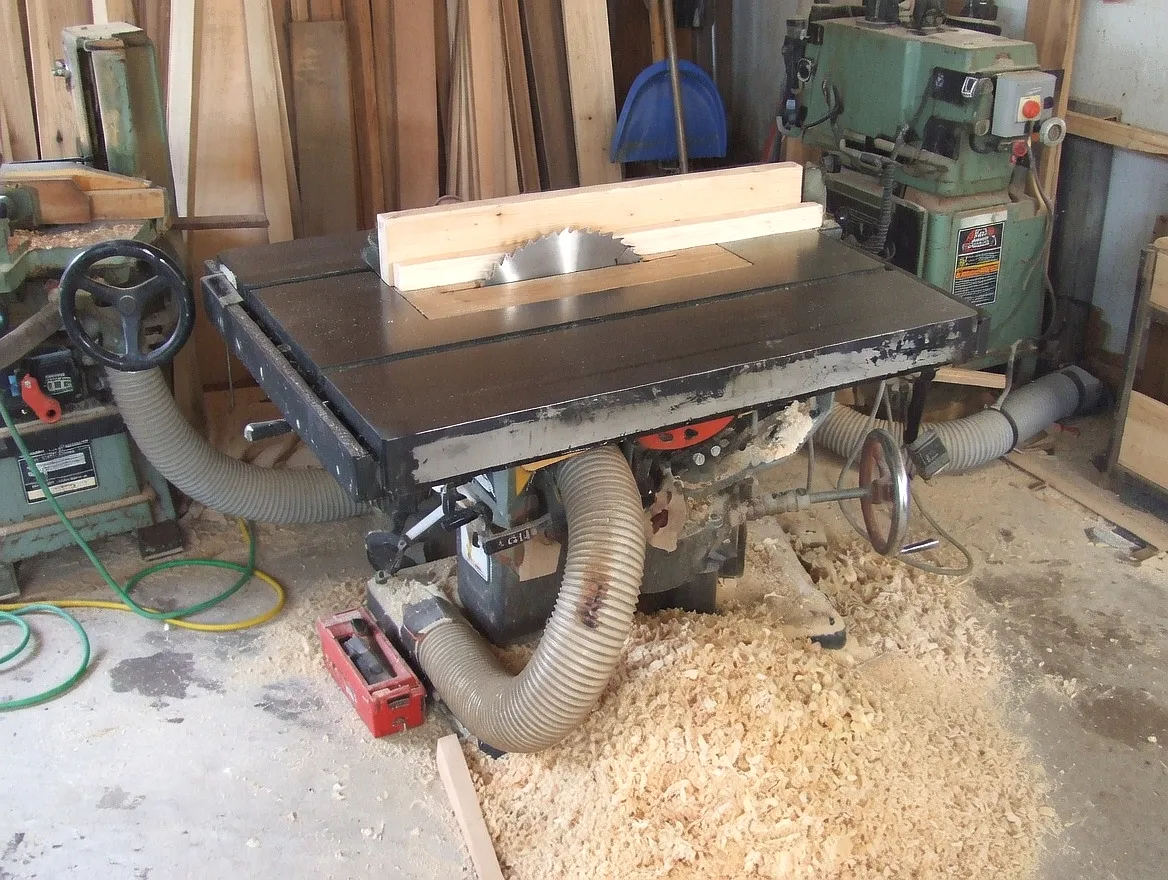 The material specification for QD bushings used in woodworking applications reflects a carefully considered balance between mechanical performance, resistance to the moisture and chemical content present in many timber processing environments, and cost-effectiveness across the expected service life. The bushing body itself is most commonly produced from grey cast iron meeting Grade 200 (ISO 185) or higher specification. Cast iron delivers excellent compressive strength for the taper-clamping function while its natural damping characteristics help absorb the vibration and impulse loads inherent in saw spindle applications. For higher-torque duties — the main drive pulley on a large industrial band saw, a multi-knife cutter block on a heavy thicknesser, or the driven pulley on a wide-belt sander — ductile iron variants (Grade 400/12 or better) provide approximately double the tensile strength of standard grey iron, substantially increasing the fatigue margin under repeated shock load cycles. For the largest bushing sizes, or where the specific application loads approach the ductile iron ratings, steel-bodied QD bushings offer the highest available strength-to-size ratio and are available as a custom option through our manufacturing programme.
The clamping screws are manufactured from Grade 10.9 alloy steel with zinc plating as the standard finish. In environments where green timber (freshly sawn, high moisture content) or chemically treated wood — preservative-treated structural timber is widely processed across UK sawmills and treatment plants — sap and reagent contact can accelerate fastener corrosion. Specifying stainless steel hardware or applying an anti-corrosion compound to the screw threads at installation extends maintenance intervals significantly and at modest additional cost. Shaft keys are produced to medium-carbon steel at DIN 6885 or equivalent BS/ISO profile dimensions, ensuring full dimensional interchangeability with the pulley and sprocket stock held by UK power transmission distributors.
Grey cast iron GG20 / Ductile iron GGG40 / Carbon steel (large series or custom)
Grade 10.9 alloy steel, zinc-plated standard; stainless steel option for corrosive or wet-wood processing environments
Black oxide + anti-rust oil standard; zinc phosphate or industrial paint coating on request
Medium-carbon steel, DIN 6885 / BS 4235 profile dimensions, included as standard with each bushing
Technical Specifications: QD Bushing Series for Woodworking Saw Spindle Applications
The series below covers the most commonly specified QD bushing sizes for woodworking machinery drive pulleys and cutter block assemblies. Torque values apply to standard grey cast iron; ductile iron variants carry approximately 25% higher ratings at identical dimensions.
| Series | Bore Range (mm) | Max. Torque (Nm) | Max. Speed (RPM) | Screw Torque (Nm) | Typical Woodworking Use |
|---|---|---|---|---|---|
| JA | 12.7 – 25.4 | 68 | 5,500 | 9 | Router spindle, trim saw motor pulley |
| SH | 16 – 38 | 136 | 4,800 | 16 | Spindle moulder motor pulley |
| SK | 19 – 55 | 310 | 4,200 | 20 | Circular rip saw, thicknesser cutter block |
| SF | 25 – 70 | 520 | 3,600 | 34 | Medium band saw drive pulley, drum sander |
| SD / SE | 32 – 90 | 1,020 | 3,000 | 54 | Large band saw, gang rip saw, wide thicknesser |
| E / F | 40 – 125 | 2,040 | 2,400 | 81 | Heavy-duty sawmill headrig, primary log band saw |
* Values are indicative for grey cast iron bodies. Contact our technical team for duty-specific sizing calculations, service factor confirmation, or non-standard bore requirements.
Application Scenarios: Where QD Bushings Make the Difference in Woodworking Machinery
Within woodworking machinery, QD bushings appear in several distinct installation locations, each carrying its own combination of speed, torque, and contamination demands. Understanding where each installation type sits in the machine and what specific performance it requires helps maintenance engineers and purchasing managers specify the correct bushing series from the start — avoiding the costly misapplication scenarios that generate premature failures and reactive maintenance call-outs at the worst possible times in the production schedule. The five scenarios below cover the configurations encountered most frequently in UK timber and furniture manufacturing operations.
Five Reasons UK Woodworking Engineers Specify QD Bushings
The practical case for specifying QD bushings over conventional taper-lock bushings, press-fit hubs, or setscrew collar arrangements in woodworking machinery applications comes down to five specific areas where the design delivers documentable, measurable performance advantages — advantages that translate directly into lower operating costs, higher production availability, and more predictable maintenance scheduling across sawmill, joinery, and furniture manufacturing operations throughout England, Scotland, and Wales.
Rapid Change-Out
A blade or cutter change requiring 30–40 minutes with a pressed-fit pulley can be done in under 10 minutes with QD bushings. Across a year running two shifts with blade changes every 6–8 hours, the cumulative time saving represents hundreds of productive hours recovered — directly measurable as increased output or reduced overtime cost.
Shaft Integrity Preserved
Repeated interference-fit removal gradually scores and scores the shaft surface, eventually requiring regrinding or shaft replacement. QD bushings leave the shaft in identical condition after the hundredth installation cycle as after the first, protecting substantial capital investment in precision-ground spindle shafts.
Consistent Dynamic Balance
QD bushings are manufactured to close bore tolerances. The mating taper ensures the pulley reseats in essentially the same angular position each time, preserving dynamic balance without requiring repeated dynamic balancing procedures after every blade or cutter change.
Inventory Simplification
One QD bushing series covers multiple bore diameters with the same outer taper dimensions, so a single pulley hub can be used across several shaft sizes by simply changing the bushing — significantly reducing the number of different parts a UK maintenance department must stock for a mixed machine fleet.
Lower Total Cost of Ownership
Despite a slightly higher unit cost than plain setscrew hubs, QD bushings consistently deliver lower total cost of ownership through reduced unplanned downtime, extended shaft service life, fewer reactive maintenance call-outs, and lower fastener replacement frequency — all quantifiable factors that UK production managers include in their maintenance cost-per-machine calculations.
Hardwick Timber Frames Ltd. — Nottinghamshire, England
Structural Timber Frame Manufacturing · CNC Saw Line Reliability Programme
Hardwick Timber Frames Ltd., a manufacturer of structural timber frame panels for residential construction based in Nottinghamshire, came to us with a recurring reliability problem on their primary CNC circular rip saw line. A 37 kW saw fitted with a conventional taper-lock pulley arrangement was experiencing pulley creep and runout deterioration approximately every six to eight weeks. The presenting symptoms — escalating vibration, declining cut straightness, and intermittent blade track errors — were forcing the production line offline for two to three hours per incident while the maintenance team worked through realignment and retightening. At two to three incidents per month across a busy construction-season production schedule, the cumulative unplanned downtime was approaching 80 to 90 hours per year on a single machine, with knock-on implications for delivery commitments to building contractors across the East Midlands.
The drivetrain assessment identified three converging root causes: installation was being performed without a torque wrench and to inconsistent screw tightening, the shaft showed visible fretting damage from three years of repeated removal cycles with an extraction drift, and belt tension was running approximately 12% above the pulley manufacturer’s maximum recommendation, adding significant radial shaft load to every running hour. Correcting the installation procedure alone was insufficient given the pre-existing shaft surface condition, so the shaft was reground to nominal dimensions before the new QD bushing assembly was fitted.
The solution involved fitting an SK-series QD bushing with a precision-matched keyway, correcting belt tension to within specification, and implementing a formal maintenance procedure with documented screw torque values and a quarterly inspection checklist. The saw line ran for over fourteen months following the upgrade without a single recurrence of pulley creep or measurable runout increase. Blade change time on the same machine fell from an average of 28 minutes to 11 minutes as a direct result of the bushing change. Based on the time savings from blade changes across a five-day working week, Hardwick Timber Frames calculated full return on the component investment in under three months.
What UK Woodworking Professionals Say
“We switched our entire band saw line to QD bushings two years ago and the maintenance picture has completely changed. Blade changes that used to be a major production event are now a ten-minute routine job. The bore quality is noticeably better than what we had before — genuinely concentric with clean keyways. No creep, no vibration issues, no arguments between the operators and the maintenance team about who last tightened the pulley.”
Works Engineer, Haines Sawmill Ltd., Cumbria
“We manufacture bespoke kitchen furniture in the West Midlands and our spindle moulders run hard through most of the week. Profile knife changes used to be slow and uncertain — you were never quite sure the runout was right until you cut the first piece and looked at it. Since we fitted these QD bushings the changeover is faster and the runout figures after reassembly are consistent every single time. That consistency has reduced our scrap rate on profile runs noticeably.”
Production Manager, Meridian Fine Furniture, Wolverhampton
“I source power transmission components for several sawmills across Scotland and QD bushings from this supplier are reliably good. Lead times are workable, the technical data is thorough, and on two occasions when I needed non-standard bore sizes the custom turnaround was quick enough to keep the machines on schedule. That responsiveness matters when a machine is standing and you need a part, not a three-week lead time.”
Maintenance Coordinator, Highland Timber Products, Inverness
Precision QD Bushing Manufacturing & Custom Specification for UK Industry
Our manufacturing facility produces QD bushings across the complete standard series range — from JA through to Q — with CNC turning, bore grinding, and keyway broaching all carried out in-house under quality management processes that include dimensional inspection and material certification for supply to OEM customers and UK industrial users. All standard bushing dimensions conform to ANSI/MPTA and equivalent ISO specifications, ensuring drop-in dimensional compatibility with the pulley and sprocket stock held by major UK power transmission distributors.
For woodworking and timber processing applications with non-standard requirements, our custom specification service covers non-standard bore diameters in both metric and imperial dimensions, extended hub lengths for unusual shaft configurations, modified keyway profiles to suit non-standard shafting, alternative material grades including ductile iron and carbon steel bushing bodies, special surface treatments, and close-tolerance bore grinding to tighter-than-catalogue runout figures for demanding high-speed spindle installations. Our application engineering team works directly with UK machinery manufacturers, OEM integrators, and maintenance departments to develop the right specification for the job — not just the closest catalogue match.
Custom Capability Highlights
Non-standard metric & imperial bore diameters
Ductile iron & steel bodies for high-torque duty
Close-tolerance bore grinding for high-speed spindle use
Modified keyways: DIN, BS, ANSI, or bespoke profile
Zinc phosphate, industrial paint & corrosion-resistant finishes
Dimensional inspection reports & material certificates supplied
UK delivery from stock or express manufacturing for urgent needs
Frequently Asked Questions
Questions from UK woodworking engineers, sawmill operators, and machinery maintenance teams across England, Scotland, and Wales.
Ready to Upgrade Your Woodworking Spindle Drive System?
Talk to our application engineering team about the right QD bushing specification for your saw, planer, spindle moulder, or band saw. We supply standard and custom-bore bushings to UK timber processors, furniture manufacturers, joinery operations, and sawmills across England, Scotland, and Wales.
edit by gzl